
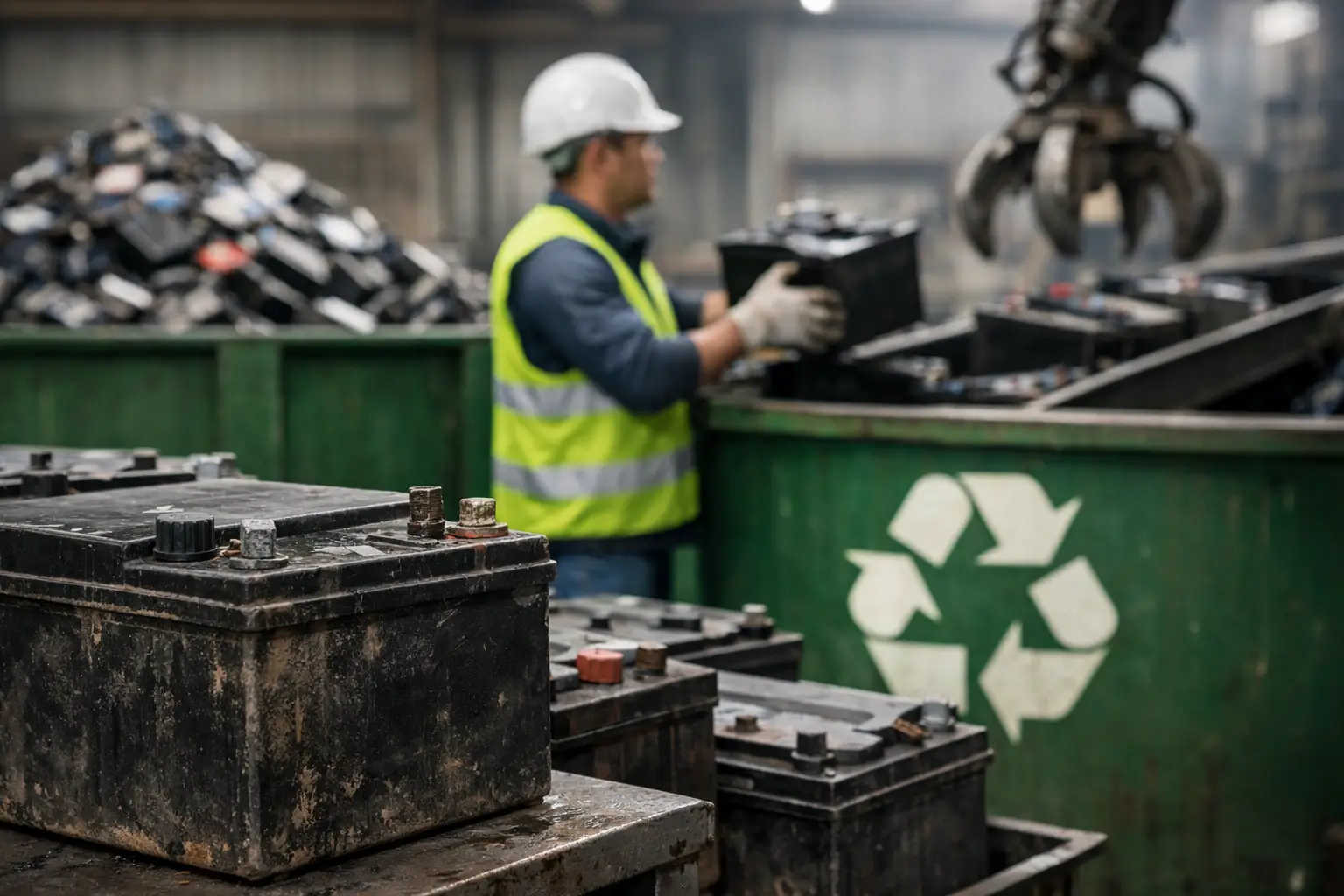
Industrial Battery Recycling Services That Work
A battery room going out of service rarely stays a battery-only job for long. Once strings are retired, teams also have to manage access, rigging, spill controls, documentation, scrap segregation, and site safety – often while the rest of the facility stays live. That is where industrial battery recycling services matter. The right provider does more than remove spent units. They help facilities control risk, recover value where possible, and keep decommissioning work moving without creating new operational problems.
For data centers, telecom sites, substations, and industrial plants, battery retirement is usually tied to a larger event. It may be a UPS replacement, a site shutdown, a capacity upgrade, or the removal of aging infrastructure that no longer fits reliability standards. In those environments, disposal is not a side task. It is part of a controlled asset recovery process that needs planning, trained labor, and a clear chain of custody.
What industrial battery recycling services should actually cover
At a minimum, battery recycling should include safe collection, packaging, transportation, recycling coordination, and documentation. In practice, serious projects demand more than that. Industrial sites often need crews that can disconnect systems, remove racks and cabinets, coordinate with facility operations, and work around energized equipment and restricted access areas.
That is why scope matters. A provider focused only on hauling may be fine for a small volume of loose batteries staged at a dock. It is usually not enough for a live facility with multiple battery strings, limited access, and a firm outage window. In those cases, the service has to extend into project management, labor planning, equipment handling, and site-specific environmental controls.
For many operators, the best outcome comes from working with a partner that can address the full chain of work – from decommissioning through removal, recycling, and material recovery. That reduces handoffs and gives the facility one accountable point of contact.
Battery type affects the recycling plan
Not all battery assets move through the same process. Chemistry, size, configuration, and installation method all affect handling requirements and recovery value.
Lead-acid batteries remain common across backup power environments, especially in UPS systems, telecom applications, and utility infrastructure. They are widely recyclable, and the lead, plastic, and electrolyte can often be reclaimed through established downstream processes. Because of that, lead-acid battery projects may offer measurable scrap value, depending on weight, condition, freight factors, and market pricing.
Nickel-cadmium batteries require a different handling approach because of the materials involved and the compliance requirements tied to them. Lithium-ion systems introduce another layer of planning, particularly around packaging, transportation classification, damaged unit management, and thermal risk controls. Even within one chemistry family, there can be major differences between small modular systems and large-format industrial installations.
This is one reason generic disposal vendors often fall short. Battery recycling at industrial scale depends on understanding the equipment, the site, and the regulations that apply to that specific mix.
Why facility teams need more than simple pickup
Operations leaders are not just trying to get old batteries off the property. They are trying to complete a project without injuries, environmental issues, schedule delays, or gaps in documentation. A simple pickup service may remove material, but it does not necessarily solve the project.
Consider a battery replacement in a live data center. The removal crew may need to coordinate with electricians, protect adjacent equipment, use proper lifting methods in tight aisles, and sequence work around uptime requirements. In a substation or industrial plant, access constraints, weather exposure, and safety protocols may shape every step of the job. If the provider cannot manage those field realities, the burden shifts back to the owner or contractor.
That is why experienced industrial battery recycling services are operational services first and recycling services second. The recycling result matters, but so do staging plans, labor supervision, material segregation, and closeout paperwork.
What to look for in an industrial battery recycling partner
Experience with mission-critical and industrial environments should be near the top of the list. A vendor that understands battery chemistry but has limited field execution capability can still create delays or safety issues during removal. The reverse is also true. A strong demolition or hauling team without battery-specific knowledge may mishandle packaging, labeling, or downstream processing.
Look for a provider that can clearly define scope before work starts. That includes site conditions, battery type and quantity, rack removal if needed, loading method, freight coordination, recycling destination, and final documentation. Good providers ask detailed questions early because surprises on battery jobs usually cost time and money.
Nationwide or multi-region coverage can also matter, especially for operators managing portfolios of telecom sites, distributed facilities, or multiple shutdowns in different markets. Standardizing the process across locations helps reduce internal coordination and makes reporting easier.
Finally, ask how value recovery is handled. Some battery streams carry positive scrap value. Others do not, especially once labor, access limitations, packaging, and transportation are factored in. A dependable partner will explain that up front instead of promising a return that disappears once the work begins.
The value side of battery recycling
Battery recycling is often framed only as a compliance obligation, but there is also a financial side. Industrial batteries contain recoverable raw materials, and in the right conditions those materials can offset part of the project cost. That does not mean every job generates a meaningful rebate. It depends on chemistry, total weight, contamination, market conditions, and how difficult the material is to remove and ship.
This is where a broader asset recovery mindset helps. If battery removal is part of a larger equipment retirement project, there may be value in related infrastructure as well – UPS units, switchgear, generators, cable, racks, or support equipment. A provider that can assess the full project instead of only the battery line item may produce a better net result.
Critical Asset Recovery operates in that space. For facilities retiring larger infrastructure systems, battery recycling can be integrated into a wider decommissioning and asset disposition plan rather than handled as a disconnected waste task.
Compliance, documentation, and environmental control
Most buyers in this market are not looking for marketing claims about sustainability. They want proof that material was handled correctly and sent through responsible channels. Documentation matters because battery projects often sit inside larger ESG, safety, and audit frameworks.
A qualified provider should be able to support shipping records, weight tracking, downstream recycling confirmation, and any other project documentation required by the customer or site. Just as important, they should know how to manage packaging, spill prevention, and temporary storage in a way that fits the battery type and the facility environment.
Environmental responsibility is not separate from operational discipline. It is part of it. When crews properly segregate material, prevent damage during handling, and move batteries through verified recycling paths, the facility reduces exposure while keeping reusable raw materials in circulation.
When a turnkey approach makes the most sense
Some sites only need battery pickup. Others need a full retirement package that includes disconnects, dismantling, equipment removal, demolition support, and recycling. The more complex the site, the more value there is in consolidating those tasks under one provider.
That is especially true when batteries are tied to end-of-life UPS systems, telecom power rooms, manufacturing support systems, or facility shutdowns. In these cases, the battery project can affect schedule, site access, safety planning, and resale or recycling decisions across multiple asset classes. Splitting responsibility across several vendors may look cheaper at first, but it often creates coordination gaps and accountability issues.
A turnkey approach is not always necessary. If material is already staged, access is easy, and the battery stream is straightforward, a narrower service scope may be enough. But for live facilities, complex removals, or projects where value recovery matters, broader execution capability usually pays for itself.
The practical question buyers should ask
Instead of asking only, Who can recycle these batteries, a better question is, Who can close this project cleanly? That shift changes how you evaluate providers. You are not buying a pickup. You are buying safe removal, reliable scheduling, material accountability, and a documented outcome that stands up to internal review.
The strongest industrial battery recycling services are built for that reality. They protect the site, respect the schedule, and treat retired batteries as part of a larger infrastructure recovery effort. When the work is planned correctly, facilities can reduce risk, recover material value where it exists, and move one step closer to a cleaner, more controlled transition.
When battery systems reach the end of the line, the goal is not just to clear the room. It is to finish the job in a way that leaves operations, compliance, and the site itself in better shape than you found them.