
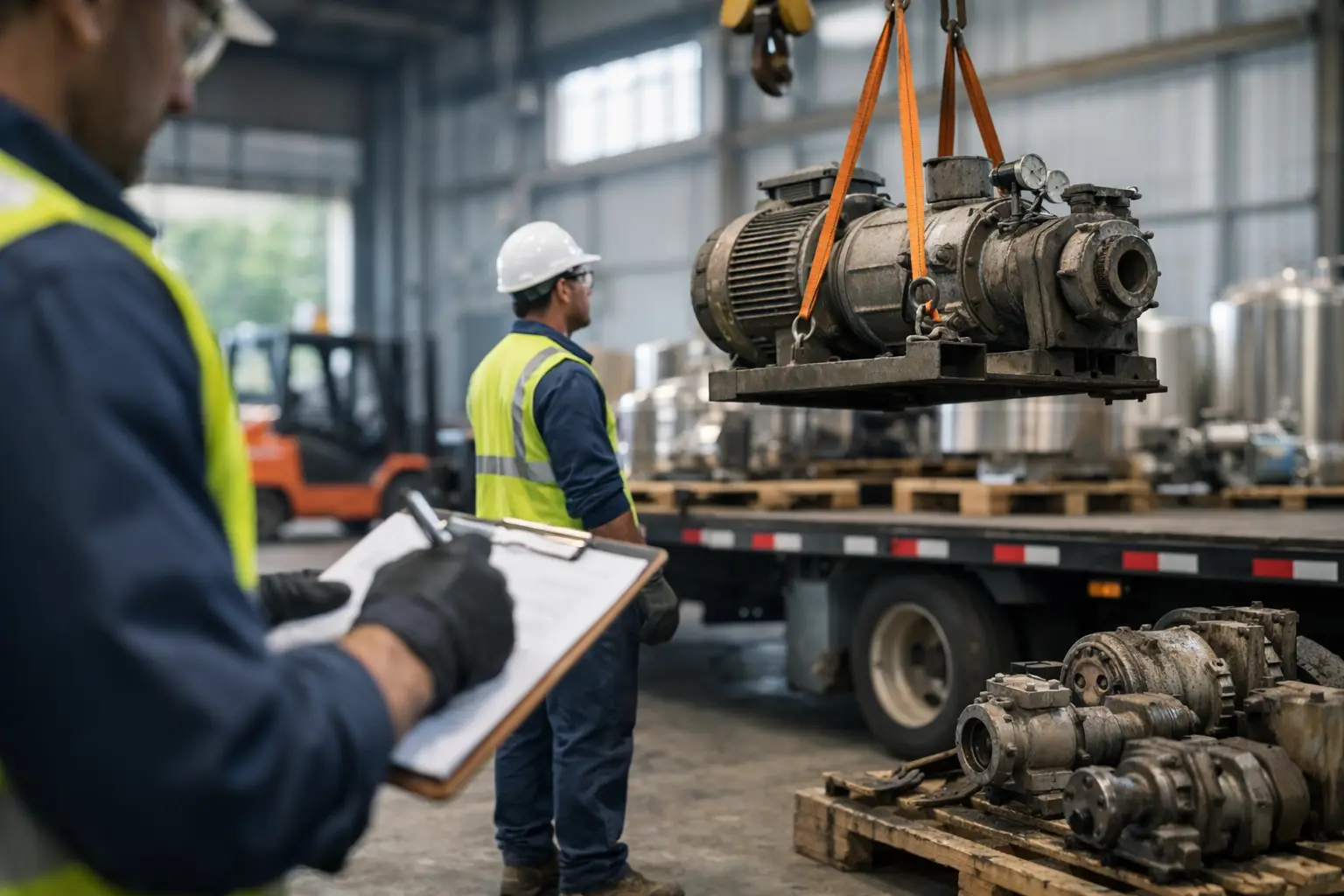
Industrial Asset Recovery That Preserves Value
A generator comes offline. A UPS plant is replaced. A telecom site is consolidated. On paper, those changes look like routine capital projects. In practice, they leave behind high-value equipment, hazardous materials, tight shutdown windows, and a lot of financial exposure. That is where industrial asset recovery matters. Done well, it turns retired infrastructure into recovered value, controlled risk, and a cleaner path to the next phase of operations.
For facility owners and operations teams, the issue is rarely just removal. The real challenge is deciding what still has market value, what must be recycled, what requires certified handling, and how to get everything out without disrupting active systems or creating safety and compliance problems. That work requires more than a scrap vendor and more than a demolition crew. It requires a recovery strategy tied to the realities of industrial equipment.
What industrial asset recovery actually includes
Industrial asset recovery is the coordinated process of evaluating, removing, reselling, refurbishing, recycling, or disposing of surplus and retired equipment. In mission-critical and industrial environments, that scope often includes generators, switchgear, UPS systems, batteries, chillers, transformers, raised flooring, cable, busway, and process equipment.
The objective is straightforward. Recover as much value as practical, remove what no longer belongs on site, and handle the balance responsibly. That means the project may involve asset purchase, rigging, dismantling, demolition, environmental services, logistics, and downstream material recovery. In many cases, the strongest result comes from combining those functions under one operational plan.
This is especially true in data centers, manufacturing plants, substations, and telecom facilities, where equipment is large, interconnected, and often installed around live infrastructure. Removal is not simply a transportation problem. It is an engineering, safety, and sequencing problem.
Why industrial asset recovery is more than equipment removal
Many organizations underestimate the cost of treating retired equipment as waste. If a contractor arrives with no plan beyond cutting, loading, and hauling, the owner often loses value in reusable assets and takes on unnecessary risk in the process.
A disciplined industrial asset recovery program starts by separating equipment into categories. Some assets can be resold as complete units. Others have refurbishment value. Some are worth more as component parts or recoverable metals. Others require specialized recycling because of batteries, refrigerants, oils, or suppression agents. Each category affects project economics.
The difference shows up quickly. A late-model generator set may have strong resale demand. A legacy UPS system may have limited whole-unit value but still contain parts that can be reclaimed. Switchgear may need careful dismantling to preserve copper and other materials. Battery strings may require documented recycling and transportation controls. When all of that is lumped together as disposal, money is left on the ground.
There is also a scheduling issue. Removal work inside active facilities has to align with outages, tenant requirements, shutdown procedures, and site access limitations. A recovery partner that understands decommissioning can plan around those constraints rather than forcing the facility team to absorb delays and change orders.
Where value is found in retired infrastructure
Residual value is not limited to equipment that looks market-ready. In industrial settings, value can come from reuse, refurbishment, component harvesting, and raw material recovery.
Generators, chillers, switchgear, ATS units, and distribution equipment often retain value if condition, age, manufacturer, and service history support resale. In some cases, older equipment with long lead-time replacements still attracts demand. That is one reason blanket assumptions about obsolescence can be costly.
At the same time, not every asset should be remarketed. Some equipment is too outdated, damaged, incomplete, or site-modified to move efficiently through resale channels. In those cases, responsible recovery focuses on parts, metals, and recyclable materials. Copper, aluminum, steel, and batteries can contribute meaningful offsets against decommissioning costs, especially on larger projects.
It depends on the equipment mix. A site heavy with power infrastructure may produce a different recovery profile than a cooling plant or a manufacturing line. The right approach starts with an honest assessment, not a generic per-ton disposal number.
The compliance side cannot be an afterthought
Industrial asset recovery touches multiple compliance concerns at once. Safety is the obvious one, but environmental handling, transportation requirements, chain of custody, and site-specific documentation matter just as much.
Battery systems require proper packaging, transport, and recycling. Refrigerant-bearing equipment must be managed according to applicable recovery requirements. Fire suppression materials may involve specialized handling. Fluids, oils, and contaminated components need to be identified before dismantling begins. If these issues are discovered late, they can stop a project or drive up cost fast.
The same applies to demolition and decommissioning sequencing. Disconnecting a switchgear lineup, removing a chiller from a constrained mechanical room, or extracting a generator from a rooftop or enclosure is not routine labor. It requires planning, rigging coordination, and a clear understanding of what remains live in the facility.
For decision-makers, this is why scope clarity matters. The cheapest removal quote is rarely the lowest total-cost option if it excludes environmental responsibility, documentation, or the labor needed to execute safely.
What a well-run recovery project looks like
Strong execution starts before any equipment is touched. The first step is usually a site review to identify asset types, access limitations, condition, salvage potential, and environmental considerations. That review should also define the boundary between removal, demolition, recycling, and resale.
From there, the project needs a practical sequence. What can be removed first without affecting operations? What requires an outage? What needs rigging plans, cranes, lifts, or floor protection? What materials must be segregated? What documentation does the owner need at closeout?
A capable recovery team will also align commercial structure with site realities. Some projects justify direct asset purchase because resale value is high. Others are better handled as fee-based decommissioning with recycling credits. Many fall in the middle, where recovered value helps offset labor, transportation, and disposal costs.
That flexibility matters. Owners should not have to force every project into the same model. The economics of a generator plant retirement are different from a battery room cleanup or a telecom shelter removal. A partner that can buy, remove, recycle, and demolish under one scope usually creates fewer handoff problems and better accountability.
Common mistakes that reduce recovery value
One of the biggest mistakes is waiting too long. Assets stored outdoors, stripped for parts, or disconnected without records lose value quickly. Another is assuming local scrap rates tell the full story. For many critical infrastructure assets, condition, make, demand, and recoverable components matter more than weight.
A second mistake is splitting the job across too many vendors. One company handles purchase, another does rigging, another handles batteries, and another takes demolition debris. That can work, but it often creates schedule gaps, unclear responsibility, and inconsistent documentation. When something goes wrong, each vendor points to the next.
The third mistake is failing to distinguish between surplus equipment and end-of-life material. Not every retired asset should be sold, and not every obsolete unit should be treated as waste. Recovery decisions should be based on market reality, safety, and total project cost.
Choosing an industrial asset recovery partner
For complex facilities, experience with the equipment category matters more than general hauling capacity. The right partner should understand backup power, electrical distribution, cooling systems, battery handling, and the practical constraints of live industrial and mission-critical sites.
Look for a provider that can speak clearly about scope, logistics, environmental stewardship, and downstream recovery paths. Ask how they evaluate resale potential. Ask who performs dismantling. Ask how materials are tracked and where they go. Ask what documentation is provided at the end of the job.
Nationwide coverage can also matter if your organization operates across multiple states or provinces. Standardized execution reduces friction for internal teams and makes it easier to manage recurring decommissioning work under a consistent process. For companies retiring infrastructure across several facilities, that consistency is often as valuable as the recovery itself.
Critical Asset Recovery works in this space because many clients do not need a basic recycler. They need one operational partner that can purchase surplus equipment, dismantle systems, remove heavy assets, and recover materials responsibly without losing control of the project.
The business case is stronger than many teams expect
Industrial asset recovery is often treated as a closeout task at the end of a capital project. That is too late. When recovery planning starts early, it can improve budget accuracy, reduce disposal cost, shorten shutdown timelines, and preserve salvage value that would otherwise disappear.
It also supports environmental goals in a practical way. Reuse and material reclamation reduce waste, and they do it without turning the project into a paperwork exercise disconnected from operations. For industrial owners, that balance matters. Stewardship has to work on the ground.
The best recovery projects are not flashy. Equipment leaves safely. Value is documented. The site is cleared on schedule. Environmental obligations are handled correctly. The owner can move on to the next phase without lingering loose ends. That is the real standard – not just getting equipment out, but getting the outcome right.