
How Used Generator Buyers Evaluate Assets
A standby generator that looked valuable on last year’s asset list can become a costly removal problem fast. That is why used generator buyers do not look at nameplate size alone. They evaluate condition, service history, site access, controls, fuel system configuration, and the cost to remove the unit safely without disrupting the facility.
For facility owners, plant managers, and infrastructure teams, that distinction matters. The right buyer is not simply quoting a number for a used generator. They are assessing whether the asset can be resold, refurbished, recycled, or recovered as part of a larger decommissioning project. In mission-critical and industrial environments, value is tied to execution as much as equipment condition.
What used generator buyers are actually pricing
In the secondary market, generator value is a blend of hardware condition and project realities. A low-hour diesel unit from a recognized manufacturer may have strong resale potential, but that does not guarantee a high offer if it sits on a rooftop with difficult crane access, outdated controls, or incomplete documentation.
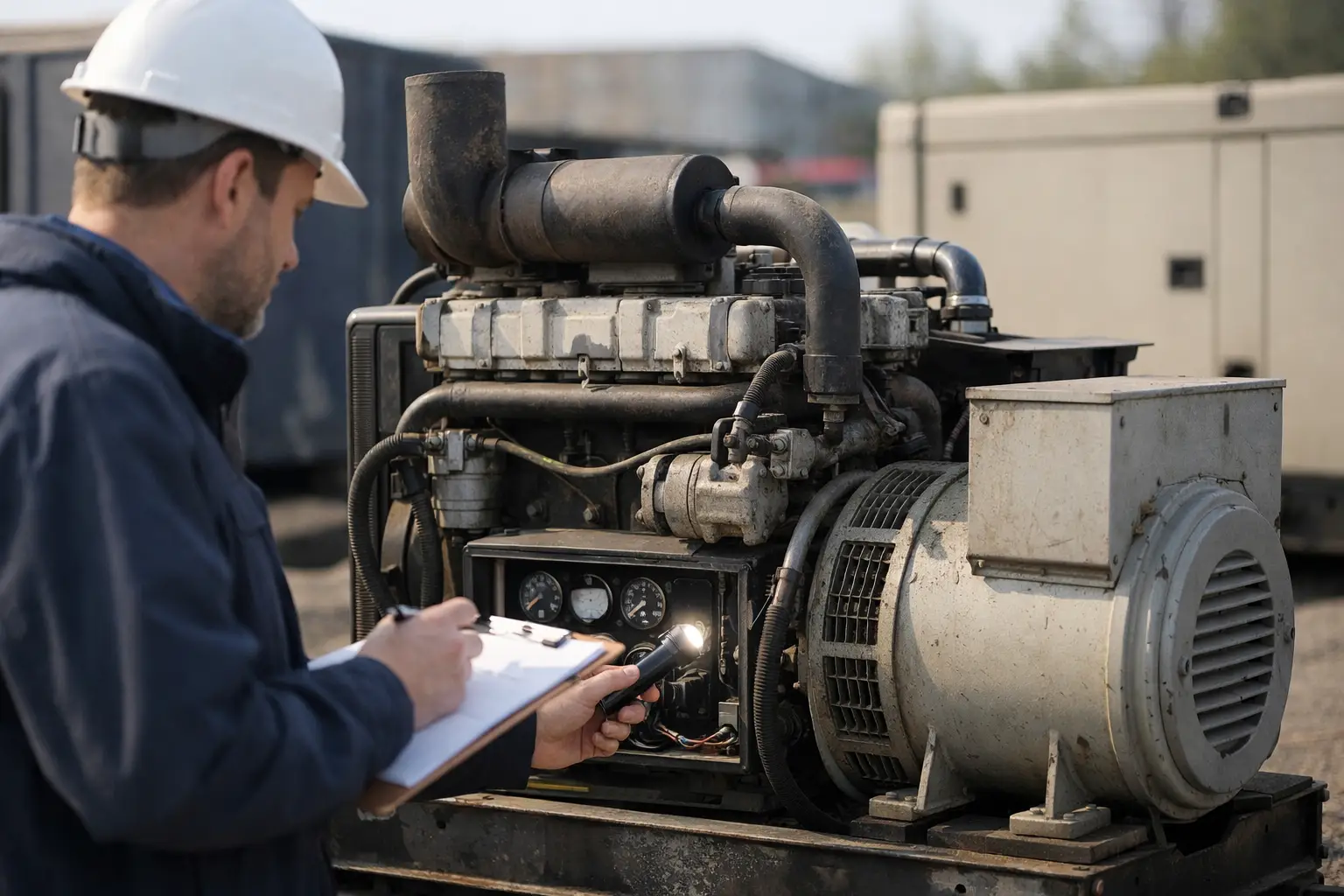
Used generator buyers typically start with the basics – manufacturer, model, kW rating, serial number, age, fuel type, and enclosure style. From there, the review gets more practical. They want to know whether the set was maintained under a formal service program, whether it was exercised regularly, and whether major components such as the engine, alternator, radiator, breaker, and controller remain intact and operational.
A buyer also considers current demand. Some configurations move quickly in the resale market, especially units that fit common commercial, telecom, data center, and industrial applications. Others are better suited for parts recovery or scrap because emissions profiles, controls, voltage, or package design limit reuse.
Why documentation changes the offer
Service records carry real weight. A generator with documented preventive maintenance, fluid analysis, repair history, and test reports gives buyers more confidence in what they are acquiring. That reduces uncertainty and often supports a stronger valuation.
The reverse is also true. If records are missing, the buyer has to assume more risk. Internal wear, deferred maintenance, fuel contamination, cooling issues, and control faults become harder to predict. In that case, the offer may reflect inspection risk, testing cost, or a heavier bias toward salvage value.
For larger projects, documentation affects more than price. It can influence removal sequencing, transportation planning, and whether a unit is suitable for resale in regulated or performance-sensitive environments.
Condition matters, but so does configuration
Two generators with the same kW rating can produce very different outcomes. One may be a clean late-model diesel unit with modern controls and a weather enclosure. The other may have obsolete switchgear interfaces, corrosion, or a fuel system that complicates removal. On paper they look similar. In practice they do not.
Used generator buyers pay close attention to package details. Paralleling capability, sound attenuation, UL listings, breaker arrangements, emissions tier, tank design, and control platform all affect remarketing potential. If the unit was custom-built for a specific site, the buyer will assess how transferable that configuration is to another end user.
This is where many sellers misjudge value. They focus on original purchase price, while the market focuses on current utility. A generator that performed well for years may still have limited resale demand if the next buyer faces integration issues or compliance upgrades.
Access and removal can determine whether a deal works
In industrial asset recovery, removal is not a side issue. It is often one of the main cost drivers. A generator in a ground-level yard with clear rigging access is a very different project from a basement unit behind active switchgear or a rooftop package above occupied operations.
Serious buyers look at the full scope. They consider disconnect requirements, fuel tank handling, electrical isolation, permits, labor, crane support, transportation, and site restoration. If a generator sale is tied to a broader shutdown, the buyer may also need to coordinate with demolition crews, electricians, environmental teams, and facility management.
That operational layer is where specialized recovery firms stand apart from general equipment traders. A trader may quote the machine. A full-service buyer evaluates the machine, the labor, the schedule, the risk, and the best downstream path for reuse or recycling.
When resale value is strong and when it is not
Not every retired generator is headed for the same outcome. Some units can be refurbished and placed back into service with minimal work. Others are candidates for parts harvesting, especially when major assemblies still hold value. Some are simply at the end of their service life and best handled through material recovery.
Several factors usually support stronger resale value. Lower operating hours help, but hours alone are not enough. Brand reputation, maintenance quality, load profile, package completeness, and clean removal conditions all matter. Units from data centers and telecom sites can be attractive when maintenance standards were high and runtime was limited to testing or occasional emergency use.
On the other hand, units with heavy wear, incomplete components, contamination, severe corrosion, or difficult extraction may trend toward scrap-based pricing. That is not necessarily a failed outcome. In many cases, recovering metal value, clearing the site, and eliminating future liability is the practical business decision.
How to prepare for used generator buyers
Sellers usually get a better process when they organize the project before requesting pricing. Start with accurate asset information and recent photos. Include the nameplate, controller, breaker section, enclosure, engine compartment, and any visible damage. If available, provide maintenance logs, commissioning records, load-bank tests, and drawings that show access conditions.
It also helps to define the scope clearly. Are you selling one generator, or are you retiring a complete backup power system that includes switchgear, ATS units, day tanks, batteries, cabling, and associated infrastructure? Is the buyer expected to disconnect and remove the equipment, or are you offering it already isolated and ready to load? Those details affect both valuation and scheduling.
Good buyers will ask detailed questions because surprises create cost. That should be viewed as a positive sign. A disciplined site review usually means fewer change orders, fewer delays, and a better chance of completing the project safely.
Choosing buyers who can execute, not just quote
The used equipment market includes brokers, resellers, recyclers, rigging contractors, and full-service recovery partners. They do not all solve the same problem. If your only goal is to move a loose generator from a warehouse, a simple resale transaction may be enough. If you are shutting down a plant room, replacing backup power at a live site, or clearing retired infrastructure from a data center, execution capability matters more.
Look for used generator buyers who understand electrical isolation, rigging constraints, code-sensitive environments, and environmental handling requirements. Ask how they manage fuel systems, ancillary equipment, transportation, and final disposition. Confirm whether they can handle related assets beyond the generator itself, especially if the project includes UPS systems, batteries, switchgear, or cooling equipment.
This is where an experienced recovery company can reduce friction. Instead of coordinating multiple vendors for purchase, removal, recycling, and demolition, the seller works through one accountable partner with a defined scope. For many operators, that is worth as much as the equipment value itself.
The environmental piece is not secondary
Industrial buyers are under more pressure to document responsible disposal. Generators contain steel, copper, aluminum, fluids, electronics, and in some cases components that require controlled handling. Sending a retired asset straight to waste is often the most expensive option in the long term, especially when compliance and reporting are part of the job.
A qualified recovery partner looks for the highest practical use first – resale, refurbishment, parts recovery, then recycling. That approach can improve financial recovery while reducing landfill waste. It also gives organizations a more defensible process when sustainability and environmental stewardship are part of internal reporting.
For companies retiring critical infrastructure across multiple sites, consistency matters. Standardized recovery practices help control risk, improve documentation, and support better planning on future decommissioning work.
Value comes from the whole project
The best outcomes rarely come from treating a generator as an isolated piece of metal. In real facilities, it is connected to systems, schedules, safety requirements, and shutdown plans. Buyers who understand that can often recover more value because they know how to remove the asset efficiently, preserve reusable components, and direct material into the right resale or recycling channels.
That is the practical standard to use when comparing offers. Price matters, but so do scope clarity, removal capability, environmental handling, and confidence that the project will be completed without creating a new operational problem. For organizations retiring backup power assets, a disciplined buyer brings structure to a process that can otherwise become expensive very quickly.
If you are evaluating generator retirement, start with the full picture – equipment condition, access, documentation, ancillary systems, and timeline. That is how the right buyer sees it, and it is usually how the best recovery decisions get made.