
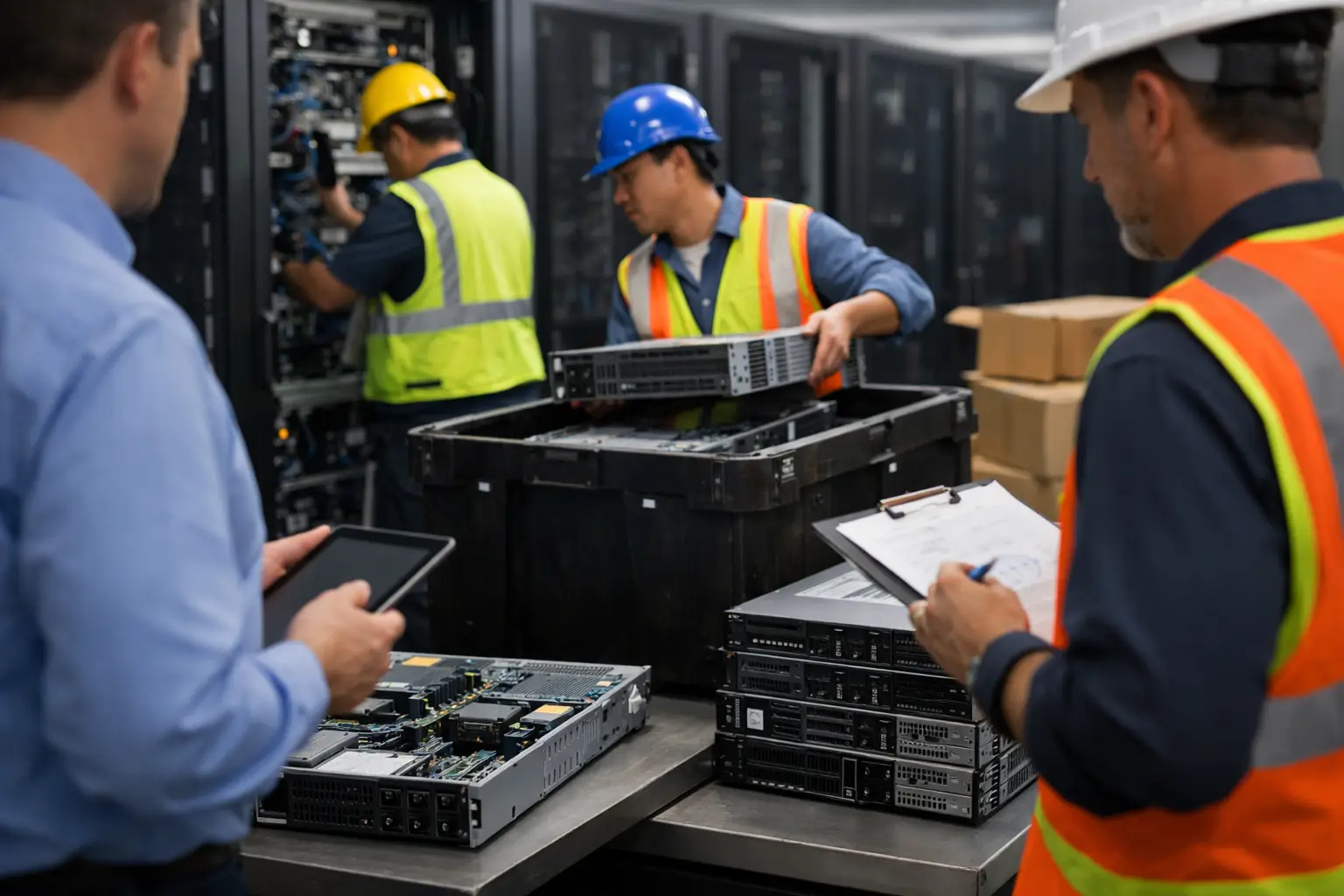
How to Evaluate Data Center Decommissioning Companies
When a data hall goes dark, the hard part often starts after the servers are gone. Power systems, batteries, switchgear, cooling equipment, raised flooring, and fire suppression assets still have to be removed safely, documented properly, and handled in a way that protects both residual value and environmental compliance. That is why selecting the right data center decommissioning companies matters well beyond basic tear-out.
For operators, facility owners, and infrastructure teams, the real question is not who can remove equipment. It is who can manage a controlled exit from a live or recently retired environment without creating new risk. A qualified decommissioning partner should be able to coordinate dismantling, logistics, asset recovery, recycling, and site support with the same discipline expected during the build and operating phases.
What data center decommissioning companies actually do
The term gets used loosely, and that can create problems during vendor selection. Some firms focus on IT asset disposition and stop at servers, racks, and networking gear. Others handle general demolition but have limited experience with mission-critical electrical and mechanical infrastructure. The stronger data center decommissioning companies bridge those gaps and manage the full scope of facility-support equipment retirement.
That scope often includes generators, UPS systems, PDUs, batteries, switchgear, busway, chillers, CRAC and CRAH units, pumps, cooling towers, fire suppression systems, cable, copper, raised floor systems, and other supporting assets. In many projects, the value and complexity of these systems exceed the value of the IT hardware already removed.
A capable contractor also understands sequencing. You cannot approach a UPS room, battery string, generator yard, and mechanical plant with a one-size-fits-all removal plan. Each asset class has different safety controls, rigging requirements, environmental handling standards, and resale or recycling pathways.
Why vendor choice affects cost, risk, and recovery
The cheapest proposal on paper can become the most expensive project in practice. If a vendor underestimates labor, lacks qualified subcontractors, or treats recoverable infrastructure as scrap, the owner absorbs the shortfall through delays, change orders, or lost asset value.
There is also the issue of operational risk. Many decommissioning projects happen in phased environments where part of the site remains active. That changes everything. Lockout and tagout procedures, access control, dust management, rigging routes, and shutdown coordination all need to be managed with precision. A contractor that mainly works in vacant commercial interiors may not be prepared for a partially energized data center or telecom facility.
Environmental handling is another separator. Batteries, refrigerants, fire suppression agents, and certain electrical components require proper recovery and downstream processing. If those materials are mishandled, the facility owner remains exposed long after the trucks leave the site.
How to assess data center decommissioning companies
Start with scope alignment. Ask whether the company handles only removal, or whether it can also purchase surplus assets, provide dismantling, manage recycling, and document disposition. A full-service partner can reduce handoffs, shorten schedules, and simplify accountability.
Experience matters, but only if it is relevant experience. A contractor with years in general demolition is not automatically qualified for mission-critical infrastructure recovery. Ask for examples involving power distribution, backup power, battery systems, cooling plants, and facility-support equipment. The more closely their past work matches your retiring assets, the lower the execution risk.
Asset recovery capability deserves close attention. Some vendors generate revenue primarily from labor and disposal fees. Others can offset project cost by purchasing reusable equipment or reclaiming higher-value materials through established resale and recycling channels. That difference can materially change the economics of a decommissioning project.
Safety and compliance should be visible in the planning process, not added later. A serious provider should be able to discuss site-specific safety procedures, environmental controls, chain of custody where required, and how regulated materials will be managed. Vague answers usually indicate a thin operating model.
The importance of equipment knowledge
Data center decommissioning companies should be fluent in the equipment they are removing. That sounds obvious, but it is often where weaker vendors get exposed.
A battery removal project, for example, is not just a labor exercise. Chemistry, voltage, weight, access, containment, and recycling streams all affect how the work should be planned. The same is true for switchgear and UPS systems, where isolation, disconnection, rigging, and salvage value depend on equipment condition and configuration.
Cooling systems require similar depth. Chillers, CRAH units, piping, pumps, and associated controls may hold value in secondary markets, but only if they are recovered carefully and documented correctly. If the removal team damages equipment during extraction, any resale opportunity disappears and the project shifts toward lower-value scrap recovery.
This is where a company with industrial asset recovery experience has an advantage. It can evaluate whether equipment should be resold, refurbished, recycled, or scrapped based on market demand, condition, age, and removal cost. That approach is more disciplined than treating every retired asset as waste.
Questions worth asking before you award the work
A proposal should tell you more than price. It should show how the company thinks.
Ask who is performing the work and who is supervising the site. Some firms sell projects with an experienced team and then outsource most of the execution. Subcontracting is common and often necessary, but it should be controlled. You need to know who owns safety, scheduling, reporting, and final disposition.
Ask how asset value is determined. If the vendor is purchasing equipment, the methodology should be clear. Condition, removability, testing status, marketability, and transportation cost all influence value. Unrealistic buyout numbers can be a warning sign that the vendor is pricing aggressively up front and planning to recover margin elsewhere.
Ask what documentation you will receive at closeout. Depending on your project, that may include equipment inventories, bills of lading, recycling records, refrigerant recovery documentation, battery handling records, and certificates tied to destruction or disposition requirements. Good reporting protects internal stakeholders and supports audit readiness.
Ask how they handle projects with partial live operations. This is one of the clearest tests of operational maturity. The answer should cover phasing, isolation procedures, access planning, communication, and contingency management.
One provider or several specialists?
It depends on the site and the goals of the project. In some cases, using separate vendors for demolition, IT disposition, battery recycling, and equipment resale may appear to reduce cost. In practice, it often increases coordination burden and creates scope gaps between trades.
A single provider with purchasing, dismantling, removal, and recycling capabilities can simplify execution. There is one point of responsibility, one schedule to manage, and a better chance of aligning asset recovery with teardown planning. That does not mean one-provider models are always best. If your project includes unusual hazardous materials, highly specialized demolition, or a unique compliance burden, a multi-vendor approach may still make sense. The key is to avoid fragmented accountability.
What strong decommissioning looks like in practice
The best outcomes usually come from early planning. Inventory work starts before removal. Assets are categorized by reuse, resale, recycling, and disposal path. Rigging and access are mapped. Shutdowns are sequenced. Environmental issues are identified before they slow the field team.
Execution should then follow a controlled order. Recoverable equipment is removed in a way that preserves value. Regulated materials are separated and processed correctly. Scrap is sorted to maximize return where possible. The site is left clean, documented, and ready for its next use, whether that means renovation, sale, redevelopment, or full closure.
This is also where environmentally responsible handling becomes practical, not just cosmetic. Reclaiming and repurposing materials reduces waste, but it can also improve project economics. For many owners, the best result is not simply compliant disposal. It is a decommissioning plan that removes risk while capturing residual value from infrastructure that still has life in secondary markets or commodity streams.
Companies such as Critical Asset Recovery are built around that model – combining equipment purchasing, dismantling, removal, recycling, and project support into one operating scope.
Choosing data center decommissioning companies with confidence
The right partner should make a complex retirement project simpler, safer, and more cost-effective. That means technical understanding of critical infrastructure, disciplined field execution, clear documentation, and a real strategy for value recovery. It also means recognizing that every facility is different. The best vendor for a full site shutdown may not be the best fit for a phased equipment replacement inside an active environment.
If you are comparing data center decommissioning companies, look past generic claims and ask how they will handle your specific mix of assets, constraints, and recovery goals. The right answer is usually the one backed by experience, clear scope, and a plan that treats retired infrastructure like assets to be managed – not just debris to be hauled away.
A well-run decommissioning project does more than clear a room. It closes out a facility chapter with control, accountability, and a better return on equipment that still holds value.