
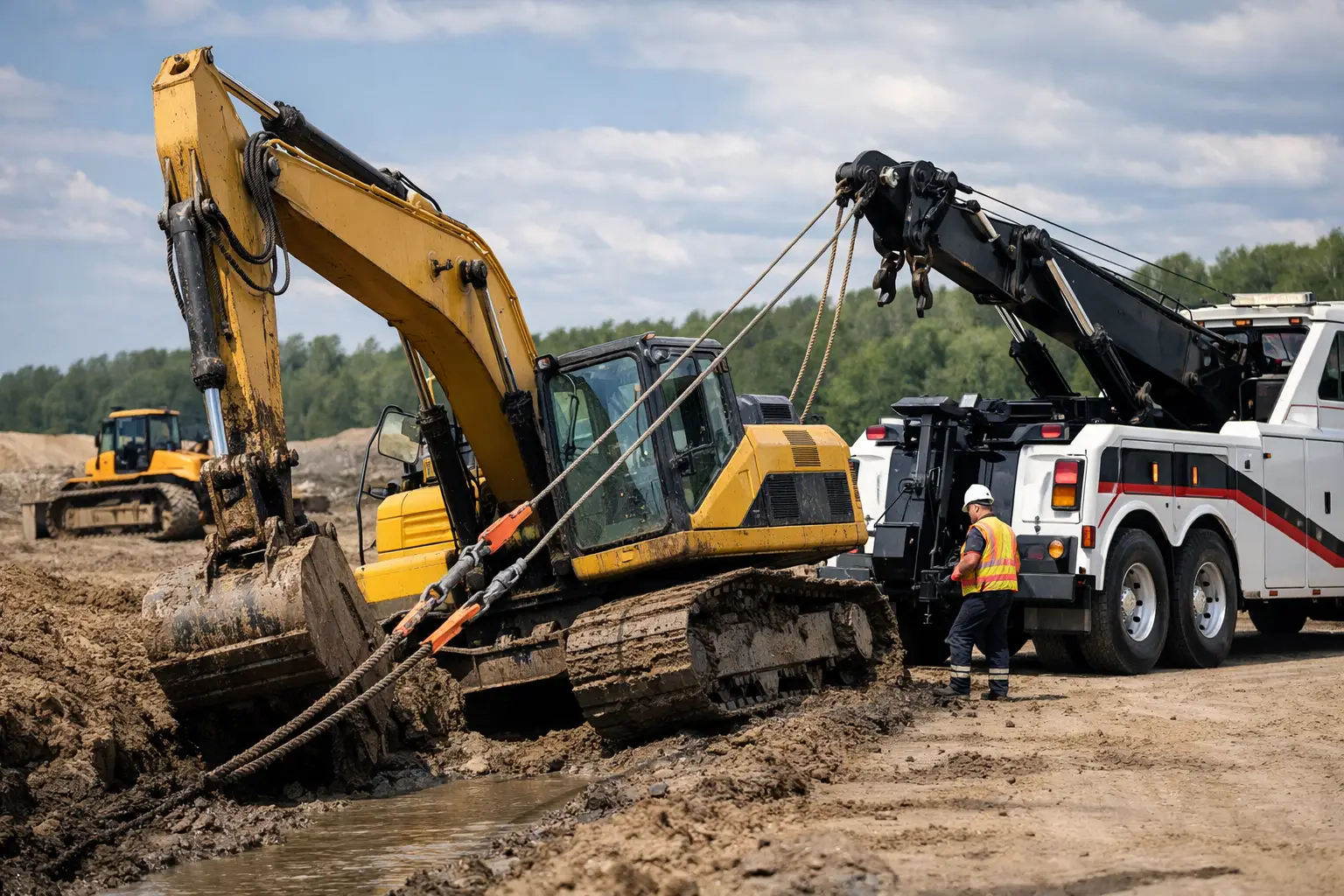
Heavy Equipment Recovery That Protects Value
A generator changeout goes sideways faster than most project teams expect. One missed lift point, one incomplete disconnect plan, or one recycler that shows up without the right rigging can turn a routine retirement into lost time, damaged property, and unnecessary cost. That is why heavy equipment recovery is not just about removal. It is about controlling risk while protecting asset value from the first site walk to the final load out.
For data centers, telecom sites, substations, and industrial plants, the stakes are higher than they are in a standard scrap job. The equipment is larger, the infrastructure is more complex, and the shutdown windows are tighter. In many cases, the assets being removed still hold resale, refurbishment, or material recovery value. A disciplined recovery process helps owners avoid treating valuable infrastructure like waste.
What heavy equipment recovery really involves
In operational environments, heavy equipment recovery usually means much more than picking up and hauling away retired machinery. It includes planning disconnects, assessing access paths, coordinating cranes or forklifts, sequencing dismantling, documenting assets, managing environmental handling requirements, and determining whether each component should be resold, refurbished, recycled, or scrapped.
That distinction matters because not all retired equipment belongs in the same stream. A standby generator may have strong secondary-market demand. A UPS system may have recoverable parts and batteries that require regulated handling. Switchgear may need specialized dismantling because of its location, condition, or age. Chillers, tanks, and processing equipment often bring their own permitting, refrigerant, fluid, or structural considerations.
When a provider approaches the job as a disposal task only, value is usually lost. When the work is handled as a recovery project, the scope expands to include asset evaluation, safe extraction, logistics, and environmentally responsible end-of-life management.
Why heavy equipment recovery fails on poorly planned sites
Most recovery problems start before any equipment moves. They begin with assumptions. Teams assume clear access exists, but a raised floor system, narrow corridor, roof hatch, or live adjacent equipment changes the removal path. They assume nameplate data is accurate, but field conditions show retrofits, damaged components, or missing parts. They assume equipment has no market value, but certain units still have resale potential if they are removed intact.
There is also the issue of coordination. Facilities often have separate contractors for electrical work, mechanical disconnects, demolition, rigging, hauling, and recycling. That fragmentation creates handoff risk. If one party finishes late or works from an outdated scope, the whole schedule shifts. For mission-critical environments, that can interfere with tenant commitments, maintenance windows, or replacement installs.
A strong recovery plan reduces those failure points by treating the project as one operational chain. Survey first. Verify conditions. Define the sequence. Match labor and equipment to the site. Establish safety controls. Then move the assets with a clear destination in mind.
Value recovery depends on condition, timing, and market fit
One of the biggest mistakes owners make is waiting too long to evaluate retired infrastructure. Heavy equipment recovery delivers the best financial result when equipment is assessed before it is stripped, damaged in place, or exposed to weather during an extended shutdown.
Condition is only one factor. Timing matters as much. Certain categories of equipment hold value when there is active demand for backup power, electrical distribution, cooling systems, or plant support assets. Market fit matters too. A late-model generator set in serviceable condition may be a candidate for resale. An obsolete unit with limited demand may still return value through engines, copper, steel, aluminum, controls, or component harvesting.
The point is not that every asset will produce a strong return. It is that every asset should be evaluated through the right lens. A recovery partner that buys, resells, refurbishes, and recycles can make those decisions based on actual end markets rather than defaulting to the quickest disposal route.
Safety and compliance are part of the financial outcome
Facility leaders usually separate safety, compliance, and cost in early planning conversations. In practice, they are tied together. A poorly managed recovery can trigger building damage, fluid release, battery handling issues, injury exposure, or delays tied to improper paperwork and disposal practices. Each one adds cost, even if it does not show up in the original quote.
This is especially relevant for equipment found in critical environments. Batteries, refrigerants, oils, fire suppression agents, and older electrical systems may require specific handling protocols. Large removals can also affect structural loading, egress, or adjacent operations. The cheapest removal number on paper often becomes the most expensive option once change orders, schedule overruns, and remediation are factored in.
That is why experienced heavy equipment recovery providers focus on scope clarity and execution discipline. They understand that environmental responsibility is not separate from project performance. It is part of it.
A better approach to equipment retirement
The most effective recovery projects start with a practical question: what is the owner trying to accomplish beyond getting equipment off the site? Sometimes the answer is speed because a replacement system is arriving. Sometimes it is maximizing value recovery from a portfolio of surplus assets. Sometimes it is complete site decommissioning with demolition and recycling under one contract.
The recovery strategy should match that goal. If uptime around adjacent systems is the priority, the plan may center on phased extraction and tight work windows. If value recovery is the main objective, the work may emphasize intact removal, inventory verification, and controlled logistics. If the site is closing, the project may combine dismantling, scrap segregation, and final clearance across multiple asset classes.
This is where a full-service provider has a practical advantage. Instead of forcing the client to coordinate buyers, riggers, haulers, and recyclers separately, the project can be managed under one scope with one chain of accountability. For owners and operations teams, that reduces friction and makes the outcome easier to forecast.
What to look for in a heavy equipment recovery partner
Experience matters, but only if it applies to the assets and environments involved. Removing a generator from a live data center yard is different from clearing general plant scrap. Recovering switchgear from an aging substation or extracting chillers from a constrained mechanical room requires planning that is specific to the infrastructure, not generic to demolition.
Buyers should look for a partner that can assess residual value as well as removal complexity. That combination changes the economics of the project. A company that understands resale channels, refurbishment opportunities, and commodity recovery can often offset more of the project cost than a contractor focused only on labor and trucking.
Nationwide reach also matters for organizations managing multiple facilities. Standardizing heavy equipment recovery across regions helps with consistency, reporting, environmental handling, and vendor management. It also makes it easier to execute portfolio-wide retirements without rebuilding the process at each site.
Critical Asset Recovery operates in that space by combining purchasing, decommissioning, removal, and recycling into one service model. For organizations retiring complex infrastructure, that kind of integrated approach is often the difference between a controlled project and a fragmented one.
The operational case for acting earlier
Heavy equipment recovery is easier to execute when it is built into capital planning, replacement schedules, and shutdown strategy instead of being treated as a final housekeeping step. Early planning gives teams time to document assets, preserve equipment condition, align disconnect scopes, and choose the best disposition path. It also reduces the chance that valuable material gets mixed into low-return scrap streams.
That does not mean every project needs a long runway. Some retirements happen under compressed timelines due to failure, lease exit, or emergency replacement. But even then, the same principle applies. The earlier a qualified recovery team is involved, the more options the owner keeps.
Retired infrastructure can still produce value long after its useful life at the original site is over. The key is handling the work with the same discipline used to install and operate it. When recovery is planned properly, equipment leaves the site safely, compliance stays intact, and the owner gets a result that makes operational and financial sense.
If you are preparing to remove large generators, UPS systems, switchgear, batteries, chillers, or other facility-support assets, the best next step is not to ask who can haul it away. It is to ask who can recover it correctly.