
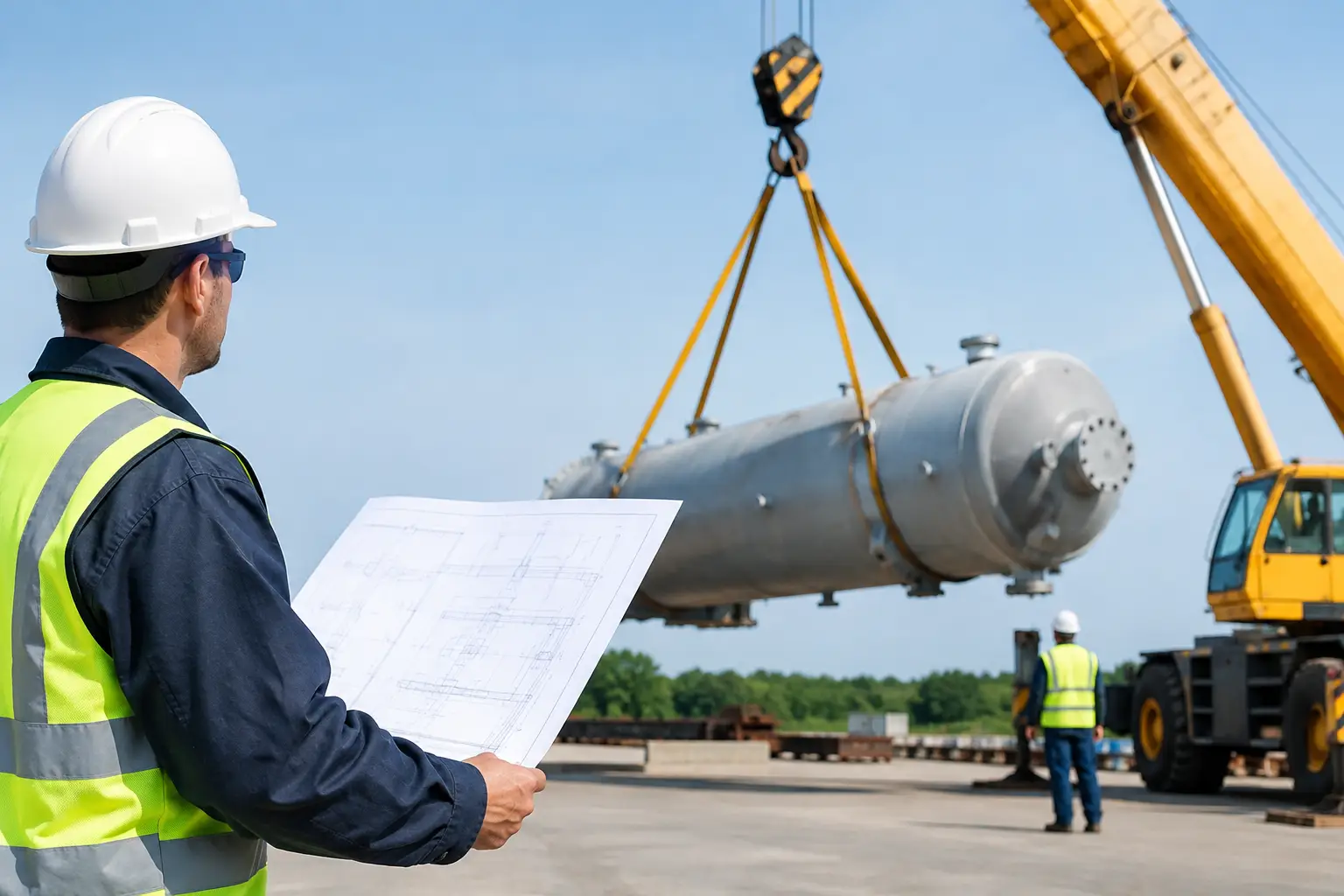
Guide to Industrial Rigging Plans for Safe Lifts
A generator, UPS cabinet, chiller, or switchgear lineup does not become easier to remove because it has reached end of life. It may still weigh thousands of pounds, contain stored energy, sit beside active infrastructure, and require a precise path out of the facility. A guide to industrial rigging plans starts with that reality: a lift is only one part of a controlled removal operation.
For facility owners and project leaders, the rigging plan is the working document that connects safety requirements, engineering information, site conditions, equipment value, and removal sequencing. It gives the project team a common understanding of what will be moved, how it will be supported, who has authority at each stage, and what conditions require the work to stop.
What an Industrial Rigging Plan Must Accomplish
An industrial rigging plan should do more than identify a crane and list a load weight. It should define the full movement from the equipment’s installed location to its final staging area, transport vehicle, processing area, or resale destination.
The required level of detail depends on the lift. A routine, low-risk movement in an open yard does not need the same planning depth as removing a transformer from a constrained electrical room or extracting raised-floor equipment from an active data center. The consequences of error, not just the size of the load, should drive the plan.
For complex removals, a useful plan addresses four operational questions:
- What is the verified load, including attached components, fluids, accessories, and rigging?
- Can the equipment, structure, floor, route, and lifting equipment support the planned forces?
- Who controls the lift, communicates changes, and has authority to stop work?
- How will the team protect people, active systems, building surfaces, and recoverable assets?
When these questions are answered before mobilization, crews spend less time improvising in the field. That protects schedules, but more importantly, it reduces exposure to dropped loads, equipment damage, blocked egress, and unplanned downtime.
Start With Equipment and Site Verification
Rigging decisions should be based on field-verified information, not assumptions drawn from an old equipment schedule. Nameplate data, manufacturer drawings, service records, and facility as-builts are valuable starting points, but they may not reflect modifications, removed components, added batteries, installed cabling, or changes in access conditions.
Confirm the equipment model, dimensions, center of gravity, approved lift points, and current weight. If the unit includes batteries, fuel, oil, refrigerant, fire suppression agents, or other regulated materials, identify how those materials will be isolated, removed, or managed before the lift. A generator with remaining fuel and a chiller with refrigerant require different preparation than an empty steel enclosure.
The site survey should follow the planned path, not just inspect the equipment room. Measure door openings, hallways, ramps, loading docks, vertical clearances, turning radii, and exterior access. Check for floor transitions, trenches, pits, overhead piping, energized busways, sprinkler lines, and areas with limited headroom. A route that works on paper can fail at a doorway, a freight elevator threshold, or a loading dock with insufficient capacity.
Floor loading is a frequent point of concern in mission-critical facilities. The load imposed by machinery skates, forklifts, cranes, and temporary support equipment may be very different from the equipment’s normal installed load. Structural review may be necessary where the route crosses raised floors, suspended slabs, utility vaults, rooftops, or older building areas with uncertain capacity.
Confirm Isolation Before Movement
No rigging plan can compensate for incomplete shutdown or inadequate isolation. Before equipment is released from its foundation, supports, or connections, the responsible facility team should confirm that electrical, mechanical, hydraulic, pneumatic, fuel, and process connections have been addressed under the site’s established procedures.
For data center and utility equipment, this includes clear verification of what remains live nearby. A retired switchgear section may be adjacent to energized gear. A UPS may be disconnected from its output but still have battery strings or bypass paths that require separate control. The plan should establish boundaries, access restrictions, and the handoff point between the facility’s isolation process and the removal crew’s work.
Build the Lift Around Verified Capacities
The lifting method must suit both the load and the environment. A mobile crane may be efficient for exterior work with adequate setup room. An indoor gantry, hydraulic gantry, forklift, chain hoist, or machinery-moving system may be a better fit where access is restricted. There is no universally preferred method. The right choice depends on capacity, headroom, travel distance, ground conditions, building constraints, and the need to keep operations running nearby.
The plan should identify the lifting equipment, rigging configuration, attachment points, sling angles, and rated capacities for each component in the system. Capacity is not simply the number printed on a sling tag or crane chart. Angles, hitch type, load distribution, edge protection, dynamic movement, radius, outrigger setup, and site conditions can all affect the usable capacity.
A qualified person should evaluate the lift configuration and determine whether the job meets the organization’s criteria for a critical lift or engineered lift. Multiple-crane picks, lifts near energized systems, work over occupied areas, high-consequence equipment moves, and lifts with limited clearance often require additional review and controls.
Do not treat center of gravity as an estimate when it can be confirmed. An offset center of gravity can cause a cabinet, generator, or process skid to tilt suddenly when the load comes free. Test lifts at minimal elevation, where appropriate and permitted by the lift plan, give the crew an opportunity to confirm balance before committing to a full movement.
Define Roles Before the Crew Arrives
Clear authority prevents conflicting instructions during a lift. The plan should name the person directing the operation, the qualified rigger or lift supervisor, equipment operators, signal persons, spotters, facility representative, and any trade partners working within the area.
Every person involved should understand the communication method, including the designated signal person and radio channel where radios are used. Crews should agree on stop-work signals before the first connection is made. If visibility is limited, communication failures must be anticipated rather than discovered while a load is suspended.
A pre-lift meeting should cover the sequence of work, exclusion zones, changing site conditions, emergency response, weather exposure for exterior lifts, and the specific hazards found during the survey. This meeting is also the time to resolve practical questions: Where will trucks stage? Who opens secure access points? What happens if an active facility alarm activates? How will pedestrian traffic be controlled?
Plan the Removal Sequence, Not Just the Pick
Industrial decommissioning frequently involves more than a single lift. Equipment may need to be disconnected, drained, dismantled into transportable sections, lifted from housekeeping pads, moved through the facility, staged, loaded, and secured for shipment. Each transfer introduces a new set of risks and responsibilities.
Sequencing matters when removing interconnected assets. Battery systems may need to come out before a UPS can be moved. Cable tray, bus duct, piping, or ductwork may need controlled removal to create access. A large chiller may require refrigerant recovery and component separation before it can be safely transported. In some cases, dismantling on site is the safest choice. In others, preserving the equipment intact supports resale value and reduces handling steps.
That trade-off should be decided early. Recoverable generators, UPS systems, switchgear, cooling equipment, and process assets may have residual value if they are removed cleanly, documented accurately, and protected from damage. A rushed demolition approach can erase that value while increasing waste volume and disposal costs.
Include Environmental and Asset-Disposition Controls
A complete industrial rigging plan should align with the broader disposition plan. Identify which materials are intended for resale, refurbishment, recycling, or disposal, and separate them accordingly. This is especially relevant for copper-bearing equipment, batteries, electronic components, refrigerants, oils, fire suppression materials, and mixed-metal assemblies.
Documenting serial numbers, asset condition, weights, and chain of custody supports both financial recovery and compliance reporting. It also helps prevent a common issue in multi-vendor projects: equipment that was expected to be retained or sold being mixed into a scrap stream.
Critical Asset Recovery approaches rigging as part of a larger controlled process that includes decommissioning, removal, asset valuation, and environmentally responsible recycling. That integrated view helps facility teams reduce vendor handoffs and maintain accountability from the first site walk through final disposition.
Keep the Plan Active During Execution
A rigging plan is not a document to file after the morning briefing. It should be reviewed whenever the field conditions change. A blocked access route, unexpected equipment modification, weather event, damaged lift point, unavailable crane position, or newly identified live system can change the risk profile immediately.
The disciplined response is to pause, reassess, and revise the method before proceeding. Pressure to meet a shutdown window is real, especially in data centers, manufacturing plants, and utility environments. But an unplanned recovery after a damaged asset or safety incident will cost more than a controlled adjustment to the schedule.
The best rigging plans make careful execution easier. They give crews the information and authority needed to move critical equipment safely, preserve recoverable value, and leave the site ready for its next phase of operation.