
Chiller Decommissioning Services Done Right
When a large chiller reaches end of life, the real risk is rarely the machine itself. It is the chain reaction that follows – refrigerant handling, crane access, electrical isolation, rigging, scrap segregation, site safety, and the question every facility team asks at the end: did we recover any value, or just pay to make a problem disappear? That is why chiller decommissioning services matter in industrial plants, data centers, telecom environments, and large commercial facilities.
A chiller is not a simple piece of surplus equipment. It is tied into power distribution, piping, controls, structural access, and environmental compliance. If removal is handled like standard junk hauling, costs climb fast and risk follows close behind. The better approach is a disciplined decommissioning plan that treats the asset as part of a larger operating environment, not just an isolated machine.
What chiller decommissioning services should actually cover
At a minimum, chiller decommissioning services should address the full chain of work from shutdown through final disposition. That includes project planning, lockout and tagout coordination, refrigerant recovery, oil and fluid management, disconnecting electrical and mechanical connections, dismantling if needed, rigging and removal, transportation, recycling, and documentation.
For many facilities, the most important word in that list is coordination. A chiller project can touch operations, environmental health and safety, engineering, building management, contractors, and sometimes landlords or local authorities. If the scope is fragmented across multiple vendors, accountability gets blurry. If one provider can manage both asset recovery and removal, the project usually moves faster and with fewer handoff problems.
That said, not every site needs the same level of intervention. A ground-level air-cooled chiller with clear truck access is a different job than a rooftop unit over an active production floor. A plant shutdown offers one set of options. A live facility replacement with tight uptime requirements offers another. The right service scope depends on access, equipment condition, refrigerant type, structural constraints, and how much of the surrounding infrastructure is also being retired.
Why old chillers become expensive long before they fail
Facility teams often delay removal because an idle chiller does not look urgent. It is sitting there, disconnected or underused, and more immediate projects take priority. The hidden cost is that dormant equipment still occupies valuable space, complicates future work, and can create environmental and safety exposure if fluids, refrigerants, or degraded components are left unmanaged.
There is also the issue of stranded value. Depending on age, tonnage, manufacturer, condition, and market demand, some chillers still have resale, refurbishment, or raw material value. Once equipment is damaged during an unplanned removal or stripped without documentation, those options narrow quickly. A structured decommissioning process protects whatever value remains while reducing disposal cost.
This matters even more in mission-critical and industrial environments where decommissioning is rarely a single-asset event. Chiller retirement often happens alongside removal of pumps, cooling towers, switchgear, piping, UPS systems, generators, or facility support equipment. Looking at the project as an integrated recovery effort can improve economics and simplify execution.
The operational side of a chiller removal project
A well-run chiller decommissioning project starts before tools arrive on site. Site review, equipment verification, and removal planning are what keep field work controlled. Teams need to confirm dimensions, weights, access points, lifting requirements, utility isolation points, and whether the chiller can leave intact or must be broken down in place.
Refrigerant recovery is one of the most sensitive parts of the job. It has to be handled properly, documented correctly, and coordinated with the rest of the decommissioning sequence. The same goes for oils and other fluids. In older systems, condition and regulatory requirements may affect how those materials are processed, transported, or recycled.
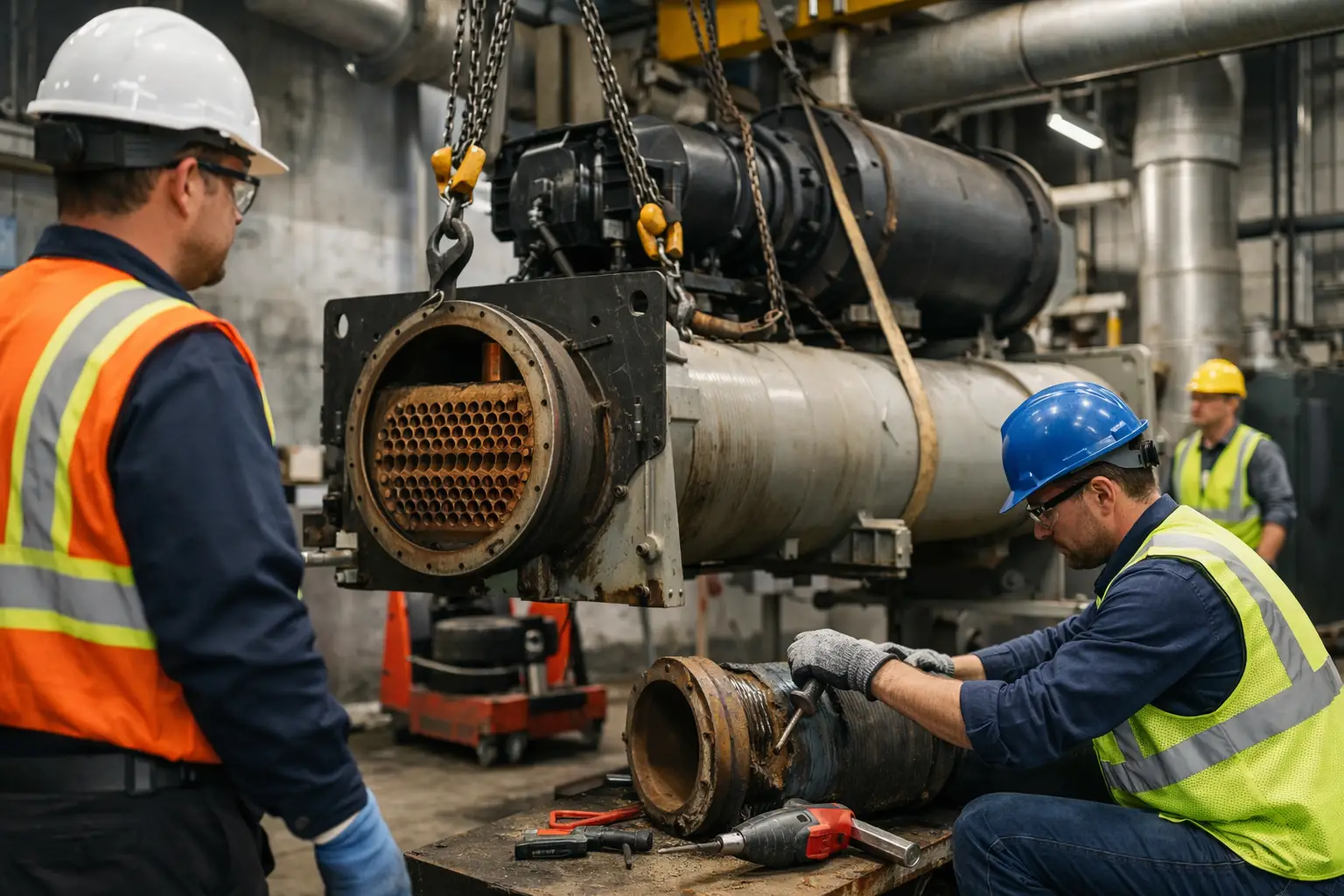
Then comes the physical removal. On some sites, that means standard rigging and loading. On others, it means saw cutting, torch work, specialized lifting plans, rooftop crane picks, floor protection, and strict work windows to avoid interrupting active operations. This is where experience shows. The work itself is not mysterious, but the margin for error is small when heavy equipment is coming out of a live facility.
Recovering value instead of treating equipment as waste
One of the biggest mistakes in this market is assuming every retired chiller is only a disposal job. Some units have useful secondary-market value. Others contain recoverable components, copper, aluminum, and steel that can offset project cost when handled correctly. Even when resale is not realistic, disciplined material recovery is usually better than a simple tear-out and dump approach.
That is where asset recovery changes the economics. A decommissioning provider that understands both removal and resale can evaluate whether the equipment should be marketed, refurbished, dismantled for components, or recycled for commodities. The answer depends on age, service history, brand, refrigerant status, and overall condition. It is not always a yes for resale, and honest evaluation matters. But when there is value to recover, it should not be left on the table.
Environmental responsibility is part of this equation, not a separate talking point. Chillers contain metals and materials with real reclaim value, and refrigerants require careful management. A responsible recovery strategy reduces landfill waste and supports compliance while also making the job more cost-conscious. For owners under ESG pressure or internal sustainability goals, that practical benefit matters.
What facility leaders should ask before hiring a provider
The best provider is not automatically the lowest bid. In chiller work, low pricing can mean scope gaps that surface later as change orders, delays, or unplanned subcontracting. Facility leaders should look closely at who is actually performing the work, how refrigerants and fluids will be handled, whether rigging is included, what documentation is provided, and whether the vendor can purchase or remarket equipment where value exists.
It is also worth asking how the provider handles adjacent infrastructure. A chiller rarely stands alone. If pumps, piping, cooling towers, electrical gear, or structural elements are in scope, the project benefits from a team that can manage broader facility decommissioning without forcing the owner to coordinate several specialty contractors.
Geographic reach matters too. Multi-site operators, national contractors, and portfolio managers often need a partner that can support work across regions with consistent process and reporting. That consistency is especially useful when retiring equipment across data centers, telecom facilities, plants, or distribution sites on staggered schedules.
When partial decommissioning makes more sense
Full removal is not always the right answer. In some facilities, a chiller is being retired but left temporarily in place while replacement systems stabilize. In others, owners only need refrigerant recovery, electrical isolation, or selective dismantling so another contractor can complete related renovations.
That is why flexible scope matters. Good chiller decommissioning services should fit the project, not force the project into a standard package. Some clients need turnkey removal and recycling. Others need a phased approach that matches shutdown windows, capital timing, or tenant requirements. The common thread is disciplined execution and clear responsibility.
Critical Asset Recovery works in this space because many owners need more than equipment removal. They need a partner that can dismantle, buy, recycle, and clear industrial assets with the same attention to safety, compliance, and recoverable value.
The real outcome is control
The best chiller decommissioning projects do not feel dramatic. They feel controlled. Utilities are isolated correctly. Refrigerants are recovered properly. The machine comes out on schedule. Materials go where they should. Documentation is complete. The site is left ready for the next phase of work.
That kind of result protects more than the project budget. It protects schedules, internal teams, and the facility itself. If you are retiring a chiller, the goal is not just to get it gone. The goal is to remove it safely, recover what it is worth, and close out the work without creating a second problem behind the first.