
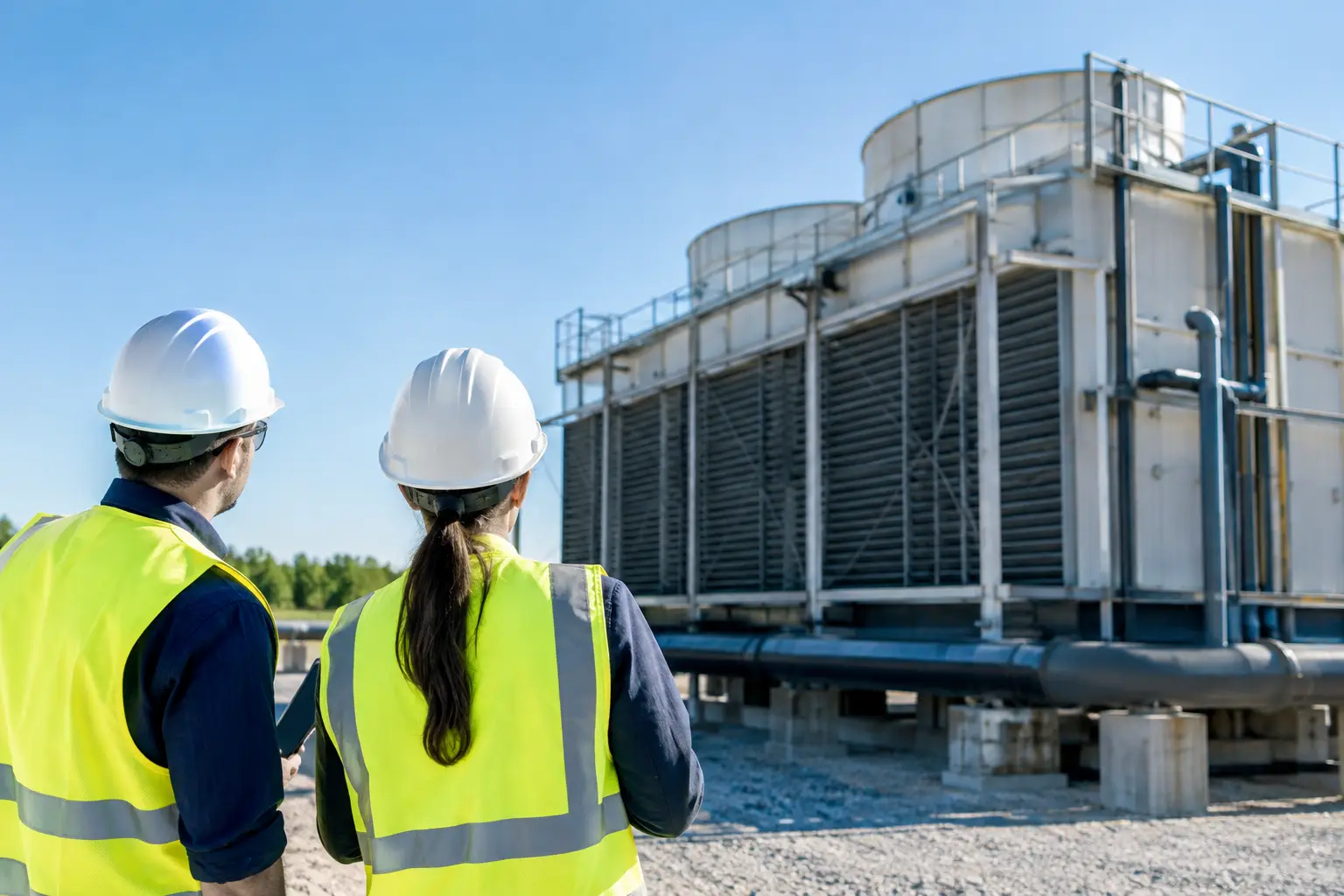
Cooling Tower Removal Guide for Facility Teams
A cooling tower can look like a single piece of equipment from the roof or yard. In practice, it is a connected system with structural steel, piping, electrical feeds, water treatment chemicals, controls, and often difficult rigging access. This cooling tower removal guide is built for facility teams that need to retire equipment without creating an avoidable safety event, environmental issue, or delay to active operations.
The right approach depends on tower type, location, structural condition, access, and whether the associated chiller plant or process system must remain online. A well-managed removal project begins long before a crane arrives. It starts with a field-verified plan that accounts for isolation, residual hazards, recovery value, and the site conditions that can change the entire scope.
Start With a Verified Scope
Equipment records are useful, but they are not a removal plan. Field conditions often differ from original drawings after years of modifications, repairs, and partial replacements. Before pricing a project or committing to a schedule, inspect the cooling tower, its basin, support steel, connected piping, electrical disconnects, control wiring, and surrounding roof or ground conditions.
Confirm the manufacturer, model, dimensions, approximate weight, construction materials, and serial numbers. Determine whether the tower is factory-assembled, field-erected, modular, or built into a larger structure. Field-erected towers may require phased dismantling rather than a single lift, while packaged units may be candidates for removal as complete sections if access and weight allow.
The scope should also establish what remains after the tower is gone. A project may include only the cooling tower itself, or it may require removal of pumps, piping, valves, electrical feeders, platforms, structural supports, chemical treatment equipment, and concrete pads. Clear boundaries prevent the common dispute of discovering “included” infrastructure after mobilization.
Plan Shutdowns Around Operating Risk
Cooling towers support systems that may be critical to production, telecommunications, data processing, or occupant comfort. The removal sequence must align with the operating plan, not simply the contractor’s preferred schedule.
Facility staff should identify all cooling loads served by the tower and verify that temporary cooling, redundant capacity, or a planned outage is available. This is especially important where a tower supports a chiller plant with limited redundancy. Removing a tower during peak seasonal demand can turn a straightforward retirement into a business continuity issue.
A written shutdown plan should define isolation points, lockout/tagout responsibility, drain-down procedures, and authorization to begin work. It should also identify every party with authority over the affected system. Operations, maintenance, safety, security, and project leadership need the same sequence of events, including the decision point for stopping work if operating conditions change.
Water, Chemicals, and Residual Hazards
Cooling tower water should never be treated as ordinary runoff. The basin and connected piping may contain biocides, corrosion inhibitors, scale-control chemicals, sediment, and biological growth. Water treatment records help determine appropriate handling, but site-specific sampling may be necessary when the condition or chemistry is unclear.
Drain and clean the system before mechanical demolition begins. Isolate makeup water, bleed lines, chemical feed lines, and basin heaters where present. Residual water in low points, pipe legs, pumps, and basins should be accounted for in the work plan. Proper containment protects the roof, surrounding grade, stormwater system, and personnel working below or around the equipment.
Older equipment can also present material concerns. Depending on age and construction, components may include treated wood, fiberglass, galvanized steel, insulation, lead-containing coatings, or legacy fill media. A qualified assessment determines what can enter normal recycling streams and what requires specialized handling.
Choose the Right Removal Method
There is no universal best method for cooling tower removal. The safest and most cost-effective path depends on site geometry, equipment condition, and the material recovery objective.
A ground-level tower with open access may be dismantled in sections using forklifts, telehandlers, and mobile cranes. A rooftop unit may require crane picks from a controlled street closure, a staged rooftop dismantling process, or a combination of both. Tight urban sites can require smaller cuts, multiple lifts, and detailed traffic and pedestrian controls. A remote industrial site may have more space but limited crane availability or unstable ground conditions.
When a tower has resale potential, preserving complete, identifiable components can improve recovery value. This can include motors, gear drives, fans, control panels, pumps, and reusable structural components. However, recovery must be weighed against labor, transport, condition, current demand, and the cost of extended site time. Not every older cooling tower is a resale candidate, but most contain recyclable metal and recoverable material value.
Critical Asset Recovery evaluates these decisions as part of a broader asset disposition plan. The goal is not merely to make equipment disappear. It is to separate reusable assets, recyclable commodities, and regulated materials while keeping the removal sequence safe and practical.
Build a Rigging and Access Plan Before Mobilization
Rigging is often the defining risk in a cooling tower project. A lift plan should be based on verified weights, lift points, crane capacity at the required radius, ground-bearing conditions, and clear travel paths. Assumed weights and informal lift points are not acceptable on deteriorated or modified equipment.
For rooftop removals, confirm roof loading, crane setup locations, swing paths, overhead obstructions, and the area required to stage dismantled material. For ground-level removals, assess underground utilities, site congestion, soft ground, nearby structures, and active vehicle routes. Crane mats, road plates, temporary barriers, and traffic coordination may be required before the first pick.
Weather is also a real scheduling factor. Wind limits, lightning, heat exposure, and icy surfaces can stop work. A disciplined contractor builds reasonable contingency into the schedule instead of forcing lifts under unsuitable conditions.
Control Safety Through Sequencing
Cooling tower work combines several high-risk activities: elevated work, confined or restricted spaces, cutting and grinding, heavy lifts, electrical isolation, and demolition around live facilities. These risks are manageable when the sequence is controlled and responsibilities are clear.
A practical site plan should address at least the following:
- verified lockout/tagout of electrical, mechanical, water, and chemical systems;
- fall protection and controlled access for rooftop or elevated work;
- hot-work controls, fire watch requirements, and protection of nearby combustible materials;
- exclusion zones for suspended loads and falling debris; and
- daily coordination with facility representatives when nearby systems remain active.
Avoid treating safety documentation as a paperwork exercise. The most useful plans identify the actual conditions crews will face: corroded platforms, wet basins, restricted egress, fragile roof areas, unexpected piping ties, and operational constraints that limit when equipment can be isolated.
Separate Recovery From Disposal
A cooling tower removal project is also an asset disposition decision. Mixed loads sent directly to disposal may be faster at the beginning, but they can increase cost and eliminate recoverable value. Segregation makes a difference, particularly when a project includes substantial steel, copper, motors, electrical components, stainless hardware, or reusable auxiliary equipment.
Material streams should be established before dismantling starts. Ferrous and nonferrous metals, motors and drives, electronic controls, fiberglass components, treated wood, plastics, and regulated materials may each require different handling. Documentation matters for organizations with environmental reporting, sustainability goals, landlord requirements, or internal capital project controls.
Recycling is not simply a final truckload. It is a planned part of the scope, with containers, staging areas, material identification, weights where required, and a documented downstream path. This supports responsible stewardship while giving facility leaders clearer visibility into project costs and material recovery.
Close Out the Area for What Comes Next
Removal is incomplete until the former tower location is safe, clean, and ready for its next use. This may involve capping or removing piping, terminating electrical feeders, patching roof penetrations, removing supports, repairing concrete, restoring coatings, and confirming that drains remain functional.
The closeout package should match the project’s complexity. At minimum, retain records of removed equipment, recovered assets, recycling or disposal activity, and final site condition. If replacement equipment is planned, document dimensions, remaining utilities, structural conditions, and access restrictions that could affect installation.
The best cooling tower removal projects leave no uncertainty for the next contractor, operations team, or property owner. A controlled retirement protects people and active infrastructure, recovers value where it exists, and turns a difficult piece of aging equipment into a cleared, accountable path forward.