
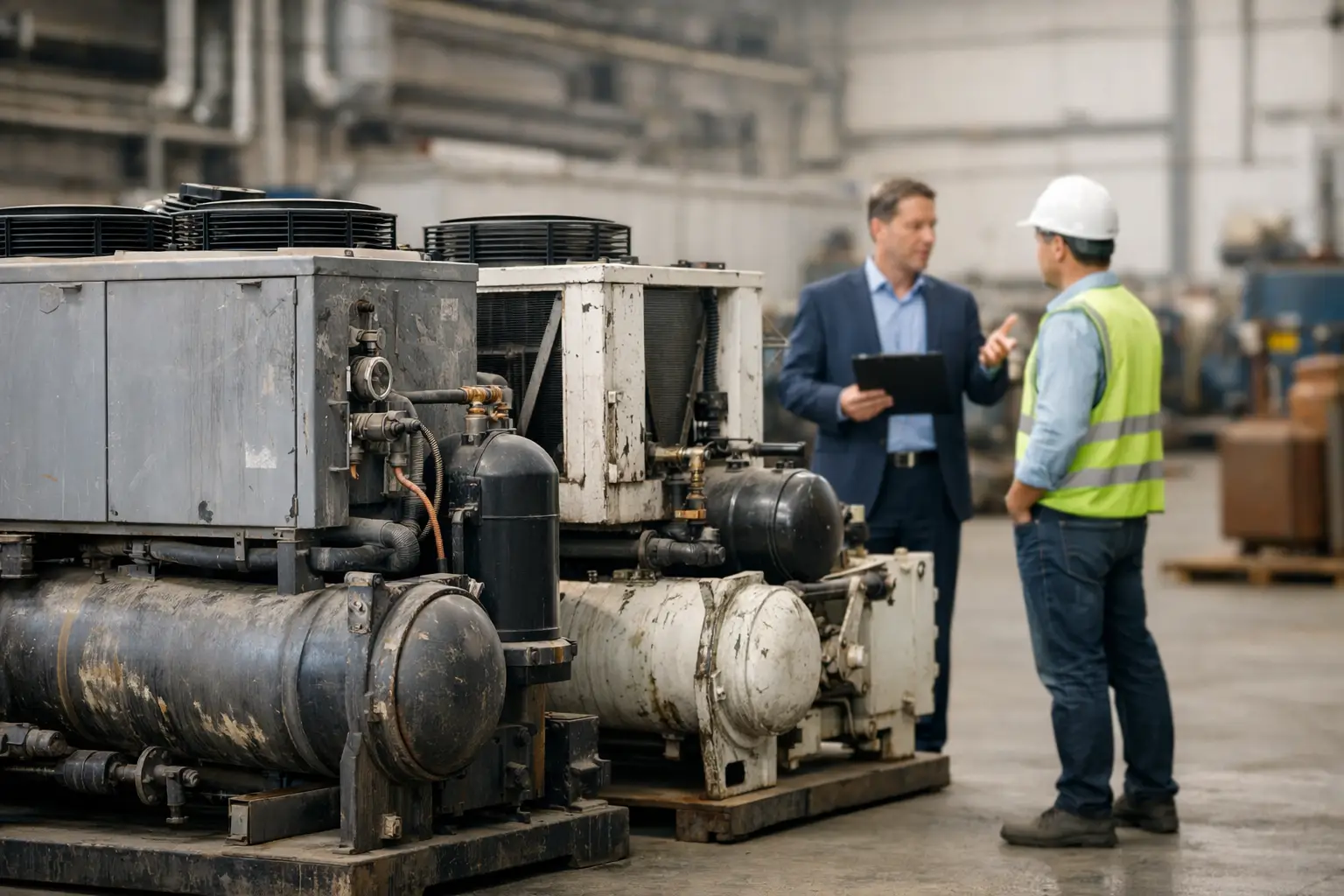
How to Sell Used Chillers Without Project Delays
A chiller replacement can create a narrow window for asset recovery. Once rigging crews, shutdown schedules, roof access, refrigerant work, and construction sequencing are in motion, a unit that had resale value can quickly become a removal cost. Organizations that sell used chillers early and with complete equipment information are better positioned to recover value while keeping the project on schedule.
For facility owners, plant managers, data center operators, and contractors, the decision is not simply whether an old chiller still runs. The practical question is whether it can be safely assessed, removed, transported, resold, recycled, or managed through a combination of these options. A disciplined disposition plan addresses all of those outcomes before the equipment becomes an obstacle.
When Used Chillers Have Resale Value
Used chillers can retain meaningful value when their condition, configuration, age, and market demand align. Water-cooled and air-cooled units from established manufacturers are often candidates for resale, particularly when they have documented service histories and remain operational. Larger industrial and commercial units may also have value for facilities expanding capacity, replacing a failed unit, or sourcing equipment for a temporary application.
Age alone does not determine the outcome. A well-maintained chiller that is older but supported by clear maintenance records may be more attractive than a newer unit with unknown operating history. Capacity, tonnage, compressor type, voltage, refrigerant type, controls, physical condition, and accessibility all affect marketability.
The best time to assess a unit is before it is disconnected or dismantled. Once equipment has been partially stripped, exposed to weather, or moved without proper protection, resale options can narrow. That does not mean the project has failed. It simply means the recovery strategy may shift toward components, metals, refrigerant handling, and responsible recycling.
How to Sell Used Chillers With Better Information
Equipment buyers need enough detail to evaluate a chiller without guessing at its identity or condition. A quick walkdown and organized equipment file can prevent delays in pricing, logistics, and approval.
Start with photographs of the full unit, nameplates, compressors, control panels, evaporators, condensers, and visible damage. Nameplate details are essential because they establish manufacturer, model, serial number, capacity, electrical requirements, manufacturing date, and refrigerant information. If the chiller has multiple modules or associated equipment, document each piece separately.
Service records add context that photos cannot provide. Include available maintenance logs, startup reports, inspection findings, repair history, operating hours, and records of major component replacement. A chiller with a recently rebuilt compressor, updated controls, or documented tube maintenance may warrant a different evaluation than an equivalent unit with no history.
Site conditions matter as much as equipment details. A buyer or recovery partner needs to know whether the unit is ground-level, installed on a roof, located in a mechanical room, or positioned behind restricted access. Door dimensions, crane access, loading conditions, elevator capacity, security requirements, and site operating hours can materially affect removal costs. Transparent site information leads to a more accurate recovery plan and reduces change-order risk.
Separate Chiller Value From Removal Scope
One of the most common mistakes in equipment disposition is treating the equipment price and removal scope as the same conversation. They are connected, but they are not identical.
A chiller may have resale value, yet require significant labor, rigging, refrigerant recovery, electrical isolation, piping separation, or demolition to remove. Conversely, a unit with limited resale potential may still be efficiently recycled when its metals and components are handled correctly. The right commercial structure depends on the balance between equipment value and project cost.
A clear scope should identify who is responsible for shutdown coordination, lockout/tagout, refrigerant recovery, fluid draining, electrical disconnection, rigging, loading, transportation, cleanup, and final recycling. It should also state whether ancillary equipment is included. Pumps, cooling towers, piping, control cabinets, structural supports, and electrical gear may have separate recovery or removal requirements.
This separation protects the facility owner. It prevents an attractive purchase offer from obscuring unpriced field work, and it prevents a removal quote from overlooking recoverable equipment value. Critical Asset Recovery approaches these projects as integrated asset disposition work, combining purchasing, decommissioning, removal, and recycling when the project calls for it.
Plan for Refrigerant, Fluids, and Environmental Controls
Chillers cannot be treated as ordinary scrap equipment. Depending on the system, they may contain regulated refrigerants, oil, glycol solutions, water treatment chemicals, and other materials that require controlled handling. Environmental responsibility is not an add-on to the project. It is part of safe execution.
Refrigerant recovery should be scheduled and documented before transport or dismantling. A licensed and qualified team should identify the refrigerant, recover it with appropriate equipment, and manage related records according to applicable requirements. Oils and fluids should be evaluated before draining, particularly where contamination, chemical treatment, or site-specific disposal requirements may apply.
There is also a practical value consideration. Refrigerant type can affect the pool of potential buyers, the cost of compliance, and the feasibility of refurbishment. Units using refrigerants with restricted availability or limited service support may still be recoverable, but buyers will evaluate that risk carefully. Accurate documentation helps establish a realistic path forward.
Build the Removal Schedule Around Operations
A successful chiller disposition project protects the facility first. Hospitals, data centers, manufacturing plants, telecom sites, and other critical environments cannot absorb avoidable interruptions because a removal crew arrived without a coordinated plan.
The work sequence should account for redundancy, temporary cooling, seasonal loads, shutdown authorization, and contractor dependencies. If a replacement chiller is being installed, determine whether the existing unit must remain in place until commissioning is complete. If it does, equipment evaluation and commercial approval can still occur in advance, with removal scheduled only after the new system is proven stable.
Removal planning should also address the physical route from the unit to the transport vehicle. Roof removals may require crane picks, street permits, lift plans, weather monitoring, and controlled exclusion zones. Mechanical-room removals may require equipment to be sectioned, pathways protected, or building systems temporarily isolated. These details are not secondary logistics. They determine whether the project proceeds safely and on time.
Know When Recycling Is the Better Outcome
Not every retired chiller is a resale candidate, and forcing a resale strategy can delay a project without improving returns. Units with severe corrosion, missing controls, obsolete refrigerants, damaged compressors, poor access, or uncertain histories may be better directed to material recovery.
Responsible recycling still requires planning. Valuable materials can include copper, aluminum, steel, brass, motors, wiring, control components, and other recoverable assets. The goal is to reclaim materials while managing refrigerants, oils, and non-recyclable waste correctly. This approach reduces landfill exposure and provides a more defensible end-of-life process for facility owners with environmental reporting or internal sustainability requirements.
A hybrid strategy is often appropriate. A recovery provider may identify reusable components, resell viable equipment, recycle the remaining materials, and remove associated infrastructure under one coordinated scope. That is especially useful during site closures, central plant upgrades, and multi-asset decommissioning projects where several equipment categories must leave the facility together.
Questions to Resolve Before You Commit
Before accepting an offer or scheduling removal, confirm the operational and commercial details that protect the project:
- Is the chiller operational, isolated, or already decommissioned?
- Are complete nameplate photos, service records, and condition photos available?
- Who will recover refrigerant and handle associated documentation?
- Does the proposed scope include rigging, dismantling, loading, transportation, and site cleanup?
- Are there access constraints, permits, crane requirements, or shutdown windows that affect cost?
- Will the provider purchase the unit, charge for removal, credit recoverable value, or use a combined structure?
These questions create a clearer basis for comparing proposals. The highest stated purchase price is not always the best result if it excludes critical work, increases schedule exposure, or leaves environmental responsibilities unclear.
Treat the Chiller as Part of a Larger Asset Strategy
Retiring a chiller often reveals other recoverable assets nearby: pumps, cooling towers, switchgear, generators, UPS equipment, batteries, raised flooring, process equipment, and support infrastructure. Reviewing the full scope can improve site efficiency because mobilization, access planning, and removal resources may be shared across equipment categories.
The most effective projects begin before the shutdown date. Document the chiller, define the removal boundaries, establish environmental controls, and select a partner that can execute in the field rather than merely quote from a distance. With that work completed early, a retired chiller becomes a managed asset decision instead of a last-minute disposal problem.