
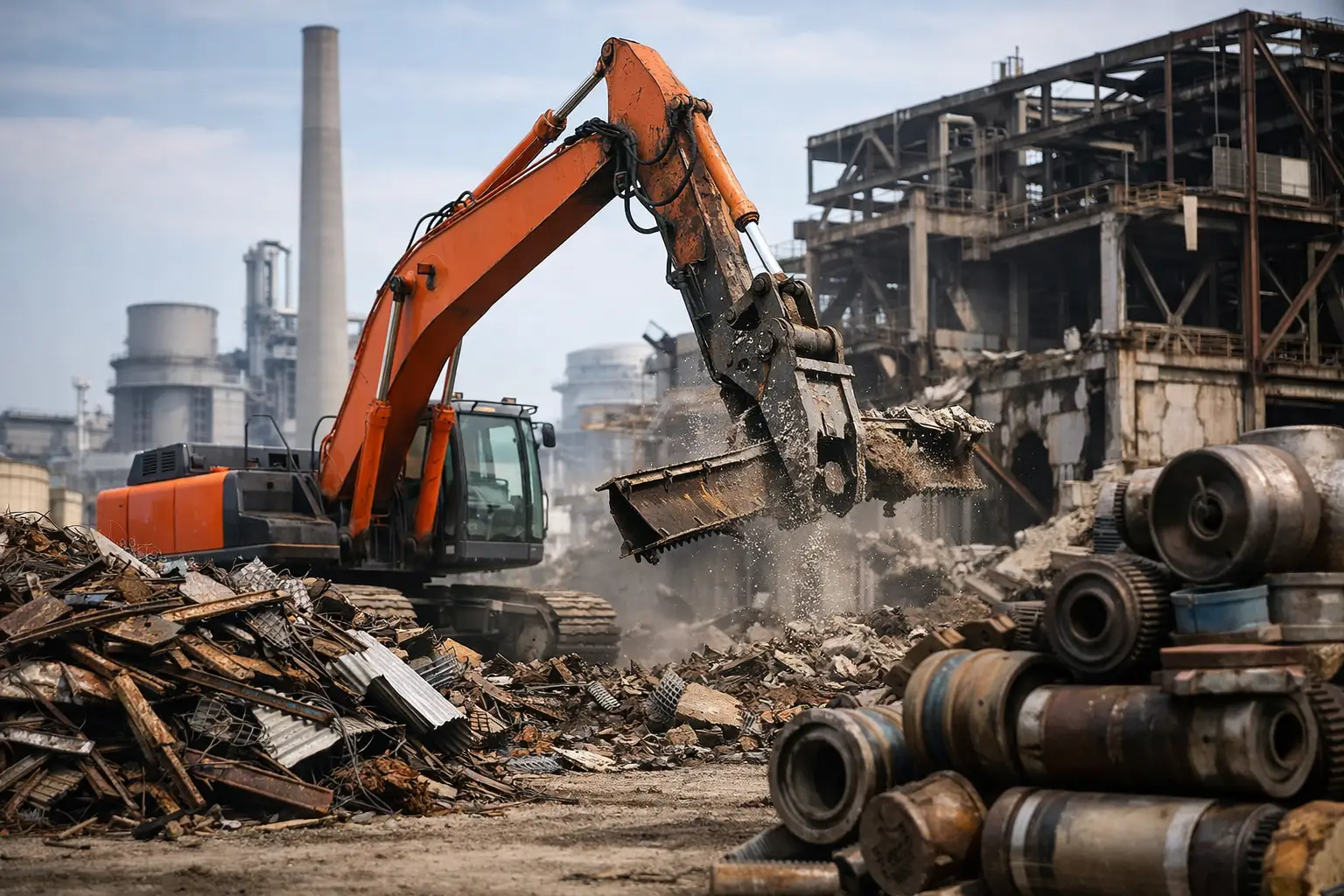
Industrial Demolition Services That Recover Value
A generator room, UPS plant, switchgear lineup, or aging production area is not simply empty space once replacement equipment arrives. It is a live operational problem until every asset is isolated, removed, documented, and handled correctly. Industrial demolition services bring discipline to that process, helping facility owners retire complex infrastructure without turning recoverable equipment and recyclable materials into unmanaged waste.
For data centers, telecom facilities, manufacturing plants, utilities, and other high-value environments, demolition is rarely just demolition. It may involve energized systems, oversized equipment, restricted access, contamination concerns, tight shutdown windows, and equipment with meaningful resale or scrap value. The right approach protects people, keeps the project moving, and creates a clear path from retired asset to final disposition.
Industrial Demolition Services Start With Scope Control
The most expensive demolition problems often begin before tools arrive on site. A vague scope can lead to missed equipment, unexpected labor, delayed handoffs, and arguments over what was included in the original work plan. Facilities need a contractor that can distinguish between equipment to remove, equipment to preserve, materials to recycle, and infrastructure that must remain in service.
A disciplined site assessment should identify the equipment type, condition, dimensions, access path, rigging requirements, electrical and mechanical connections, and final destination for each major asset. For a data center, that may include generators, UPS systems, battery strings, PDUs, switchgear, CRAH units, chillers, raised flooring, and fire suppression components. In an industrial plant, it may include processing equipment, motors, tanks, control panels, piping, and structural supports.
This early work also establishes the sequence of removal. A switchgear lineup cannot be approached like a palletized piece of surplus equipment. A rooftop chiller cannot be treated like a ground-level machine. The removal plan must reflect actual site conditions, including loading capacity, elevator access, crane placement, security requirements, and the work that continues around the project.
Decommissioning Must Come Before Physical Removal
Safe demolition begins with controlled decommissioning. Equipment should be shut down, isolated, disconnected, and verified before dismantling or rigging begins. The exact requirements depend on the asset and facility, but the principle is consistent: remove energy and process risk before removing material.
For critical infrastructure, that can mean coordinating with facility operations to confirm redundancy, transfer loads, isolate feeders, drain fluids, disconnect fuel systems, and identify active pathways that cannot be disturbed. It may also mean working within approved maintenance windows where a delay of a few hours has real operational consequences.
This is where specialized experience matters. Removing a retired generator from a standby power plant is different from demolishing a vacant warehouse bay. The work requires a practical understanding of the equipment, its connections, its weight, and the conditions that could affect adjacent systems. A capable provider plans the work around operational continuity rather than assuming the facility is fully offline.
Documentation Supports Accountability
Asset lists, photographs, serial numbers, weights, removal records, and disposition reports are not administrative extras. They help owners verify what left the site, support internal asset-retirement processes, and provide a record of responsible handling.
Documentation is especially useful when multiple stakeholders are involved. Corporate real estate, facility operations, finance, environmental health and safety teams, contractors, and buyers may all need a clear view of the project. A documented chain of custody reduces uncertainty and helps close out the work cleanly.
Recover Value Before Sending Equipment to Recycling
Not every retired asset has resale value. Age, condition, demand, maintenance history, market timing, and removal cost all affect the outcome. Still, treating all obsolete equipment as scrap from the start can leave money on the table.
Generators, UPS systems, switchgear, chillers, cooling equipment, raised flooring, and select processing equipment may retain value for reuse, refurbishment, parts recovery, or resale. In some cases, the recovery value can offset a meaningful portion of decommissioning and removal costs. In others, the equipment is too old, incomplete, damaged, or specialized to justify resale, and recycling becomes the responsible option.
That distinction should be made with an honest evaluation, not a blanket promise. A practical asset recovery partner considers the total project economics: equipment value, labor, transportation, rigging, market demand, and recycling returns. The objective is not to claim value where none exists. It is to capture available value while giving the facility a predictable path forward.
Critical Asset Recovery approaches industrial asset retirement with that full-service perspective. Equipment purchasing, dismantling, removal, resale, and recycling can be coordinated under one scope, reducing the handoffs that frequently slow down complex projects.
Responsible Recycling Is Part of the Work Scope
Industrial equipment contains valuable and regulated materials that require proper handling. Copper, aluminum, steel, circuit boards, lead-acid batteries, electronics, refrigerants, oils, and fire suppression agents cannot be managed with a one-size-fits-all disposal plan.
Responsible recycling starts with separation. Materials that can be reused or refurbished should be identified before they are damaged during tear-out. Metals should be sorted to improve recovery. Batteries need appropriate packaging and transport. Equipment containing fluids or refrigerants requires controlled recovery and handling. Where an asset cannot be reused, reclaiming its raw materials is a better outcome than sending large quantities of equipment to landfill.
Environmental responsibility also has an operational benefit. Clear material handling procedures reduce site clutter, limit avoidable contamination risks, and help owners meet internal sustainability commitments. For companies retiring large volumes of facility infrastructure, those results are measurable in both project control and waste reduction.
Site Logistics Determine Whether the Project Stays on Schedule
Heavy equipment removal is often constrained by the building rather than the equipment itself. A 20,000-pound generator may fit through a loading door but require engineered rigging to navigate a tight turn. A UPS may be located on an upper floor with limited freight elevator capacity. A switchboard may need to be broken down into manageable sections without damaging active equipment nearby.
A reliable demolition plan accounts for these realities before removal day. It considers staging areas, traffic flow, floor protection, equipment routes, loading docks, lift plans, trailers, permits, security clearances, and cleanup requirements. It also defines who is responsible for each step, including coordination with building management, general contractors, and facility personnel.
Nationwide projects add another layer of complexity. Standards need to remain consistent across sites, even when access rules, local conditions, and project schedules differ. A provider with broad coverage can help organizations maintain a repeatable process while adapting the field execution to each location.
Demolition Is Not Always the Best Answer
Full demolition is appropriate when a facility is being vacated, repurposed, or rebuilt. But selective removal may be the better choice when the building remains operational or when portions of the infrastructure will support a new installation.
For example, a facility may need obsolete battery strings and UPS modules removed while retaining distribution equipment. A plant may retire one production line while preserving overhead utilities for another. In these situations, precision matters more than speed alone. The project must remove what is no longer needed without creating unnecessary restoration costs or operational disruption.
What Facility Leaders Should Expect From a Service Partner
The provider should be able to explain the scope in plain operational terms: what will be removed, how it will be disconnected, where it will go, what documentation will be provided, and which risks require coordination before work starts. Ambiguity is a warning sign, particularly when the work involves critical power, cooling, electrical distribution, or heavy machinery.
Facility leaders should also expect realistic scheduling. Fast execution is valuable, but a credible schedule accounts for shutdown approvals, equipment isolation, permits, labor, rigging, transportation, and downstream processing. A plan that ignores these dependencies may look attractive at the proposal stage and become costly on site.
The best industrial demolition services do more than clear a room. They create a controlled transition between retired infrastructure and the facility’s next operating plan. When safety, asset recovery, recycling, and logistics are managed as one coordinated effort, owners can close out aging systems with fewer surprises and more value retained.