
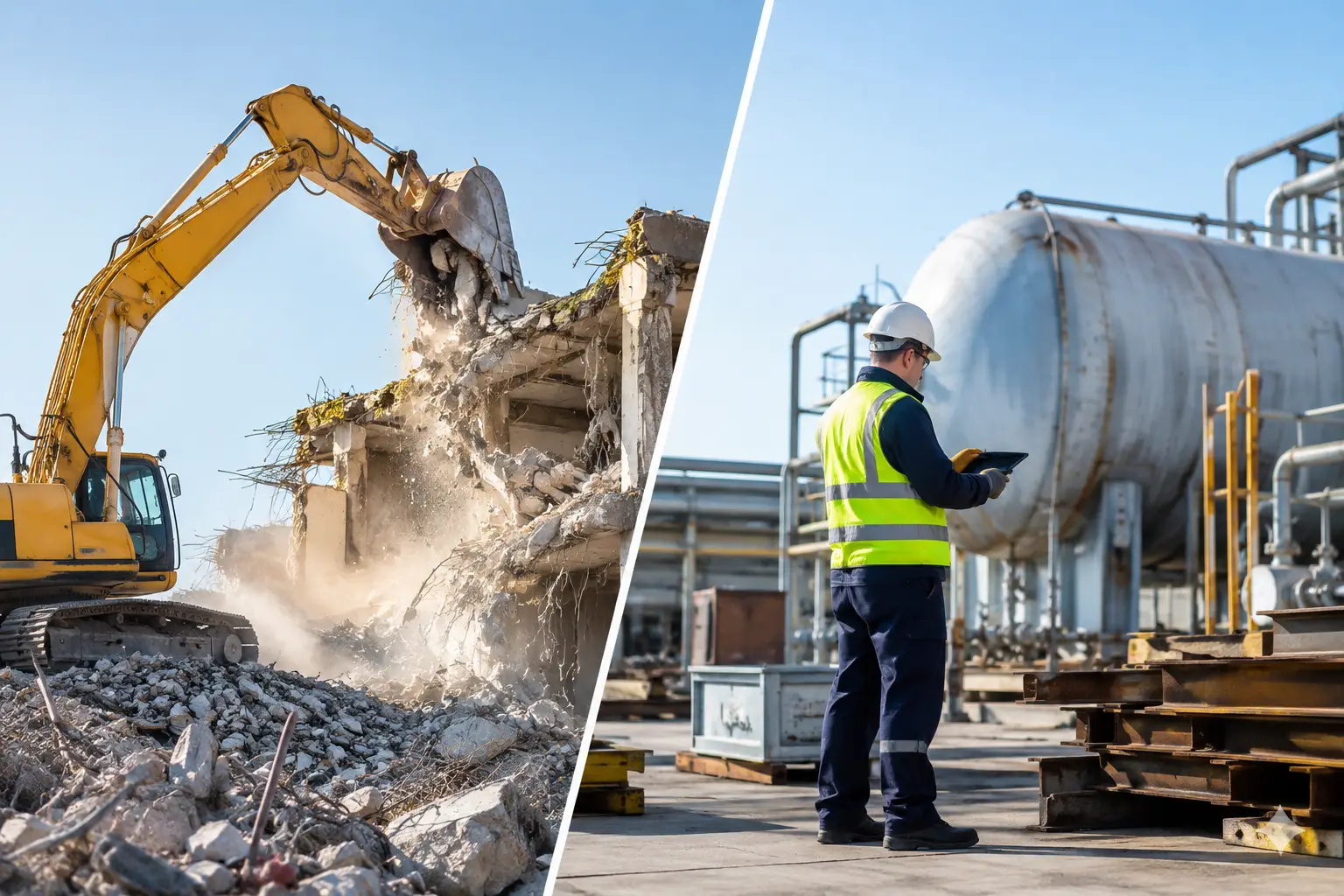
Demolition Versus Decommissioning Explained
A retired generator is not automatically demolition debris. The same is true for UPS systems, switchgear, chillers, battery strings, raised flooring, and processing equipment. In a demolition versus decommissioning decision, the scope determines whether equipment is isolated, documented, removed for resale, recycled by material type, or destroyed along with the surrounding structure. That distinction affects project cost, safety exposure, schedule certainty, and the value recovered from assets that may still have useful life.
For facility owners and operations teams, the question is rarely academic. A data center refresh, telecom consolidation, plant shutdown, substation upgrade, or building exit can involve energized systems, hazardous materials, heavy components, and equipment with meaningful secondary-market value. Selecting the right approach early prevents avoidable waste, change orders, and site risks later.
Demolition Versus Decommissioning: The Core Difference
Demolition is the controlled dismantling or destruction of a building, room, structure, or installed system. Its primary objective is to clear space. Depending on the project, this may include interior demolition, concrete removal, structural work, or the removal of equipment that has no intended reuse.
Decommissioning is the disciplined retirement of equipment or infrastructure from service. Its primary objective is to make assets safe, disconnected, documented, and ready for removal, reuse, resale, recycling, or final disposal. It is a process, not simply a removal event.
The two scopes often overlap. A facility may need decommissioning before demolition can begin. For example, a data hall undergoing renovation may require UPS equipment disconnected, batteries removed, fuel systems isolated, fire suppression recovered, and cable pathways cleared before contractors can demolish partitions or flooring. Treating all of that work as demolition can leave asset value and compliance obligations unaddressed.
What a Decommissioning Scope Includes
A well-planned decommissioning project starts with an equipment inventory and site assessment. Teams identify what is installed, its condition, ownership status, access requirements, power sources, weight, lifting needs, and potential resale or recycling path. This assessment also identifies hazards that can change the removal plan.
The work commonly includes shutdown coordination, lockout/tagout support, electrical isolation, disconnecting mechanical and utility connections, fluid recovery, battery handling, equipment labeling, rigging, loading, and transportation. For mission-critical environments, sequencing matters. Redundant systems may remain active until a cutover is complete, and one incorrect disconnection can affect live operations.
Documentation is another practical difference. Equipment serial numbers, asset tags, weights, material streams, recycling records, and chain-of-custody details may be necessary for internal asset controls, lease closeouts, environmental reporting, or insurance requirements. Decommissioning creates an accountable record of what left the site and where it went.
For equipment with recoverable value, condition and handling are critical. A functional generator, switchgear lineup, UPS module, chiller, or industrial processing component can lose resale value quickly if it is cut apart, exposed to weather, or removed without proper rigging. Controlled dismantling preserves optionality. Once an asset is damaged, the project may be limited to scrap recovery.
When Demolition Is the Right Choice
Demolition is appropriate when the asset or structure has no viable reuse path, when site redevelopment requires complete clearance, or when removal by preservation would create disproportionate cost or risk. It is also a necessary component when obsolete equipment is integrated into deteriorated infrastructure that cannot be safely separated.
That does not mean demolition should begin without planning. Heavy electrical and mechanical equipment can contain oils, refrigerants, lead-acid batteries, capacitors, fire suppression agents, or other materials requiring specialized handling. Before demolition, teams should confirm that utilities are disconnected, hazardous materials are managed, and salvageable components have been evaluated.
In many industrial projects, the most effective plan is selective demolition. This approach removes targeted systems while preserving the building shell, adjacent production areas, active utility runs, or equipment that will remain in service. Selective demolition is especially useful in phased upgrades where operations cannot stop completely.
The difference is operational: demolition clears what is in the way, while decommissioning controls how critical assets leave service. A project may require both, but they should not be treated as interchangeable line items.
How the Decision Affects Cost and Asset Value
The lowest removal quote is not always the lowest total project cost. A contractor focused only on demolition may price for speed and material weight, while overlooking equipment resale value, reusable spares, recyclable commodities, or the cost of managing regulated materials after the fact.
Decommissioning can require more upfront coordination because it includes inventory, isolation, careful removal, and asset disposition planning. Yet it can reduce net project costs when equipment has resale value or when metals, batteries, and other materials can be recovered responsibly. It also reduces the likelihood of surprise costs caused by improper handling, damaged equipment, or incomplete documentation.
The economics depend on the asset mix. Newer, serviceable equipment from recognizable manufacturers may offer meaningful resale potential. Older equipment may have little market value but still contain recoverable copper, steel, aluminum, lead, or other materials. Some assets are best recycled because transportation, testing, refurbishment, or storage would exceed their resale value.
A credible recovery partner evaluates those paths honestly. The goal is not to promise value where none exists. It is to build a disposition plan that accounts for labor, access, rigging, transportation, environmental obligations, and the realistic market for each asset category.
Safety and Compliance Cannot Be an Afterthought
Retiring critical infrastructure requires more than a truck and a crew. Switchgear and UPS systems can retain hazardous energy. Battery systems introduce electrical, chemical, and weight hazards. Chillers and cooling equipment may require refrigerant recovery. Generators can involve fuel, oil, exhaust systems, and large rigging loads. Fire suppression systems may require agent recovery and controlled handling.
The correct scope assigns responsibility before work starts. It should identify who authorizes shutdowns, who verifies isolation, what permits are required, how materials will be staged, and how the team will protect active systems and occupied areas. On congested sites, access routes, loading dock schedules, crane placement, and floor loading can be as important as the removal method itself.
Environmental stewardship also becomes more manageable when assets are sorted by disposition. Reuse extends the useful life of serviceable equipment. Refurbishment can return selected assets to the market. Recycling recovers raw materials when reuse is not practical. Sending everything to a landfill or mixed scrap stream may be convenient, but it rarely reflects the best financial or environmental outcome.
A Practical Framework for Selecting the Scope
Before issuing a request for proposal or scheduling a shutdown, establish the project objectives. The following questions help determine whether the work is primarily demolition, decommissioning, or a combined scope:
- Must the facility, room, or equipment be cleared for redevelopment or continued operations?
- Are any systems energized, connected to fuel, water, refrigerant, fire suppression, or active production processes?
- Which assets have resale, refurbishment, spare-parts, or commodity-recycling potential?
- What documentation is required for asset retirement, recycling, leases, audits, or environmental reporting?
- Can removal be staged around live operations, customer commitments, or scheduled cutovers?
If the answers point to complex shutdowns, valuable equipment, regulated materials, or operating constraints, decommissioning should lead the plan. Demolition can then follow after systems are safe, disconnected, and removed from the work area.
Why One Accountable Partner Matters
Fragmenting a project among an electrician, demolition contractor, scrap buyer, rigger, recycler, and transporter can create gaps in responsibility. Each vendor may perform its assigned task, yet no one may own the outcome from shutdown through final disposition. That increases coordination demands on the facility team and makes it harder to trace what happened to removed equipment.
A full-service approach brings equipment assessment, purchasing, dismantling, removal, recycling, and demolition coordination into one accountable plan. Critical Asset Recovery supports this model by evaluating critical infrastructure for resale and recovery potential while managing the practical work required to remove it safely and responsibly.
The right scope begins with a clear view of what the equipment is worth, what it contains, and what the site needs next. When those answers guide the work, retirement becomes a controlled transition rather than a costly disposal problem.