
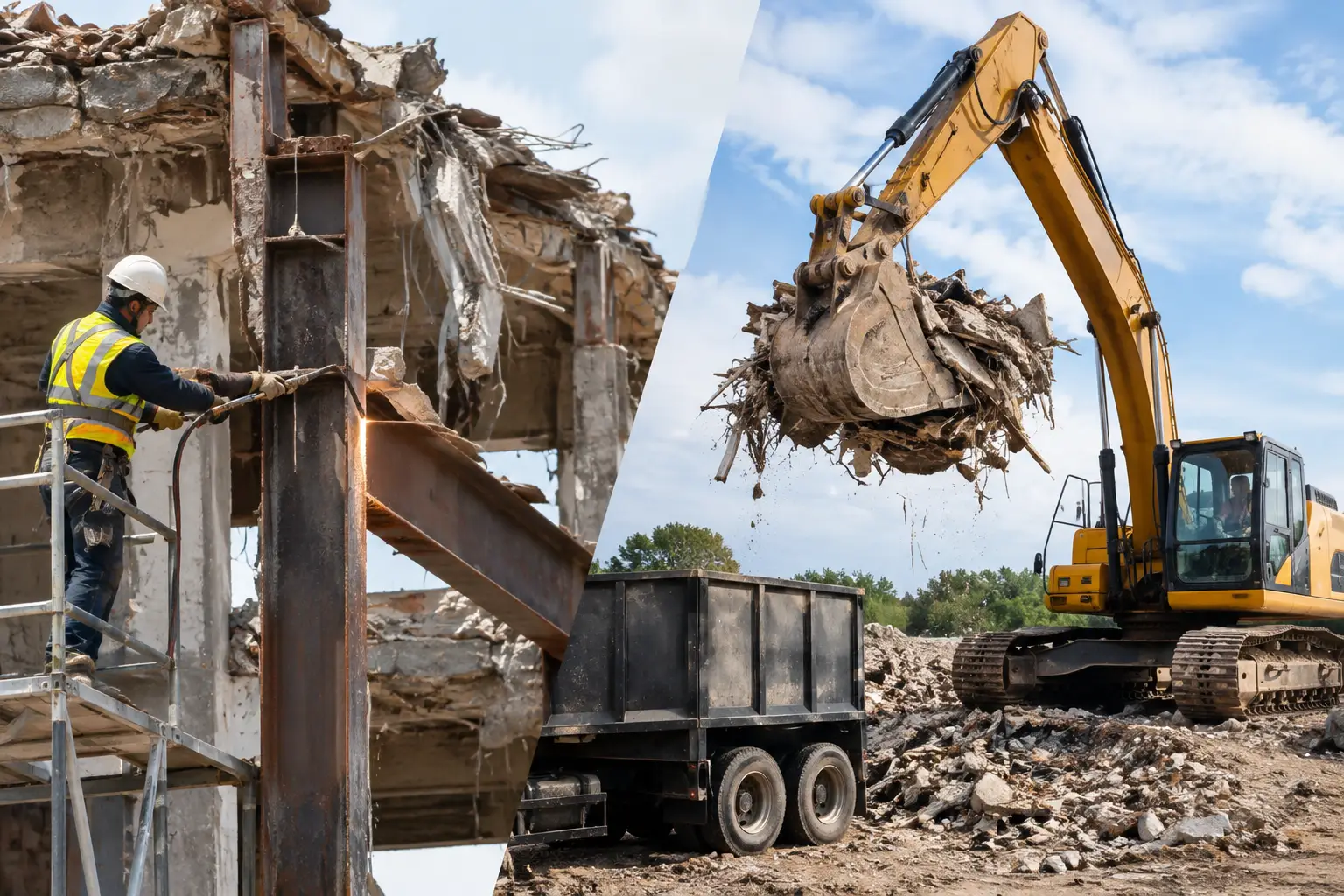
Onsite Dismantling Versus Removal Explained
A retired 2 MW generator, UPS lineup, chiller, or switchgear section can look like a single removal task on a project schedule. In practice, the choice between onsite dismantling versus removal affects crew safety, outage planning, transportation, residual value, waste handling, and the final cost of the project. The right answer depends on the asset, the facility, and the constraints around it.
For data centers, telecom sites, industrial plants, substations, and manufacturing facilities, equipment retirement is rarely just a matter of getting old hardware out the door. Access routes may be tight. Equipment may be connected to live systems. Batteries, oils, refrigerants, fire-suppression agents, and electrical components can require controlled handling. A disciplined scope starts by deciding whether an asset should leave the site intact or be broken down where it stands.
What Onsite Dismantling Means
Onsite dismantling is the controlled disassembly of equipment within the facility before it is moved from the property. A crew may separate a generator into major components, remove UPS battery strings and cabinets, disassemble raised flooring, cut oversized process equipment into transportable sections, or segregate recoverable metals and recyclable materials at the source.
This approach is most useful when an asset cannot physically travel through loading areas, corridors, roof openings, or equipment doors as a complete unit. It is also common when rigging a complete machine would create unacceptable structural, operational, or safety concerns. Instead of forcing a large object through a constrained facility, the project team reduces it into manageable sections using planned lifting, cutting, containment, and material-handling methods.
Dismantling can also support responsible material recovery. Copper, aluminum, steel, circuit boards, battery materials, and other components can be separated according to their downstream recycling or resale path. That does not mean every asset should be dismantled. Once an item is broken down, the opportunity to resell it as functioning equipment may be reduced or eliminated.
Where dismantling adds value
Dismantling is often the practical choice for installed equipment with limited egress. Examples include large air handlers, chillers in enclosed mechanical rooms, obsolete switchgear banks, generators located behind fixed infrastructure, and machinery that was installed before later building modifications restricted access.
It can also be the safer choice when an asset needs isolation, fluid removal, battery management, or component-level separation before movement. A large UPS system, for example, may need to be de-energized, disconnected, and separated from battery cabinets before any rigging begins. The work is not simply demolition. It is controlled decommissioning with a material-recovery plan.
What Equipment Removal Means
Removal generally means extracting an asset substantially intact for transportation, resale, refurbishment, recycling, or offsite processing. Depending on the project, the work can include disconnecting utilities, rigging the equipment, loading it onto appropriate transport, securing permits, and delivering it to its next destination.
Intact removal is often preferred for serviceable equipment with remaining market value. A properly maintained generator, transformer, UPS, cooling unit, or electrical distribution asset may have value to another operator, refurbisher, or parts buyer. Keeping that equipment whole protects the ability to test, market, transport, and repurpose it.
Removal may also be faster at the site when access is favorable. If a unit can be isolated, lifted, and loaded through a clear route, moving it intact can reduce the amount of cutting, sorting, and debris management required inside an active facility. However, that efficiency shifts some complexity to transportation. Weight, dimensions, trailer type, route restrictions, crane requirements, and loading conditions all need to be addressed before mobilization.
When intact removal is the stronger option
Equipment removal is usually the better fit when the asset is operational or repairable, accessible, and economically viable to transport. It works particularly well for skid-mounted generators, containerized power systems, modular UPS units, accessible switchgear, telecom power equipment, and surplus facility-support assets that can be disconnected without extensive building work.
The asset’s condition matters. A functioning unit with documentation, maintenance history, and identifiable components is more likely to support resale or refurbishment than a unit that has been exposed to water, stripped for parts, or cut apart. In these cases, careful removal can turn a disposal line item into value recovery that offsets decommissioning costs.
Onsite Dismantling Versus Removal: The Decision Factors
The most reliable decision process examines more than the equipment’s size. Facility conditions, asset value, safety exposure, environmental obligations, and schedule requirements should all be reviewed before a crew arrives. A site walk and equipment assessment are the foundation for an accurate scope.
Access and physical constraints
The first question is simple: can the equipment leave intact? Door heights, corridor widths, floor loading, elevator capacity, roof penetrations, dock access, overhead obstructions, and turning radiuses can quickly determine the answer. A unit that was easy to install during construction may be difficult to extract from an operating facility years later.
When the route is restrictive, onsite dismantling may avoid unnecessary building demolition or high-risk rigging. When access is clear, intact removal may preserve value and reduce time spent processing material inside the facility.
Asset value and condition
A complete asset generally has more potential value than its raw materials, but only if there is a realistic secondary-market or refurbishment path. Age, manufacturer support, operating condition, maintenance records, runtime, capacity, and demand for the model all affect that outcome.
A professional recovery partner should evaluate the equipment before deciding it is scrap. This is especially relevant for backup generators, UPS systems, electrical gear, cooling equipment, and specialized processing assets. If the equipment is obsolete, damaged, or too costly to transport, dismantling for recyclable commodities may deliver the more practical result.
Safety and operational continuity
In active facilities, the work plan must protect personnel and prevent disruption to systems that remain online. Lockout/tagout, verification of de-energization, battery isolation, fluid management, fire protection considerations, and lifting plans should be addressed before equipment is disconnected or cut.
Onsite dismantling can create additional noise, dust, sparks, and work-zone requirements. Those conditions may be manageable in a shutdown plant but unacceptable beside an active data hall or production line. Conversely, removing a complete, extremely heavy unit can introduce significant crane and rigging exposure. The safer method is the one supported by a site-specific plan, not a default preference.
Environmental handling requirements
Many infrastructure assets contain materials that cannot be handled as ordinary construction debris. Batteries require proper sorting and downstream recycling. Generators and mechanical equipment may contain fuel, lubricants, coolants, or other fluids. Chillers may require refrigerant recovery. Fire-suppression systems may require specialized handling of agents and cylinders.
Dismantling provides an opportunity to separate these materials at the point of removal, but it requires disciplined containment and documentation. Intact removal can simplify onsite handling when the receiving facility is prepared to process the asset correctly. Either approach should include a clear chain of custody for regulated and recyclable materials.
Schedule, budget, and project coordination
The lowest initial bid is not always the lowest project cost. An inexpensive removal scope that overlooks access limitations, outage windows, transport requirements, or material handling can create delays and change orders. Likewise, a dismantling plan that treats all equipment as scrap can leave recoverable value on the table.
The best scopes account for labor, equipment, rigging, transportation, permits, waste handling, asset purchase value, and restoration work. They also define who is responsible for disconnecting power, piping, controls, and supporting infrastructure. Clear boundaries prevent the common problem of a contractor arriving to find that the asset is still connected or that the planned exit route is not available.
A Practical Approach to Complex Retirements
For many projects, the answer is not exclusively dismantling or removal. A facility may remove serviceable generators, UPS modules, and switchgear intact while dismantling battery systems, raised flooring, obsolete cooling components, or inaccessible equipment onsite. This mixed approach often improves value recovery while keeping logistics manageable.
Start with a detailed inventory that identifies equipment type, condition, dimensions, weight, connections, known hazards, and location. Then assess each item’s resale potential and feasible removal route. The resulting plan should identify what will be removed intact, what will be dismantled, what will be recycled, and what site conditions must be in place before work begins.
Critical Asset Recovery approaches this work as a full asset-disposition project rather than a simple hauling assignment. That means considering equipment value, decommissioning requirements, material recovery, transportation, and environmentally responsible recycling together. A coordinated plan reduces vendor handoffs and gives facility leaders a clearer view of cost, risk, and expected outcomes.
Plan the Method Before the Shutdown Window
The most useful question is not, “Should this equipment be dismantled or removed?” It is, “What method protects the facility, preserves available value, and completes the work within the operating window?” Answering that question early gives project teams time to verify access, isolate systems correctly, arrange specialized equipment, and establish responsible downstream handling.
When the method is selected before the shutdown window begins, equipment retirement becomes a controlled transition instead of an expensive last-minute obstacle.