
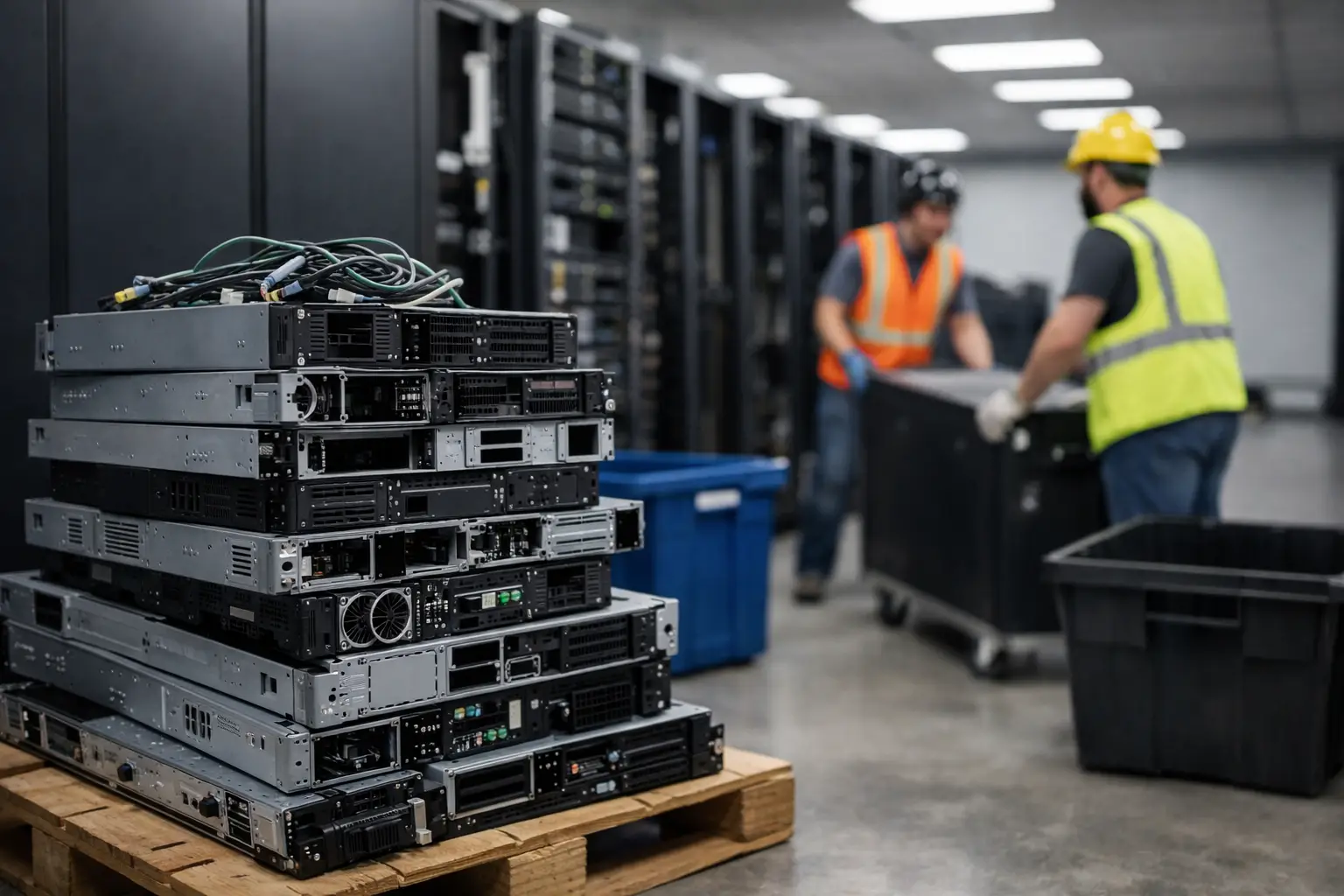
Best Data Center Liquidation Options for Retired Assets
A data center retirement can leave a facility team with millions of pounds of equipment, a hard shutdown date, and little room for mistakes. The best data center liquidation options do more than move surplus assets off-site. They recover available value while controlling safety, environmental, scheduling, and documentation risks.
The right path depends on what is being retired, the condition of the equipment, site access, project timing, and whether the facility must remain operational during the work. A late-model UPS or generator may have a resale market. Obsolete batteries, damaged cooling equipment, and mixed scrap may be better suited for material recovery. Most large projects require a combination of both.
Best Data Center Liquidation Options by Asset Type
Direct purchase for marketable equipment
A direct purchase is often the most efficient option for equipment with documented condition and a viable secondary market. This can include diesel and natural gas generators, UPS systems, switchgear, PDUs, chillers, CRAC units, transfer switches, raised flooring, and certain fire-suppression components.
The buyer evaluates the asset’s manufacturer, model, age, capacity, maintenance history, operating condition, location, and removal requirements. When the equipment has real resale value, a direct offer gives the owner a defined recovery amount and a clear disposition path. It also reduces the administrative burden of listing assets individually, coordinating site visits, and negotiating with multiple buyers.
This option works best when equipment is still installed, has complete identification information, and can be removed without disrupting critical operations. It is less effective for highly customized systems, units with missing records, or equipment that has been exposed to water damage, contamination, or improper storage.
Consignment or structured resale
Some assets are valuable but require more time to reach the right end user. Structured resale can be appropriate for newer equipment, specialty electrical gear, lightly used cooling systems, and large lots that need broader market exposure.
The trade-off is timing. A facility owner may achieve stronger returns than a quick-sale approach, but payment is usually tied to the final sale of the asset. This route also requires careful agreements covering storage, title transfer, pricing authority, transportation, insurance, and unsold equipment.
For a site closure or accelerated migration, waiting for individual assets to sell may not be practical. In that situation, a guaranteed purchase price or a blended purchase-and-recycle model often provides more certainty.
Auction for large, defined asset packages
Auction can work when a site has a clear inventory of equipment that can be inspected, marketed, and released on a set schedule. It is commonly considered for complete data hall packages, facility-support equipment, telecom infrastructure, and surplus inventory held in a warehouse.
An auction does not automatically produce the highest net return. Seller fees, buyer premiums, asset preparation, photography, lotting, loading obligations, and the risk of low participation can affect the outcome. Equipment that is difficult to disconnect or ship may attract bids that do not reflect its original value.
Auction is generally strongest when the assets are easy to identify and load, the deadline allows time for marketing, and the owner can accept market-driven pricing. It is usually not the preferred choice for a live facility where buyers, inspection activity, and staggered pickup windows would create operational or security concerns.
Recycling and commodity recovery
Recycling is the responsible liquidation option for equipment with limited reuse value. Batteries, obsolete electronics, damaged cabinets, cable, copper bus, steel enclosures, depleted fire-suppression agents, and end-of-life mechanical equipment can contain recoverable materials even when resale is not realistic.
The key is to separate material recovery from simple disposal. Lead-acid and lithium battery systems, refrigerant-bearing cooling equipment, capacitors, oils, and electronic components require disciplined handling. A qualified recovery provider should identify regulated materials, manage proper segregation, and document downstream recycling or disposal channels.
Recycling returns vary with commodity markets and the actual composition of the equipment. A recycler that evaluates only weight may overlook components with resale value. Conversely, a reseller without industrial recycling capability may leave the owner responsible for the low-value remainder. A combined approach prevents both problems.
Full-service decommissioning with asset recovery
For complex projects, full-service decommissioning is often the most practical liquidation model. One provider manages the equipment evaluation, purchase or resale strategy, dismantling, rigging, loading, recycling, and final site cleanup.
This approach is especially valuable when the project involves heavy electrical and mechanical infrastructure. Removing a generator, battery plant, switchgear lineup, chiller, or raised-floor system is not just a transportation task. It requires sequencing, lockout and tagout procedures, lift planning, trained crews, containment controls, and coordination with facility operations.
A full-service scope can also reduce vendor fragmentation. Rather than hiring one firm for demolition, another for rigging, separate buyers for equipment, and a recycler for residuals, the owner has one accountable project partner. The financial structure may include purchased assets that offset removal costs, fee-based services for labor-intensive work, and documented recycling for materials without resale value.
How to Evaluate Data Center Liquidation Providers
The best data center liquidation options are only as dependable as the provider executing them. A high offer has little value if the buyer cannot perform the removal safely, misses the shutdown window, or abandons low-value material after taking the most desirable equipment.
Start with the provider’s ability to assess the whole site, not just individual assets. They should understand the relationship between critical power, cooling, fire protection, cable management, batteries, and supporting infrastructure. This is particularly important in phased decommissions, where some systems remain active while adjacent equipment is disconnected and removed.
Ask how the provider determines value. A credible assessment considers asset condition, service records, market demand, removal complexity, freight, and residual material value. Be cautious of broad estimates that are not supported by an inventory review or site conditions. The value of a skid-mounted generator with accessible loading is different from the value of the same unit in a constrained urban facility with limited rigging access.
Documentation should be part of the scope from the beginning. Depending on the project, this may include detailed asset inventories, serial-number records, bills of sale, pickup confirmations, weight tickets, recycling certificates, battery manifests, and final completion reports. These records help owners demonstrate responsible disposition to internal stakeholders, auditors, landlords, customers, and environmental teams.
Build the Liquidation Plan Before Equipment Is Disconnected
Value recovery improves when planning begins before the shutdown crew starts cutting cable or breaking down systems. Photograph equipment in place, capture nameplates and serial numbers, gather maintenance logs, and identify accessories such as breakers, bypass cabinets, control panels, fuel tanks, spare modules, and battery cabinets. Missing components can materially reduce resale value.
The plan should also define ownership boundaries. In colocation and leased facilities, not every installed item belongs to the same party. Confirm what equipment is customer-owned, landlord-owned, leased, under warranty, or subject to return obligations before it enters a liquidation inventory.
Schedule is equally important. A provider needs to know the final power-down date, access restrictions, freight constraints, security requirements, loading-dock availability, and any restoration obligations. If a building must be returned to shell condition, include cable tray, conduits, housekeeping pads, fuel systems, and raised flooring in the scope rather than treating them as last-minute additions.
Safety planning cannot be separated from financial planning. The cheapest removal approach may create greater exposure if it overlooks energized systems, stored energy in batteries and capacitors, refrigerants, fuel, overhead lifting, or confined access. Experienced decommissioning teams build the work sequence around the site’s operating reality, then align asset recovery with that sequence.
A Practical Decision Framework
For marketable assets with time for inspection and controlled removal, direct purchase or structured resale can provide meaningful recovery. For a clean, well-inventoried package with a flexible schedule, auction may be worth considering. For end-of-life material, certified recycling protects the facility from avoidable environmental risk.
When the site contains a mix of valuable equipment, obsolete infrastructure, and difficult removal conditions, an integrated provider is usually the stronger option. Critical Asset Recovery approaches these projects as both a recovery and execution challenge: identify reusable assets, recover materials responsibly, and remove infrastructure according to the facility’s schedule and safety requirements.
A liquidation plan should leave the site cleaner, the paperwork complete, and the owner with a defensible record of where critical assets went. That is the standard worth setting before the first cabinet is disconnected.