
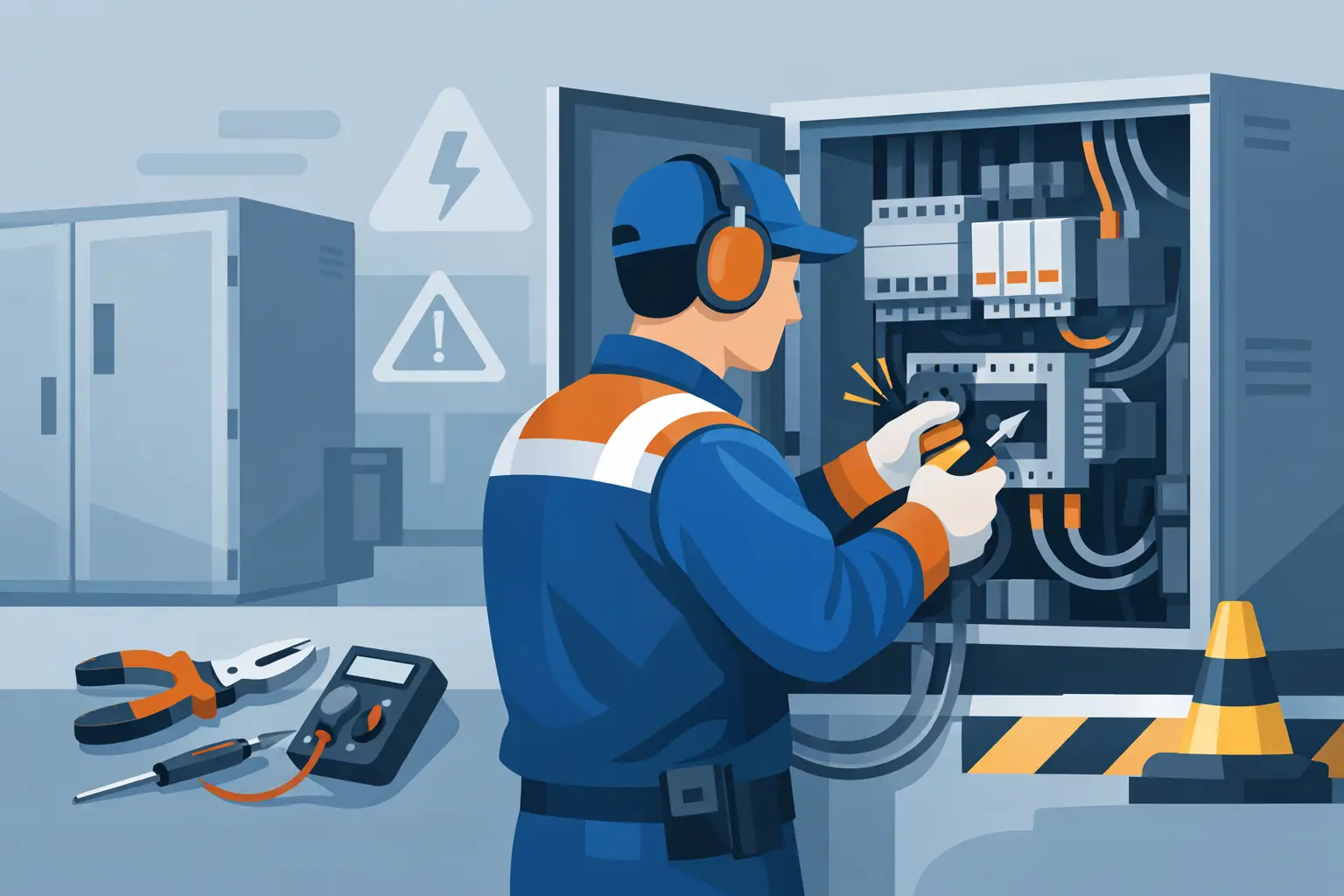
How to Dismantle Electrical Switchgear Safely
A retired switchgear lineup can look inactive while still presenting serious electrical, mechanical, and environmental hazards. Knowing how to dismantle electrical switchgear safely starts with recognizing that this is not a general demolition task. It is a controlled decommissioning project that requires verified isolation, qualified electrical personnel, a lifting plan, and a clear decision about what will be reused, sold, recycled, or disposed of.
For data centers, substations, telecom facilities, and industrial plants, the goal is larger than clearing floor space. A disciplined approach protects personnel, preserves recoverable asset value, keeps the facility operational where required, and creates a documented path for responsible material handling.
Start With a Decommissioning Scope, Not a Tear-Out Plan
Before anyone opens a cabinet or removes a cover, establish the project scope. Identify the switchgear lineup, associated transformers, control panels, bus duct, feeder cables, battery systems, and any upstream or downstream equipment affected by the work. Determine which systems are being retired and which must remain energized to support ongoing operations.
This distinction matters in live facilities. Removing a lineup may involve shared control wiring, interlocks, monitoring circuits, fire alarm interfaces, or temporary power arrangements. A shutdown that appears straightforward on a one-line diagram can affect critical loads if field conditions do not match current documentation.
The scope should define the equipment condition, ownership of removed materials, site access rules, required outages, lifting constraints, and final site condition. It should also identify whether the equipment has resale potential. Switchgear with intact breakers, relays, enclosures, and traceable maintenance history may retain value. Unplanned destructive removal can eliminate that value before an asset recovery review occurs.
Confirm Equipment Identity and Condition
Switchgear is not one uniform asset class. Low-voltage switchboards, medium-voltage metal-clad switchgear, metal-enclosed interrupter equipment, and arc-resistant lineups require different controls. Voltage class, manufacturer, age, fault-duty rating, breaker type, insulating materials, and physical configuration all influence the removal plan.
A qualified team should complete a field inventory and compare nameplate data against available electrical drawings. Record serial numbers, breaker information, relay packages, copper bus configuration, panel dimensions, and estimated weights. Photographs and condition notes support both safety planning and disposition decisions.
Older equipment deserves additional scrutiny. Depending on age and construction, the project may require assessment for asbestos-containing materials, lead-based coatings, PCB-containing components, mercury switches, sulfur hexafluoride equipment, or oil-filled devices. These materials cannot be treated as ordinary scrap. Their presence changes the containment, handling, transportation, and disposal requirements.
Isolate, Lock Out, and Prove the Equipment Is De-Energized
The central rule in how to dismantle electrical switchgear safely is simple: never rely on labels, breaker position, or verbal confirmation alone. The equipment must be isolated under a site-specific lockout/tagout program and verified de-energized by qualified electrical workers.
The isolation process begins upstream. All potential sources must be identified, including utility feeds, generators, UPS output, backfeed paths, tie breakers, control power transformers, stored-energy devices, and external control circuits. A disconnected main breaker does not necessarily eliminate voltage at all points in a lineup.
After authorized isolation and lockout/tagout, qualified personnel should use properly rated test instruments to verify absence of voltage. Test instruments must be checked before and after use against a known source. This process is especially important around medium-voltage gear, where induced voltage, capacitive coupling, and stored energy can create unexpected hazards.
Capacitors and spring-operated breakers require separate attention. Stored electrical and mechanical energy must be discharged or restrained according to the equipment manufacturer’s procedures and the project safety plan. Do not assume that time alone has made these components safe.
Establish Arc-Flash and Work Boundaries
Even during retirement work, arc-flash exposure remains a concern until the equipment has been fully isolated and absence of voltage is verified. The site’s electrical safety program should establish approach boundaries, required personal protective equipment, permitted work activities, and the qualifications required for each task.
Where drawings are incomplete or equipment conditions are uncertain, treat the uncertainty as a hazard. A conservative plan may require additional investigation, controlled access, temporary barriers, or a revised sequence of work. Rushing to maintain a removal schedule is not an acceptable substitute for verified conditions.
The work area should be secured from unrelated personnel. Clear signage, controlled entry, housekeeping requirements, and a defined communication process reduce the likelihood that someone re-energizes equipment, enters a lifting zone, or disturbs tagged circuits.
Plan the Physical Dismantling Sequence
Once electrical hazards have been controlled, the project becomes a heavy-equipment removal operation. Switchgear sections can weigh thousands of pounds, and their center of gravity may shift as breakers, bus bars, doors, and internal components are removed. A cabinet that appears stable can become unstable when separated from adjacent sections or floor anchors.
The dismantling sequence should be engineered around equipment layout, available rigging access, floor loading, door clearances, and the route from the electrical room to the loading area. Verify dimensions before removal begins. A lineup may fit through a corridor but not through a turn, elevator opening, or dock door.
Disconnect and identify control wiring, communications cabling, grounding conductors, and feeder cables before separating sections. Labeling and documentation are worthwhile when equipment may be refurbished, sold, or evaluated for parts. For equipment destined only for recycling, documentation still supports a cleaner, safer separation of copper, steel, aluminum, and electronic components.
Remove components in the planned order, using appropriate lifting devices for breakers, instrument transformers, and panel sections. Never use improvised lifting points. Follow manufacturer lifting provisions where available, and use qualified riggers to select slings, spreader bars, forklifts, cranes, skates, or other handling equipment based on verified weights and travel conditions.
Protect the Facility During Removal
Many switchgear projects occur in facilities that remain partially operational. The removal crew must protect adjacent energized equipment, raised floors, cable trays, walls, fire protection systems, and access routes. Dust, metal shavings, loose hardware, and open floor penetrations can create operational problems well beyond the immediate work area.
Use barriers and containment where cutting, grinding, or material separation is necessary. In many cases, cold methods and mechanical disassembly are preferable because they reduce fire risk and limit airborne debris. Hot work should be avoided unless it is necessary, authorized, and controlled under the facility’s permit process.
Temporary openings created by cable removal or equipment extraction should be protected promptly. This is particularly important in data centers and telecom environments, where open pathways can affect airflow management, firestopping, or personnel safety.
Separate Materials for Reuse and Responsible Recycling
The best disposition path depends on equipment age, condition, demand, and project economics. Functional breakers, relays, meters, spare parts, and complete switchgear sections may be candidates for resale or refurbishment. Equipment with damaged insulation, obsolete protection systems, or limited market value may be better directed to responsible recycling.
Material separation improves both recovery value and environmental performance. Copper bus and cable, aluminum components, ferrous metals, electronic boards, batteries, and regulated materials should be handled through appropriate channels. A mixed load may be faster to remove, but it often reduces value and makes downstream processing less transparent.
Maintain records of equipment removed, weights where available, recycling streams, and final disposition. Documentation helps facility owners demonstrate responsible management of retired infrastructure and supports internal asset, sustainability, and compliance reporting.
Use Qualified Specialists When the Risk Is High
Internal maintenance teams may understand the facility better than anyone, but switchgear dismantling often requires capabilities outside routine maintenance work. Medium-voltage systems, restricted-access rooms, complex rigging, environmental concerns, and live-adjacent conditions call for specialized electrical, demolition, and recovery expertise.
A qualified decommissioning partner should be able to coordinate electrical isolation, equipment inventory, dismantling, rigging, transportation, resale evaluation, and recycling as one managed scope. That integrated approach reduces handoffs between vendors and helps avoid the common gap between safe removal and responsible final disposition.
Critical Asset Recovery approaches switchgear retirement as an asset and risk-management project, not simply a scrap haul. The right plan protects people first, maintains control of the site, and captures value where value remains. When the last section leaves the room, the facility should have more than empty space – it should have a documented, safer path forward for its next phase of infrastructure.