
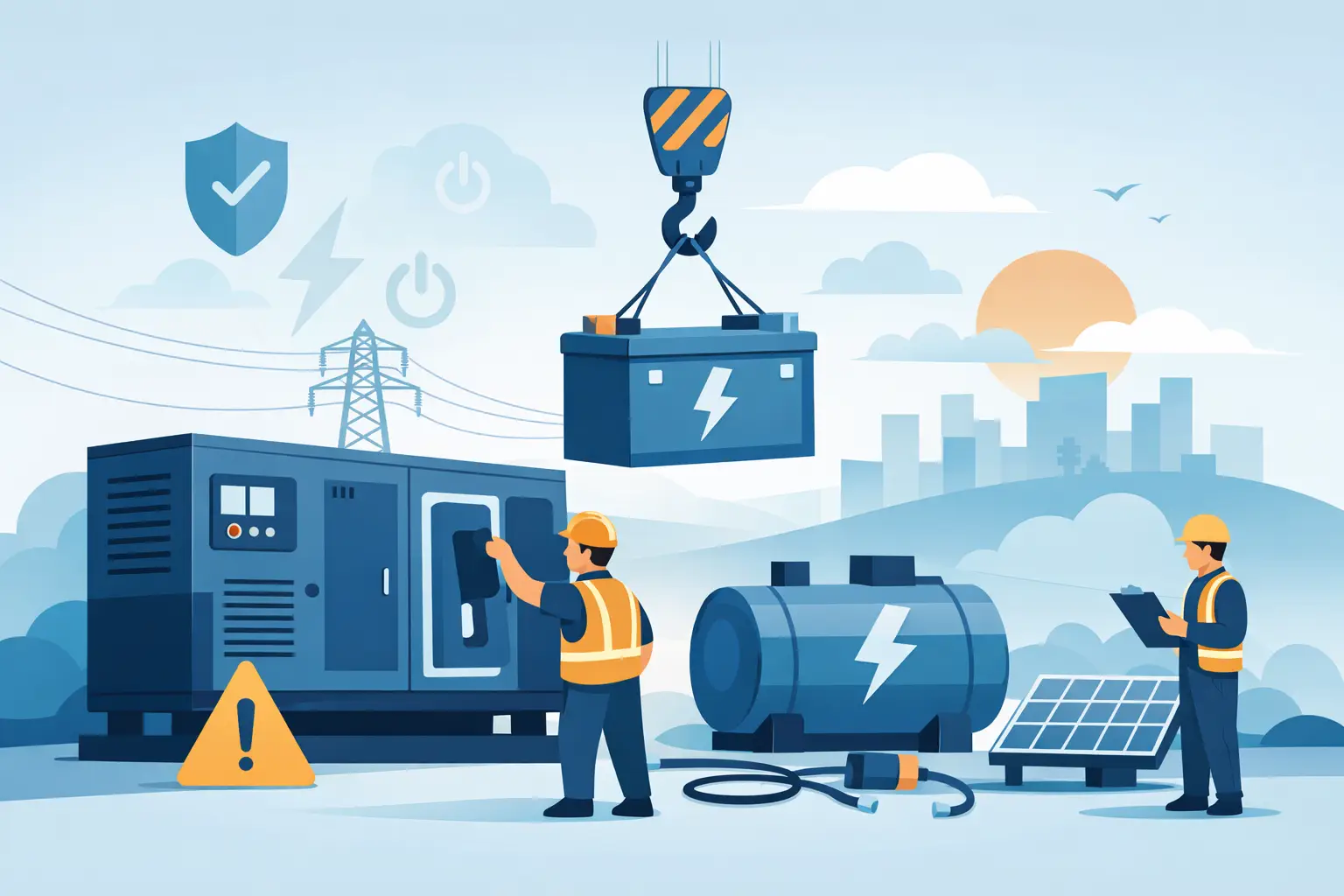
How to Retire Backup Power Infrastructure Safely
A backup power retirement can look straightforward until the first cabinet is opened, the first battery string is disconnected, or a generator is found tied into equipment that remains live. Knowing how to retire backup power infrastructure means managing far more than removal. The project must protect personnel, preserve continuity for active loads, document environmental obligations, and recover the value still contained in major equipment and materials.
For data centers, telecom sites, plants, substations, and other critical facilities, the best retirement projects are planned as controlled asset-disposition programs. Equipment is isolated, assessed, removed in the right sequence, and routed for resale, refurbishment, recycling, or compliant disposal. That discipline reduces avoidable downtime, safety exposure, and last-minute costs.
Start With Scope, Ownership, and Operating Risk
Before a contractor mobilizes, establish exactly what is being retired and what must remain in service. Backup power infrastructure often has dependencies that are not obvious on an outdated one-line diagram. A UPS may support a small but essential control load. A generator may share fuel, exhaust, monitoring, or transfer equipment with another system. Battery rooms can contain multiple strings installed during different expansion phases.
Build the project scope from a current field walk, not only from drawings or asset lists. Identify the equipment, its physical location, access path, approximate weight, voltage class, connection points, and any restrictions on lifting, loading, or working hours. Include associated components such as automatic transfer switches, switchgear, distribution panels, battery cabinets, maintenance bypasses, fuel tanks, chargers, remote monitoring hardware, cabling, conduit, pads, and exhaust systems.
At this stage, determine who owns the equipment and whether any leases, warranties, utility agreements, customer contracts, or landlord requirements affect disposition. An asset may be physically obsolete but still subject to return, reporting, or data-handling obligations. Clarifying those constraints early prevents equipment from being removed before the appropriate approvals are in place.
The operating plan should also define the required outage window. In some projects, a full shutdown is acceptable. In others, the retired system must be replaced or bypassed while the facility remains online. The difference drives sequencing, labor requirements, temporary power planning, and cost.
How to Retire Backup Power Infrastructure With a Safe Sequence
Retirement begins with a written method of procedure that has been reviewed by facility operations, electrical safety personnel, and the removal team. The method should establish the order of operations, isolation points, lockout/tagout responsibilities, verification requirements, emergency contacts, and criteria for stopping work.
Do not treat shutdown as a single event. Critical systems need confirmation at several points: before isolation, after transfer of supported loads, after opening sources, and before removal work begins. Qualified electrical personnel should verify absence of voltage using appropriate procedures and test equipment. Mechanical and stored-energy hazards deserve the same attention. Generator starting circuits, batteries, fuel systems, spring-charged breakers, pressurized lines, and capacitors can remain hazardous after normal operation has stopped.
A controlled sequence usually follows this logic:
- Confirm that supported loads have been migrated, shut down, or placed on an approved alternate source.
- Isolate normal and emergency sources, apply lockout/tagout, and verify the equipment is de-energized.
- Disconnect batteries, control wiring, feeders, fuel connections, cooling lines, exhaust components, and monitoring connections according to the approved plan.
- Remove equipment in a sequence that maintains stability, access, and clear travel paths for rigging crews.
- Reinspect the area before restoring adjacent systems or releasing the work zone.
The exact order depends on site conditions. For example, battery removal may occur before UPS cabinet extraction because it reduces weight and eliminates a significant stored-energy hazard. At another site, access limitations may require cabinets to be moved before large switchgear sections can be reached. The method must fit the actual facility, not a generic checklist.
Separate Equipment With Resale Value From Material for Recycling
Backup power assets should not be classified as scrap by default. Late-model generators, UPS systems, transfer switches, switchgear, power distribution units, battery cabinets, and related components may have resale or refurbishment value if their condition, configuration, and market demand support it. Even older equipment can contain recoverable metals and components that offset disposal costs.
Begin with an asset inventory that captures manufacturer, model, serial number, capacity, age, condition, service history, and available accessories. Clear photographs, nameplate data, maintenance records, and test reports improve the accuracy of a recovery assessment. A complete generator package, for example, may include the generator, enclosure, controls, radiator, breakers, muffler, and fuel-related equipment. Separating those items without documenting their relationship can reduce potential resale value.
There is a practical trade-off between recovery value and project speed. A carefully dismantled, fully documented asset can command more value than equipment cut apart for rapid removal. However, where a facility has a hard closure date, limited access, damaged equipment, or high labor costs, recycling may be the more economical path. The right decision is based on net recovery after labor, rigging, transportation, testing, storage, and compliance costs, not on an optimistic estimate of resale price.
A qualified recovery provider can evaluate the mix of assets and recommend whether purchase, consignment, refurbishment, component harvesting, or recycling is the most responsible disposition route. This approach gives decision-makers a realistic picture of what can be recovered and what must be treated as a removal cost.
Plan Carefully for Batteries, Fluids, and Regulated Materials
Batteries require their own handling plan. Valve-regulated lead-acid batteries, flooded lead-acid batteries, nickel-cadmium batteries, and lithium-ion battery systems have different transportation, packaging, storage, and recycling requirements. Their risks can include electrical shock, arc flash, acid exposure, thermal events, heavy lifting, and hazardous-material transportation issues.
Battery strings should be identified by chemistry, quantity, condition, and configuration before removal. Damaged, swollen, leaking, overheated, or compromised batteries may need special containment and handling procedures. Do not allow mixed battery chemistries or unmarked batteries to enter a general scrap stream. A documented battery recycling path protects the facility and supports environmental reporting.
Generators and supporting equipment may also contain diesel fuel, lubricants, coolant, filters, and absorbents. Fuel should be evaluated for reuse, transfer, treatment, or disposal before tank and generator work begins. If tanks are being retired, the scope should address cleaning, residual liquids, associated piping, and any site-specific environmental requirements.
Older electrical equipment may introduce additional concerns, including legacy insulation, coatings, fire suppression materials, or equipment requiring specialized evaluation. When conditions are uncertain, pause and assess rather than allowing the removal schedule to dictate an unsafe decision.
Manage Dismantling, Rigging, and Site Logistics
Heavy backup power equipment rarely leaves a facility by the route it entered. Building modifications, new racks, security barriers, raised floors, and active operations can make removal more difficult than installation. A pre-removal logistics survey should confirm door sizes, ceiling height, floor loading, crane access, freight elevator capacity, truck staging, and traffic controls.
Rigging plans should account for verified equipment weights and centers of gravity. UPS cabinets, battery strings, generator skids, and switchgear lineups can be deceptively heavy or top-heavy. Improvised moves create unacceptable risk to personnel, adjacent infrastructure, and the building itself.
The work area should be separated from active operations, with clear material routes and defined laydown areas. In live facilities, control dust, noise, vibration, and access disruptions. If demolition is required, coordinate it after recoverable assets, regulated materials, and reusable components have been removed. Demolition is often the final step, not the first.
Document the Closeout Before the Crew Leaves
A retirement project is not complete when the equipment reaches the loading dock. Facility teams need records that show what was removed, where it went, and what condition the space was left in. This is especially relevant for organizations with environmental, insurance, audit, customer, or corporate sustainability requirements.
Closeout documentation should match the scope and may include asset lists, serial-number records, weight tickets, recycling certificates, bills of lading, photographs, waste manifests, and confirmation of residual-value payments or credits. If equipment has been resold or refurbished, document the transfer of custody and any data-bearing components that were removed or destroyed.
The final site walk should confirm that abandoned cables, fluids, batteries, debris, penetrations, and damaged surfaces have been addressed. It should also verify that remaining systems are labeled correctly and that any changes to drawings or operational records are handed back to the facility.
Critical Asset Recovery approaches these projects as an integrated process: assess the assets, control the removal, recover value where practical, and route remaining materials through responsible recycling channels. That single-point accountability is particularly valuable when a project includes generators, UPS systems, batteries, switchgear, and facility-support equipment in the same scope.
The right retirement plan leaves more than an empty room. It leaves a safer site, defensible documentation, a clear disposition trail, and a facility team ready for the next phase of operations.