
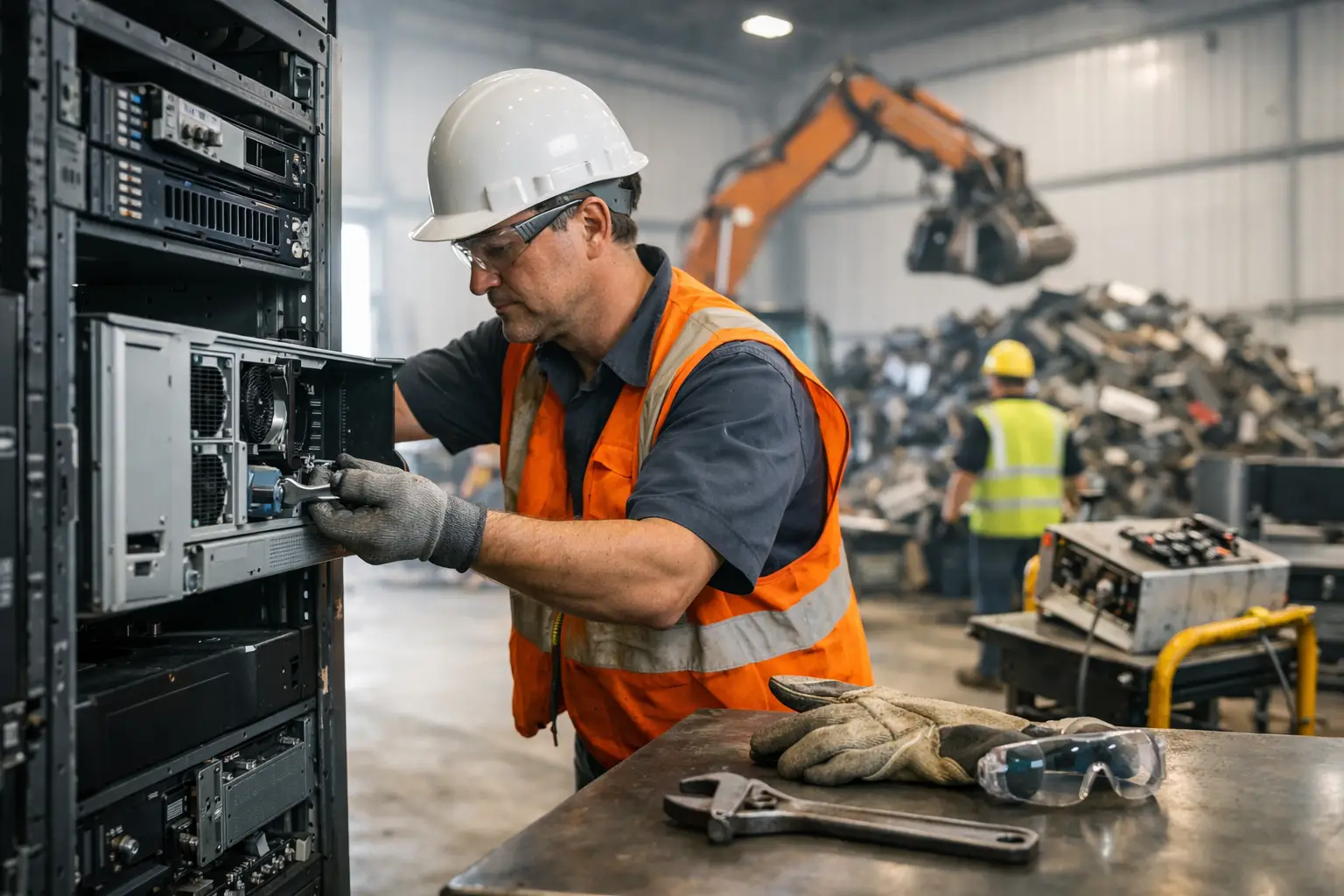
Best Practices for Equipment Decommissioning
A retired generator, UPS cabinet, chiller, or switchgear lineup is not simply surplus equipment waiting to leave the site. It remains connected to operational dependencies, energy hazards, environmental obligations, and potential resale value. The best practices for equipment decommissioning begin by treating retirement as a controlled infrastructure project, not a hauling task.
For data centers, telecom sites, substations, manufacturing plants, and other critical facilities, the quality of a decommissioning plan affects more than the final disposition of equipment. It affects uptime during transition, worker safety, project cost, audit readiness, and the amount of value recovered from assets that still have a useful life.
Start With a Site-Specific Decommissioning Plan
Every project should begin with a documented scope that identifies what is being removed, what must remain operational, and how the work will be sequenced. A broad equipment list is not enough. The plan should capture manufacturer, model, serial number, capacity, condition, location, weight, access constraints, and connected systems.
This early assessment often reveals the issues that create delays later. A 2 MW generator may be straightforward to sell, for example, but removal may require fuel management, exhaust separation, crane access, and structural review. A UPS system may have residual value, but its battery strings can require separate handling, staging, and recycling processes. Raised flooring, cooling equipment, fire suppression systems, and distribution equipment each present different removal and environmental requirements.
The plan should also establish a clear shutdown sequence. Determine which feeds, controls, bypasses, monitoring points, and backup systems are affected before anyone disconnects equipment. In a live facility, decommissioning is frequently performed in phases to protect redundancy and prevent an avoidable outage.
Confirm Ownership and Final Disposition Early
Before removal starts, confirm who owns each asset and who has authority to approve its sale, reuse, recycling, or destruction. Leased equipment, shared infrastructure, and assets with lender interests can complicate disposition if this is not resolved upfront.
Then assign a preliminary disposition path for each item: resale, refurbishment, redeployment, parts recovery, recycling, or disposal. This prevents usable equipment from being damaged or mixed into a scrap stream simply because it was not identified in time. Final disposition may change after inspection, but a planned path keeps value recovery and environmental stewardship part of the project from day one.
Put Safety and System Isolation Before Removal
The most serious decommissioning failures usually occur before equipment moves. Electrical, mechanical, chemical, and stored-energy hazards must be controlled by qualified personnel under a defined safety program. Lockout/tagout procedures, verified absence of voltage, arc-flash precautions, and electrical isolation are fundamental for switchgear, UPS systems, PDUs, battery plants, generators, and related distribution equipment.
Mechanical systems require the same discipline. Chillers, air handlers, pumps, piping, and processing equipment may hold pressure, refrigerant, glycol, oil, water, or other materials. Generators may retain fuel, lubricants, coolant, and starting batteries. Fire suppression systems may contain agents that require specialized recovery and handling.
A removal partner should assess lifting points, equipment weight, rigging routes, floor loading, door clearances, and loading dock access before mobilization. When equipment is located on rooftops, upper floors, basements, or constrained operating areas, the logistics plan can be as important as the equipment itself. A low purchase price or inexpensive hauling quote can quickly become costly if the provider has not accounted for the actual site conditions.
Preserve Asset Value Before Dismantling
Many facilities lose recoverable value because equipment is treated as obsolete based on age alone. Age matters, but condition, maintenance history, runtime, configuration, market demand, and the availability of accessories matter as well. A well-maintained generator, switchgear section, UPS module, cooling unit, or industrial processing asset may still be valuable to another operation.
Complete documentation improves the chance of a successful resale or refurbishment outcome. Gather maintenance logs, test reports, service records, operating hours, load history, manuals, accessories, and spare parts where available. Photograph equipment before it is disconnected and record serial numbers accurately. For high-value infrastructure, this information gives prospective buyers confidence and helps establish a realistic value.
Equipment should be removed in a way that protects that value. Panels, controllers, cables, breakers, and ancillary components are often damaged when dismantling is rushed. The right approach depends on the equipment’s intended destination. If the asset is headed for recycling, efficient separation of materials may be appropriate. If it has resale potential, careful disconnect, packaging, and transport are worth the added effort.
Use a Value-First, Not Scrap-First, Evaluation
A practical disposition hierarchy starts with reuse and resale when equipment remains safe, serviceable, and marketable. Refurbishment or parts recovery can be appropriate when a complete system is no longer viable but certain components remain useful. Responsible recycling should follow when reuse is not feasible.
This approach does not mean every retired asset should be stored indefinitely in hopes of a buyer. Storage consumes space, creates inventory risk, and can postpone a necessary decision. It means evaluating assets promptly and realistically, with a provider that understands both industrial equipment markets and the physical work required to remove the equipment.
Manage Environmental Materials as Separate Workstreams
Environmentally responsible decommissioning requires more than sending metal to a recycler. Complex facility equipment contains materials that must be identified, contained, transported, and processed appropriately. Batteries, refrigerants, oils, fuels, coolants, electronics, fluorescent lamps, fire suppression agents, and certain insulation or legacy building materials all require specific handling considerations.
Battery removal deserves particular attention. Lead-acid, nickel-cadmium, and lithium-ion battery systems have different risks, transport requirements, and recycling paths. Battery strings should be isolated, labeled, staged securely, and handled by personnel equipped for the battery chemistry and site conditions. Damaged or swollen batteries require an elevated level of care.
For cooling equipment, refrigerant recovery should be completed before equipment is cut apart or transported. For generators and fuel systems, draining, cleaning, and documenting residual fuel and fluids can avoid leaks and unexpected transportation complications. If demolition work is part of the scope, conduct any required site surveys early enough to prevent hazardous materials from stopping the project after crews arrive.
Documentation matters here. Maintain records showing what materials were removed, where they were sent, and how they were processed. A clear chain of custody supports internal environmental reporting, customer commitments, and future audits.
Coordinate Logistics Around Facility Operations
Decommissioning crews work around the realities of active facilities: loading docks with limited hours, shared access roads, security protocols, clean-room requirements, tenant operations, and strict outage windows. A sound logistics plan accounts for these conditions before trucks, cranes, or rigging teams arrive.
Establish one project lead with authority to coordinate site access, permits, escorts, staging locations, emergency contacts, and daily work approvals. Confirm truck types, trailer capacity, packing needs, and export requirements if equipment will travel outside the region. For large equipment, schedule rigging and transportation as one coordinated operation rather than separate handoffs.
It also helps to define what the site should look like when the work is complete. Does the scope include housekeeping, pad removal, cable removal, floor repair, equipment room restoration, or demolition of supports and containment? A clearly defined end state prevents disputes over what “removed” means.
Select a Partner With Execution and Accountability
The best practices for equipment decommissioning depend on selecting a provider that can manage the full chain of work. For critical infrastructure, the provider should be capable of asset evaluation, safe dismantling, heavy equipment removal, resale or recycling, transportation coordination, and documentation. Splitting these responsibilities among multiple vendors can work, but it increases handoffs and can obscure accountability when schedules change or conditions differ from the original scope.
Ask how the provider evaluates recoverable assets, manages hazardous or regulated materials, protects equipment intended for resale, and documents final disposition. Request clarity on insurance, safety procedures, equipment ownership transfer, project exclusions, and change-order processes. The lowest upfront bid may not be the lowest project cost if it excludes rigging, fluid management, packaging, documentation, or site restoration.
Critical Asset Recovery approaches decommissioning as both an operational and asset recovery assignment. That means assessing whether critical equipment can be sold, refurbished, repurposed, or responsibly recycled while managing the removal work needed to return the site to a usable condition.
A well-run project leaves more than an empty room or cleared pad. It leaves a documented record, a safer site, properly managed materials, and a defensible answer to what happened to every major asset after it crossed the retirement line.