
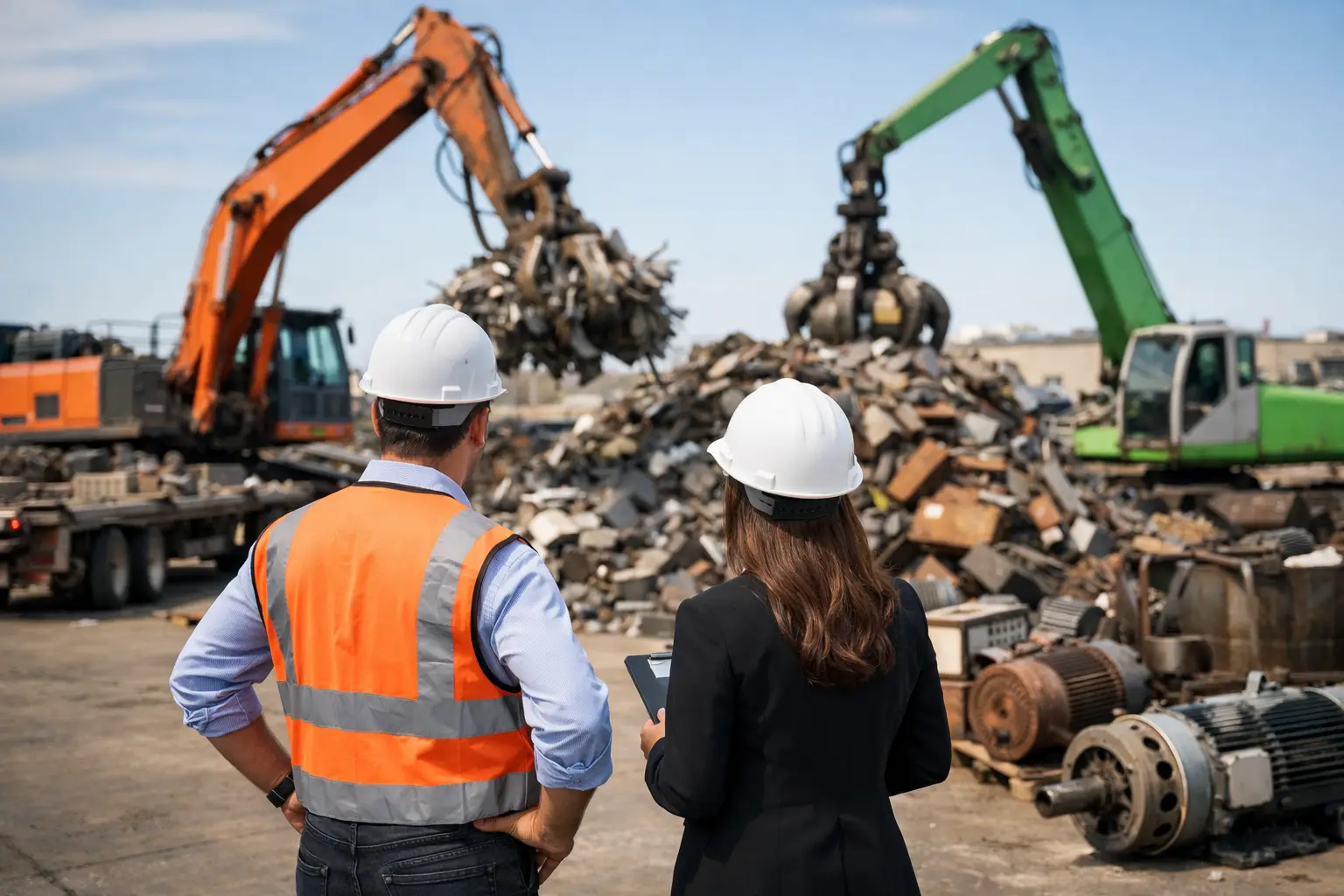
Choosing an Industrial Equipment Recycling Company
A retired generator, UPS lineup, chiller, or switchgear section is not simply scrap waiting to leave the site. It may contain recoverable value, regulated materials, heavy components, live facility interfaces, and removal risks that can affect operations. The right industrial equipment recycling company turns that complexity into a controlled project: equipment is evaluated, removed safely, sold or refurbished where practical, and recycled responsibly when reuse is no longer viable.
For data centers, telecom facilities, substations, manufacturing plants, and other critical environments, the decision is about more than hauling. It is about selecting a partner that can coordinate people, equipment, documentation, timing, and environmental stewardship without creating unnecessary risk for the facility.
Why the Recycling Partner Matters
Industrial infrastructure is rarely removed under simple conditions. Equipment may be installed in a basement, on a rooftop, behind active electrical gear, or within a facility that must remain operational while work is completed. A large diesel generator may require rigging plans, fuel management, disconnection coordination, and transport logistics. A UPS system may involve battery handling, electrical isolation, and narrow access paths. Cooling equipment can introduce refrigerant recovery requirements.
A recycler that only sees tonnage can miss the operational details that determine whether a project stays on schedule. An experienced recovery partner starts with the asset, but also considers access, weight, condition, remaining serviceability, safety requirements, shutdown windows, and the facility’s end goal. That approach helps prevent a value-recovery project from becoming an expensive removal problem.
The best outcome is not always resale, and it is not always recycling. A late-model generator with documented maintenance history may have strong secondary-market value. Aging battery strings, damaged cabinets, or obsolete processing equipment may be better directed to material recovery. A dependable provider explains the likely path for each asset and does not force every item into the same disposition method.
What an Industrial Equipment Recycling Company Should Handle
A qualified industrial equipment recycling company should be able to manage the full chain of disposition, from the initial asset review through final removal and material recovery. That scope reduces handoffs between demolition crews, freight providers, buyers, and recyclers, which helps the facility maintain accountability.
For complex projects, service scope should address the following operational needs:
- Asset identification, condition assessment, and evaluation of resale potential
- Equipment purchasing, resale, refurbishment, or material recycling
- Decommissioning, disconnection support, dismantling, and demolition
- Rigging, loading, transportation coordination, and site cleanup
- Responsible handling of batteries, refrigerants, fire suppression agents, and other regulated materials
- Documentation that supports internal reporting and environmental objectives
Not every project requires every service. A plant with equipment already staged at grade may need purchasing and freight coordination. A live data center replacing backup infrastructure may need a phased removal plan that works around maintenance windows and active operations. The provider should scale the plan to the site rather than sell a fixed package that does not fit the work.
Recovering Value Before Declaring Equipment Scrap
The fastest disposal option is not necessarily the lowest-cost option. Industrial equipment often retains value because replacement lead times are long, parts remain in demand, or comparable used assets are difficult to source. Generators, transfer switches, switchgear, UPS systems, chillers, raised flooring, and certain manufacturing assets can all have resale potential depending on condition, age, capacity, configuration, and market demand.
A serious recovery partner assesses that potential before cutting, crushing, or consolidating equipment for scrap. Maintenance records, runtime hours, test results, model numbers, photographs, and available accessories can materially affect value. Even when a complete system is not suitable for resale, components may be recoverable for refurbishment or parts.
There are trade-offs. Holding equipment for a longer sales process may not make sense when a facility needs immediate clearance or has limited staging space. In those cases, a direct purchase, recycling program, or blended approach can be more practical. The point is to make the decision with clear information rather than assuming old equipment has no value.
Safety and Environmental Execution Are Part of the Scope
Heavy infrastructure removal carries real risk. Weight, stored energy, fuel, electrical connections, overhead lifting, confined access, and changing site conditions all require disciplined planning. A capable provider should understand the difference between removing equipment from an empty building and removing it from a controlled industrial environment where neighboring systems may remain in service.
Ask how the company approaches site-specific safety planning, access restrictions, lifting requirements, work permits, and coordination with facility personnel. The answer should be specific. Broad assurances are not enough when a 20,000-pound generator must move through an active loading area or a battery room must be cleared without disrupting nearby systems.
Environmental handling deserves the same level of attention. Lead-acid batteries, lithium-ion batteries, refrigerants, oils, fuel, electronics, and fire suppression agents should be managed according to their material characteristics and applicable requirements. Responsible recycling means separating reusable equipment from recyclable commodities and ensuring materials are routed through appropriate channels instead of being treated as mixed waste.
This matters for more than compliance. It supports corporate sustainability goals, reduces avoidable landfill use, and provides a defensible process for assets that once supported critical operations.
Plan the Project Around Operations, Not Just Removal
The strongest recovery projects begin before crews arrive. A site walk or detailed remote assessment establishes what is being removed, where it is located, what remains active, and what constraints may affect the schedule. From there, the project plan should identify the order of work, required shutdowns, staging areas, rigging access, loading routes, and restoration expectations.
For facilities with limited downtime, phased execution is often the right answer. Equipment can be isolated, disconnected, and removed in stages as replacements are commissioned. This approach may take more coordination than a full shutdown, but it can protect business continuity and reduce pressure on operations teams.
Communication also matters. Facility managers need a clear point of contact, a defined scope, and updates when conditions change. Contractors and site security need to know who is arriving, what vehicles are expected, and where work will occur. Finance and asset teams may need purchase records or disposition documentation. A provider that manages these details helps avoid the delays that frequently occur between technical completion and project closeout.
Questions to Ask Before Selecting a Provider
Before awarding a project, ask whether the company has handled equipment and environments comparable to yours. Experience with industrial removal is useful, but mission-critical backup power, cooling systems, and electrical infrastructure require their own level of familiarity.
You should also ask how the provider determines resale value, what work is performed by its own team versus subcontractors, and how it handles materials that cannot be resold. Request clarity on who is responsible for dismantling, rigging, transportation, cleanup, and environmental documentation. If the provider is purchasing assets, confirm whether the offer accounts for removal costs, access challenges, and equipment condition.
Nationwide coverage can be valuable for organizations managing multiple locations, but coverage alone is not enough. The provider must be able to execute locally with consistent safety standards and accountable project management. More than 20 years of recovery experience, as offered by Critical Asset Recovery, can be especially valuable when a project involves mixed equipment, tight schedules, or high-consequence facility conditions.
A good partner will ask questions in return. They will want to know whether the equipment is energized, whether records are available, if fuel or refrigerant remains in the system, what access limitations exist, and when the site can support removal. Those questions indicate planning, not friction.
When retired infrastructure is treated as a managed asset instead of an afterthought, facilities can reduce removal risk, recover more value, and keep materials in productive use. Start with a complete inventory and an honest view of the site’s constraints. That gives the recovery team the information needed to build a safer, more cost-effective path forward.