
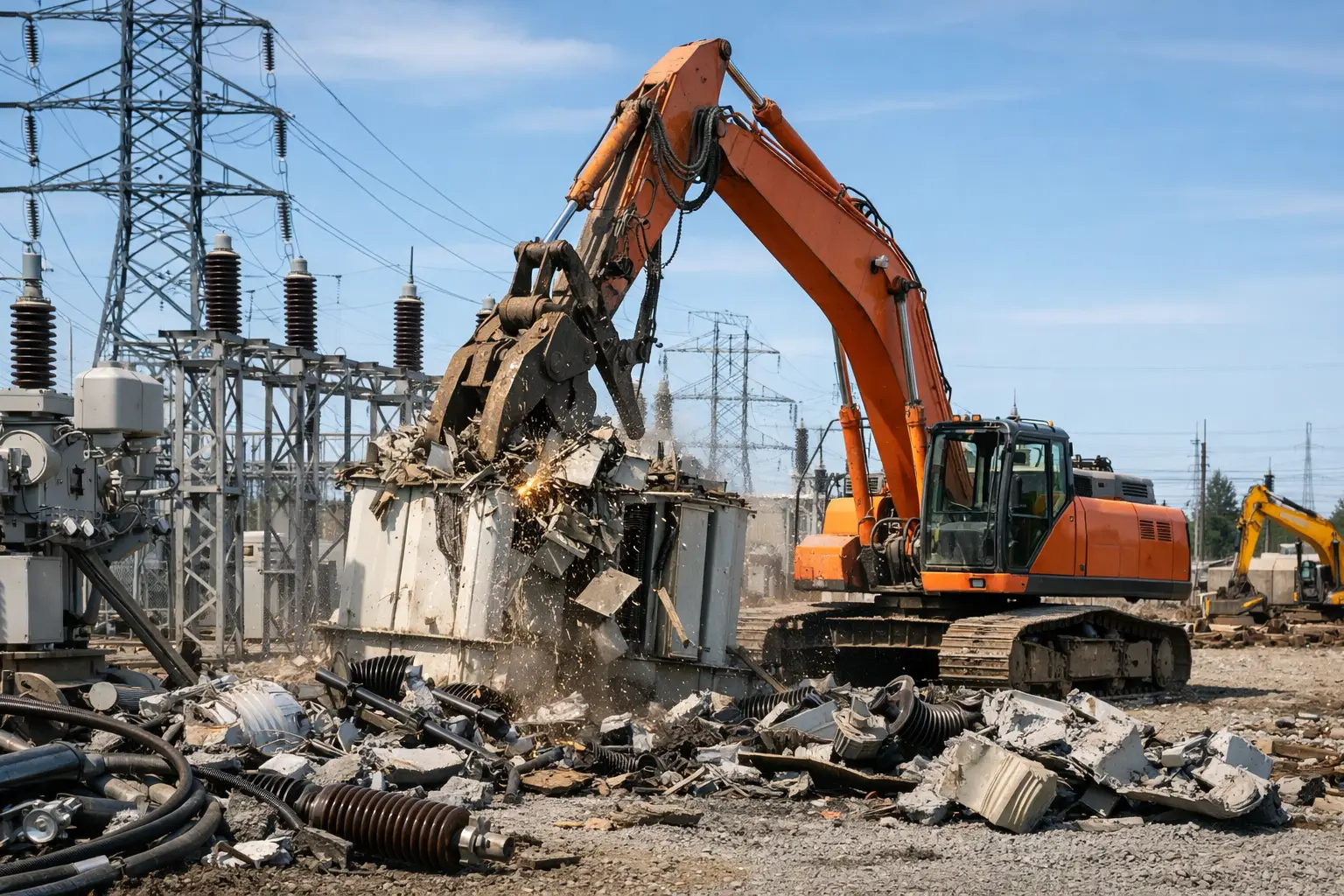
Substation Equipment Demolition Done Right
A retired transformer, breaker lineup, or battery bank is not simply scrap waiting to be hauled away. It is part of an energized infrastructure environment with heavy components, stored energy, regulated materials, and site-specific operating constraints. Substation equipment demolition requires a controlled plan that protects personnel, preserves recoverable value, and leaves the site ready for its next use.
For utilities, industrial plants, telecom operators, and large facilities, the work often begins long before a crew arrives with rigging and cutting equipment. A successful project depends on accurate asset identification, verified isolation, a practical removal sequence, and a clear destination for every major component. When those decisions are made early, demolition becomes a disciplined asset disposition project instead of an expensive, reactive cleanup effort.
Why Substation Equipment Demolition Requires More Planning
Substations combine electrical distribution equipment with structural, mechanical, and control systems. A single retirement project may include power or distribution transformers, circuit breakers, switchgear, protective relays, battery systems, cable, buswork, steel structures, grounding components, and concrete foundations. Equipment age, operating history, site access, and ownership boundaries can all affect the scope.
The primary risk is assuming that equipment is dead because it is scheduled for removal. Crews need documented isolation, lockout/tagout procedures, verification of de-energization, and a defined approach for stored energy. Capacitors, batteries, control circuits, spring-charged breakers, and connected cable systems may retain hazards even after a planned outage.
Logistics are equally consequential. Transformers and switchgear sections can require engineered lift planning, specialized rigging, crane access, route reviews, and coordinated trucking. A removal method that looks efficient on paper can fail quickly if the site has restricted clearances, limited staging space, weak access roads, or active equipment nearby.
There is also a financial reason to plan carefully. Some retired equipment has resale, refurbishment, parts, or commodity value. Other assets are best recycled because of condition, age, obsolescence, or documentation gaps. Separating those paths before demolition helps avoid turning usable equipment into damaged scrap.
Build the Scope Around the Actual Assets
A useful scope starts with a field-verified inventory, not a generic equipment list. Nameplate details, manufacturer, model, ratings, condition, dimensions, location, and accessibility should be documented for major assets. Photos and serial numbers support valuation, resale decisions, transportation planning, and final reporting.
The inventory should also identify equipment that cannot be removed until a predecessor task is complete. For example, control wiring may need to be disconnected and labeled before relay panels are moved. Buswork may need to be removed before switchgear can be extracted. A transformer cannot be transported until its oil is managed, accessories are removed, and the lift plan is approved.
Determine What Can Be Recovered
Asset recovery should be evaluated before cutting, crushing, or commingling materials. Serviceable breakers, relay panels, switchgear components, spare parts, battery racks, copper bus, and structural steel may each have different recovery paths. Value depends on market demand, condition, testing requirements, completeness, and the cost of extraction.
Not every asset should be preserved. Equipment with severe damage, outdated specifications, contamination concerns, or limited demand may be more appropriately directed to responsible recycling. The goal is not to force a resale outcome. It is to make an informed decision that balances recovery value, schedule, handling cost, and environmental responsibility.
Define the Site End State
Demolition scope can range from removing selected assets to clearing an entire substation footprint. The expected end state should be explicit: equipment removed only, foundations demolished, cable trenches abandoned or removed, fencing dismantled, grade restored, or a pad prepared for replacement equipment.
This distinction matters because heavy demolition work can introduce additional permits, dust control needs, concrete disposal requirements, and restoration costs. If the site will remain in service, the scope must also establish physical boundaries, access controls, and protection for adjacent live equipment.
Establish Isolation and Safety Controls Before Removal
Safety planning should be site-specific and led by qualified personnel familiar with the equipment and facility rules. Written procedures must address isolation points, lockout/tagout responsibilities, verification methods, switching coordination, work boundaries, emergency response, and communication protocols.
A pre-job meeting is not a substitute for technical planning, but it is where the plan becomes actionable. The crew should understand what is being removed, what remains energized, who controls access, where lifting will occur, and when conditions require work to stop. Changes in weather, switching status, site traffic, or equipment condition should trigger a reassessment.
Hazardous-material management deserves the same attention. Transformer oil may require sampling and controlled handling. Older equipment can involve PCB concerns, lead-acid batteries, mercury-containing components, asbestos-containing materials, or SF6 gas in certain breakers. Requirements vary by equipment type, condition, location, and applicable regulations. Sampling, labeling, containerization, transportation, and downstream disposal or recycling should be planned before removal begins.
Use a Removal Sequence That Protects Equipment and People
The safest sequence is usually the one that reduces uncertainty at each stage. After verified isolation, crews often begin with loose materials, control wiring, batteries, small components, and accessible auxiliaries. Larger electrical assemblies, bus systems, relay cabinets, and steel structures are then dismantled in an order that maintains stability and access.
Heavy equipment removal comes later, once drainage, disconnection, rigging, and transportation requirements are complete. Transformers may require oil processing, bushing removal, radiators or external accessories to be secured, and precise center-of-gravity planning. Switchgear can require section-by-section removal or specialized skidding when direct crane picks are not practical.
Cutting is sometimes necessary, but it should not be the default. Controlled disassembly can preserve resale value, reduce sparks near sensitive equipment, simplify material segregation, and lower the chance of damaging assets that need to remain operational. The right method depends on the site, equipment condition, removal schedule, and final disposition plan.
Keep Material Streams Separate
A well-run project does not treat the entire site as mixed demolition debris. Segregation supports both recovery value and environmental stewardship. Copper, aluminum, steel, lead, electronics, batteries, oil-containing components, and general debris should be identified and managed through appropriate streams.
This approach improves accountability. It also makes it easier to document what was sold, refurbished, recycled, or disposed of. For organizations with internal environmental goals or corporate asset-retirement policies, that documentation can be as valuable as the removal itself.
Critical Asset Recovery approaches these projects as both a dismantling assignment and an asset disposition opportunity. That means evaluating equipment for purchase, resale, refurbishment, recycling, or removal while coordinating the practical work required to clear the site. One accountable provider can reduce handoffs between demolition crews, buyers, recyclers, and freight coordinators.
Select a Partner Based on Execution, Not Just a Bid
The lowest removal price can become costly when the scope excludes rigging, fluids, transportation, disposal documentation, site restoration, or unforeseen access challenges. A capable provider should clarify inclusions, exclusions, equipment ownership, safety responsibilities, material destinations, and schedule assumptions before work starts.
Experience with industrial and mission-critical environments matters because the work must adapt to operating realities. An active facility may need phased removal around outages. A remote substation may require extensive mobilization planning. An urban location may have strict staging and traffic limitations. There is no single demolition playbook that fits every site.
Ask how the provider will inventory assets, manage recoverable material, coordinate heavy lifts, handle hazardous components, and document final disposition. The answers should be specific enough to show that the work has been considered from mobilization through final cleanup.
The best time to create value from retired substation equipment is before the first component is disconnected. With a disciplined plan, qualified crews, and a defined recovery path, a complex retirement project can move forward safely while supporting both operational goals and responsible material reuse.