
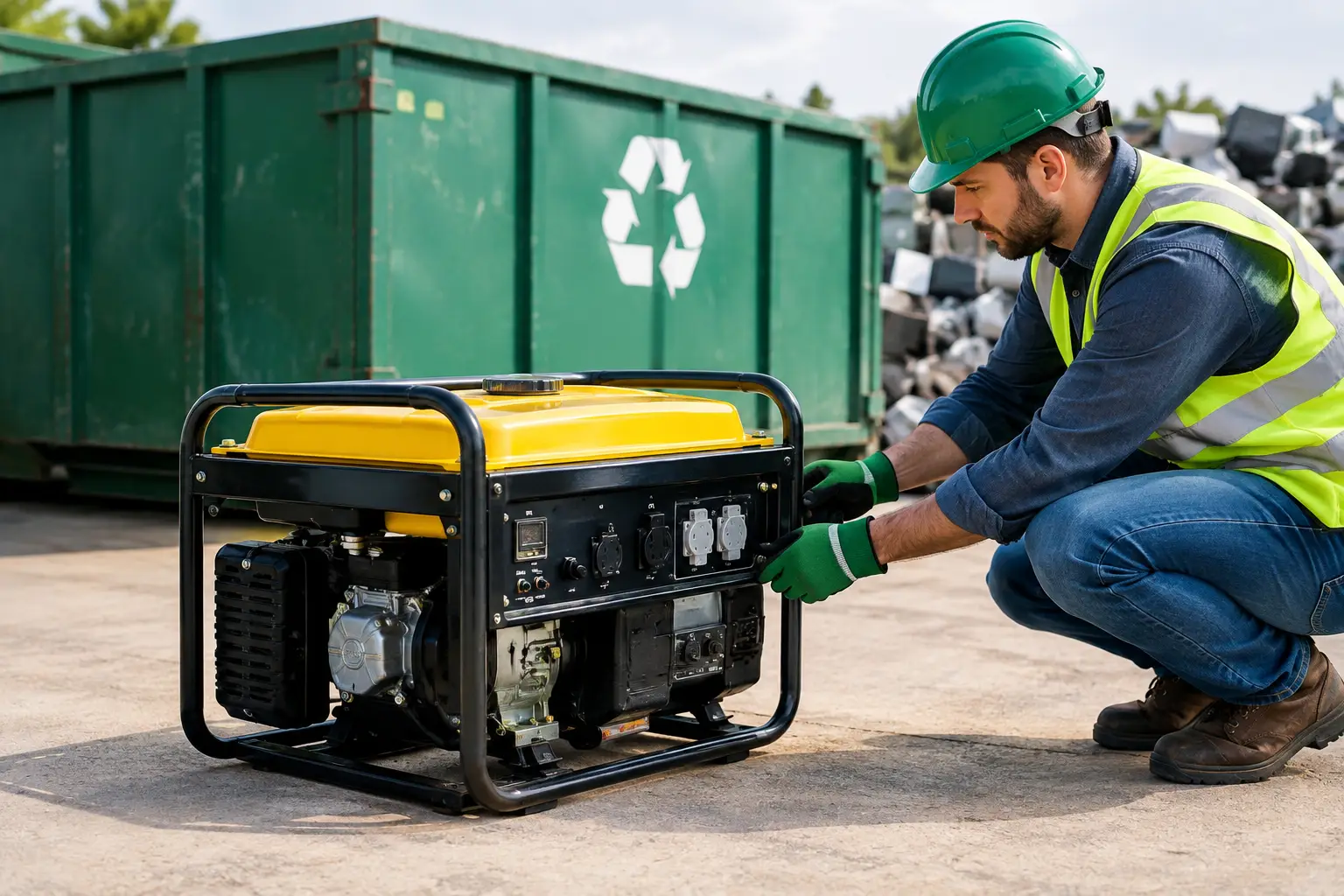
How to Recycle Generators Without Added Risk
A retired generator is rarely just a piece of scrap. It may contain recoverable copper, steel, aluminum, controls, batteries, fuel, lubricants, coolant, and regulated components that require deliberate handling. Knowing how to recycle generators begins with treating the unit as a managed asset disposition project, not a haul-away task.
For facility owners, plant managers, data center operators, and contractors, the right process can reduce site risk, support environmental objectives, and preserve residual value. The wrong process can leave behind spills, incomplete documentation, avoidable removal costs, or a generator that was resalable but prematurely scrapped.
How to Recycle Generators: Start With an Asset Assessment
Before scheduling removal, identify exactly what is being retired. Record the generator manufacturer, model, serial number, power rating, fuel type, operating hours, condition, location, and available maintenance history. Photograph the equipment and note whether it is complete with its enclosure, transfer switch, day tank, controls, exhaust components, batteries, and associated cabling.
This assessment determines the most appropriate disposition path. A late-model diesel generator with documented maintenance, low operating hours, and intact controls may have resale or refurbishment value. An older unit with significant mechanical failure may be better suited for component recovery and material recycling. Many projects fall between those two categories, with usable accessories or parts that can be separated before the remaining equipment is processed.
The decision should not be based on age alone. Generator demand varies by rating, fuel type, emissions configuration, regional power needs, and the availability of compatible parts. A professional asset recovery review can establish whether resale, refurbishment, part harvesting, or recycling provides the strongest financial and operational outcome.
Plan the Removal Before Disconnecting Anything
Generator recycling often begins in locations built around continuity of operations. A standby unit may be tied into automatic transfer equipment, fuel systems, ventilation, battery chargers, remote monitoring, and life-safety procedures. It cannot be handled like an isolated appliance.
Confirm that the generator is no longer required for emergency coverage and that replacement power arrangements are in place. Coordinate lockout/tagout procedures, electrical isolation, fuel isolation, and any permits required for lifting, hot work, or site access. In data centers, telecom facilities, and manufacturing plants, removal timing should also account for delivery routes, security protocols, floor loading, overhead clearances, and operating equipment nearby.
A written scope should clarify who is responsible for disconnecting electrical feeds, draining fluids, removing exhaust sections, rigging the unit, restoring penetrations, and transporting materials. Clear responsibility prevents a common project failure: a generator is removed, but ancillary tanks, wiring, batteries, pads, or contaminated materials remain on site without an owner.
Manage Fuel, Fluids, and Batteries Separately
Environmental responsibility depends on separating regulated and recoverable materials before dismantling. Diesel, gasoline, propane, natural gas connections, engine oil, coolant, filters, and starter batteries all require specific handling practices. Fuel that remains usable may be transferred or managed through an approved fuel service, while unusable fuel and contaminated liquids require proper waste characterization and disposal.
Lead-acid batteries should be removed from the generator and routed through an appropriate battery recycling stream. Do not leave them in a unit headed for transport or general metal processing. Batteries can leak, create short-circuit hazards, and add unnecessary weight during rigging.
Fluid management matters even when a generator has been idle for years. Hoses, filters, pans, reservoirs, and engine compartments can retain oil, coolant, and fuel residue. Draining and containing these materials before loading reduces the chance of releases during removal and helps keep recyclable metal streams cleaner.
Separate Equipment Value From Scrap Value
The largest financial mistake in generator disposition is pricing the entire unit as mixed scrap before evaluating its marketable components. Industrial generators often contain equipment with value beyond the base metals, including alternators, engines, control panels, breakers, radiators, transfer equipment, sound-attenuated enclosures, fuel tanks, and monitoring hardware.
A complete, tested unit usually carries the highest potential value, but only if it can be safely removed and transported at a cost that makes sense. Refurbishment may be appropriate when the engine and alternator are sound but the unit needs controls work, cosmetic repair, or load-bank testing. Component recovery can be practical when the generator is incomplete or damaged, yet major assemblies remain serviceable.
Scrap recycling is still an essential path for equipment that has reached the end of its useful life. Generator assemblies contain ferrous metals, copper windings, aluminum, stainless steel, and electronic components that can be reclaimed when properly separated. The objective is not to force every unit into resale. It is to use the disposition method that best balances value recovery, removal cost, safety, and environmental responsibility.
Use Proper Rigging and Transportation Controls
Generator sets are heavy, irregular loads. Even smaller commercial units can present difficult center-of-gravity conditions, while industrial and mission-critical generators may require cranes, hydraulic gantries, skates, forklifts, or specialized trailers. Enclosures and fuel tanks can change lift points and weight distribution, particularly when equipment has been modified over time.
Verify equipment weights against manufacturer documentation whenever possible. If documentation is unavailable or the configuration has changed, field verification is necessary before finalizing a lift plan. The plan should address access constraints, travel paths, ground conditions, weather exposure, traffic control, and protection for active facility infrastructure.
Transportation should also reflect the equipment’s condition. A drained, de-energized, properly secured generator is safer to move and simpler to process. Any remaining hazardous materials, loose panels, damaged batteries, or unrestrained accessories should be addressed before the load leaves the site.
Document the Generator Recycling Process
Asset disposition documentation protects the facility long after the truck departs. Retain records showing equipment identification, removal dates, fluid and battery management, weight tickets where applicable, downstream recycling or disposition details, and any resale or purchase documentation. For regulated facilities, internal environmental, safety, and finance teams may each need different records from the same project.
Documentation also supports capital asset retirement and audit requirements. Serial numbers, asset tags, and final disposition records help reconcile fixed-asset registers and demonstrate that retired infrastructure was managed through an accountable process. If data-bearing controls, monitoring devices, or networked equipment are included in the project, establish data-handling requirements before removal.
A qualified recovery provider should be able to define the service scope in advance and provide project records that match the facility’s reporting needs. This is especially valuable when a retirement project includes generators alongside UPS systems, switchgear, batteries, cooling equipment, or broader demolition work.
When Full-Service Recovery Makes Sense
A single accessible generator may be manageable through a local recycling arrangement. The equation changes when equipment is rooftop-mounted, inside a constrained mechanical room, connected to a fuel system, located at an active data center, or part of a multi-asset shutdown. In those cases, coordinating separate vendors for electrical work, fuel handling, rigging, hauling, recycling, and cleanup can create unnecessary gaps.
Full-service recovery combines planning, dismantling, equipment purchasing, removal, recycling, and site restoration under one accountable scope. Critical Asset Recovery supports this type of work across industrial and mission-critical environments, helping owners determine which assets should be sold, refurbished, recycled, or removed as part of a larger decommissioning plan.
The best time to plan generator recycling is before replacement equipment arrives or a shutdown date is set. Early evaluation gives the project team more options, more time to coordinate safe removal, and a clearer path for turning retired power infrastructure into recovered value rather than unmanaged waste.