
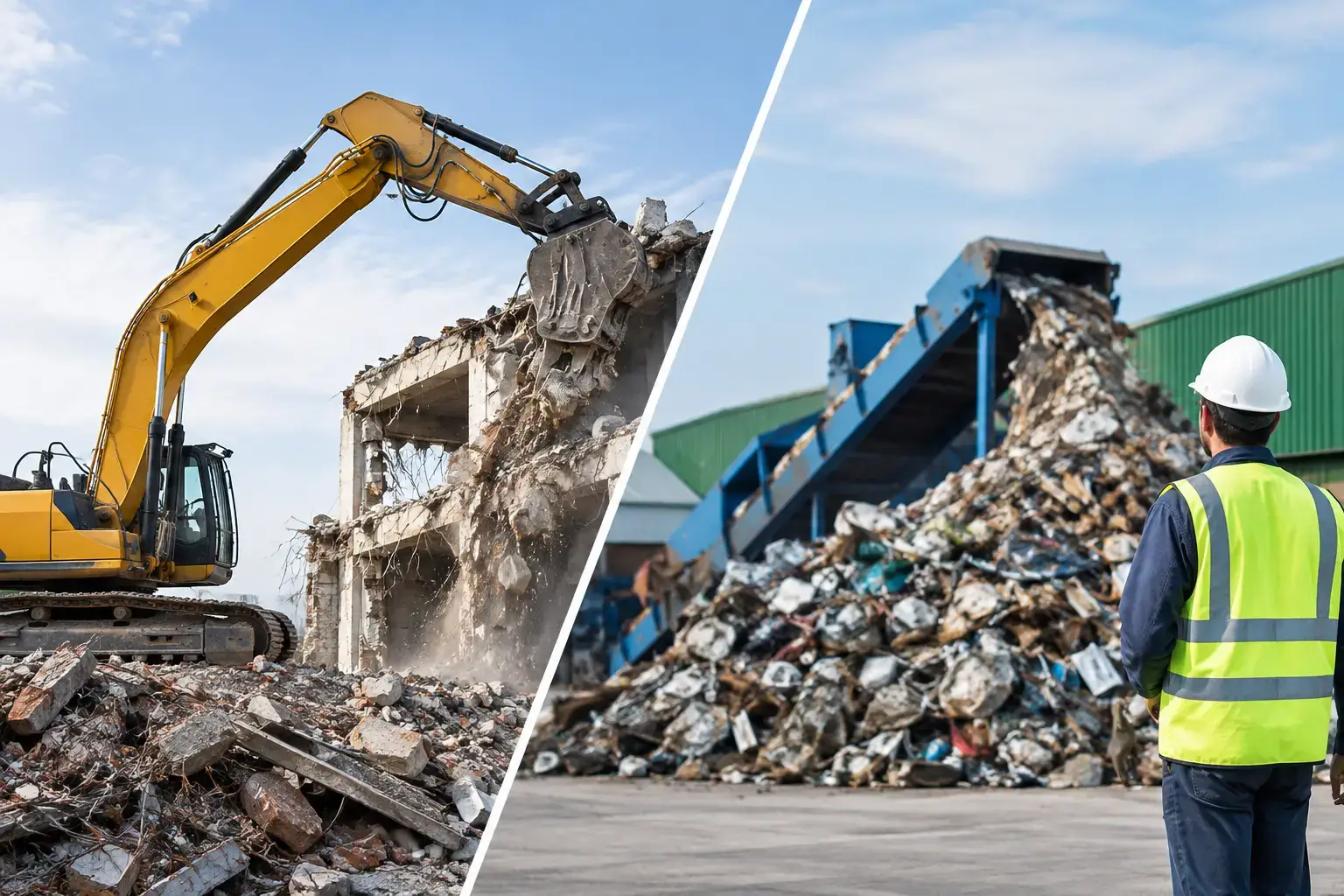
Demolition Contractors Versus Recyclers Compared
A retired generator is not simply scrap. Neither is a UPS system, switchgear lineup, chiller, battery string, or raised-floor system. Each may contain resale value, recoverable materials, regulated components, and removal risks that affect the schedule for the entire facility. That is why the choice between demolition contractors versus recyclers should be made before crews arrive on-site, not after equipment has been disconnected and loaded out.
For data centers, telecom sites, plants, substations, and other industrial facilities, the right partner depends on the project scope. Demolition and recycling are connected, but they are not interchangeable services. Treating them as the same can lead to missed asset value, unclear material accountability, avoidable downtime, and gaps in environmental documentation.
Demolition contractors versus recyclers: the practical difference
A demolition contractor is primarily responsible for safely taking apart, removing, or demolishing physical structures and installed systems. Their work may include site preparation, equipment rigging, concrete removal, structural demolition, debris management, and coordinating heavy machinery. The central objective is often to clear a space safely and on schedule.
A recycler is primarily responsible for processing materials at the end of their useful life. That may include segregating metal, recovering cable, processing electronic components, managing batteries, and directing materials into appropriate commodity or disposal streams. The central objective is responsible downstream handling and material recovery.
Both roles are necessary in many projects. The difference is where their accountability begins and ends. A demolition contractor may remove an asset and send it to a recycler. A recycler may accept material after it has been removed, sorted, and transported. Neither arrangement automatically addresses the condition, resale potential, transport requirements, or chain of custody for a complete piece of critical infrastructure.
That distinction matters when the equipment is still operational, repairable, or valuable for parts. It also matters when removal requires shutdown coordination, electrical isolation, lifting plans, fuel handling, refrigerant recovery, or strict access controls.
When demolition is the primary need
Demolition is usually the lead requirement when a project involves buildings, structural elements, heavily integrated systems, or significant site clearing. A facility may be preparing for a major renovation, equipment expansion, lease turnover, or full shutdown. In these situations, the work is defined by safe execution, schedule control, and physical removal.
A qualified demolition scope should address the practical realities of the site: work-zone controls, utility identification, lockout and tagout coordination, equipment access, floor loading, rigging, dust control, and debris routing. If walls, slabs, foundations, ductwork, piping, or fixed infrastructure must be removed, a demolition contractor’s capabilities are central to the project.
However, a demolition-first approach can be expensive if it treats every retired asset as waste. Industrial equipment often has a different disposition path than general construction debris. A 2 MW generator, medium-voltage switchgear, chiller, or maintained UPS may warrant inspection before it is cut apart or placed in a scrap container.
When recycling is the primary need
Recycling is the primary need when equipment has already been disconnected and staged, has no practical reuse market, or is being retired for material recovery. This is common for damaged units, outdated electronics, mixed metals, cable, batteries, and components with limited resale demand.
The recycling provider should be able to identify material streams and manage them responsibly. For mission-critical environments, that includes more than steel and copper. Battery chemistries, electronic boards, capacitors, refrigerants, oils, fire suppression agents, and other controlled materials require deliberate handling. The facility owner should understand who is responsible for each stream and what documentation will be provided after processing.
Recycling can be cost-effective, especially where material volumes are high and assets have limited secondary-market value. Yet recycling should not be the default before equipment has been evaluated. Once a usable generator is reduced to scrap, its resale and refurbishment value is gone.
The missing category: asset recovery and decommissioning
Many complex projects require a third approach: integrated asset recovery and decommissioning. This model begins by assessing equipment for reuse, resale, refurbishment, parts harvesting, recycling, or disposal. It then coordinates the technical work required to remove the asset safely from the operating environment.
This is especially useful for facilities retiring multiple types of equipment at once. A data center refresh, for example, may include UPS modules, batteries, PDUs, switchgear, CRAC units, generators, cabling, raised flooring, and fire suppression components. Each category may need a different disposition path.
The advantage of an integrated provider is not merely fewer vendors. It is the ability to make disposition decisions before removal begins. Equipment with market value can be preserved and marketed. Equipment with reusable components can be dismantled carefully. Material without reuse value can be routed to recycling. Site demolition can proceed with clearer separation between recoverable assets and general debris.
Critical Asset Recovery uses this approach for industrial and mission-critical infrastructure projects, combining equipment purchasing, decommissioning, removal, resale, and environmentally responsible recycling. For facility teams, that can reduce handoffs between the people taking equipment out, the people evaluating it, and the people responsible for its final disposition.
How value recovery changes the project economics
The biggest financial difference between demolition contractors and recyclers is often what happens before material is weighed. Scrap value is based largely on commodity content. Asset recovery value is based on condition, configuration, age, demand, service history, and the ability to move equipment without damage.
A late-model generator with documented maintenance history may have significant resale potential. A working chiller may be suitable for refurbishment. Certain switchgear components can retain value even when the complete lineup is no longer needed. Conversely, obsolete batteries, damaged equipment, and incomplete systems may be better candidates for recycling.
There is no universal rule that reuse is always the best choice. Storage costs, removal complexity, transportation distance, market demand, and project deadlines all matter. A facility facing a hard turnover date may place more value on speed and certainty than on pursuing the highest possible recovery return. The key is to make that trade-off deliberately, with a clear understanding of what each path offers.
Questions to ask before selecting a provider
Before awarding the project, define whether the vendor will only remove equipment, only receive material, or manage the full disposition process. The scope should make clear who is responsible for disconnect coordination, rigging, packing, loading, transportation, recycling, and final documentation.
Ask how the provider evaluates reusable equipment and whether that evaluation occurs before dismantling. Request clarity on how proceeds from equipment sales or scrap recovery are handled. If an asset purchase is part of the proposal, confirm which assets are included, what condition assumptions apply, and what happens if field conditions differ from the initial assessment.
Environmental accountability deserves the same level of attention. Confirm how batteries, oils, refrigerants, electronic waste, and other regulated materials will be managed. For sensitive facilities, establish chain-of-custody expectations for data-bearing equipment and access-controlled areas. A vague promise to “recycle everything” is not a project plan.
Finally, assess operational discipline. The provider should be able to work around active operations, coordinate with facility personnel, maintain safe work practices, and adapt to field conditions without losing control of the schedule. Nationwide coverage can also be valuable for organizations standardizing decommissioning across multiple sites in the United States and Canada.
Choose the scope before choosing the label
The right answer is rarely demolition contractor or recycler alone. A site-clearing project may need demolition leadership, while a staged warehouse inventory may need a recycling partner. A data center decommissioning project often needs both, plus equipment evaluation and specialized removal expertise.
Start with the assets, not the vendor label. Identify what must be preserved, what can be resold, what must be recycled, and what requires physical demolition. When those decisions are made early, the project is easier to price, safer to execute, and more likely to return value instead of leaving it behind in the scrap pile.