
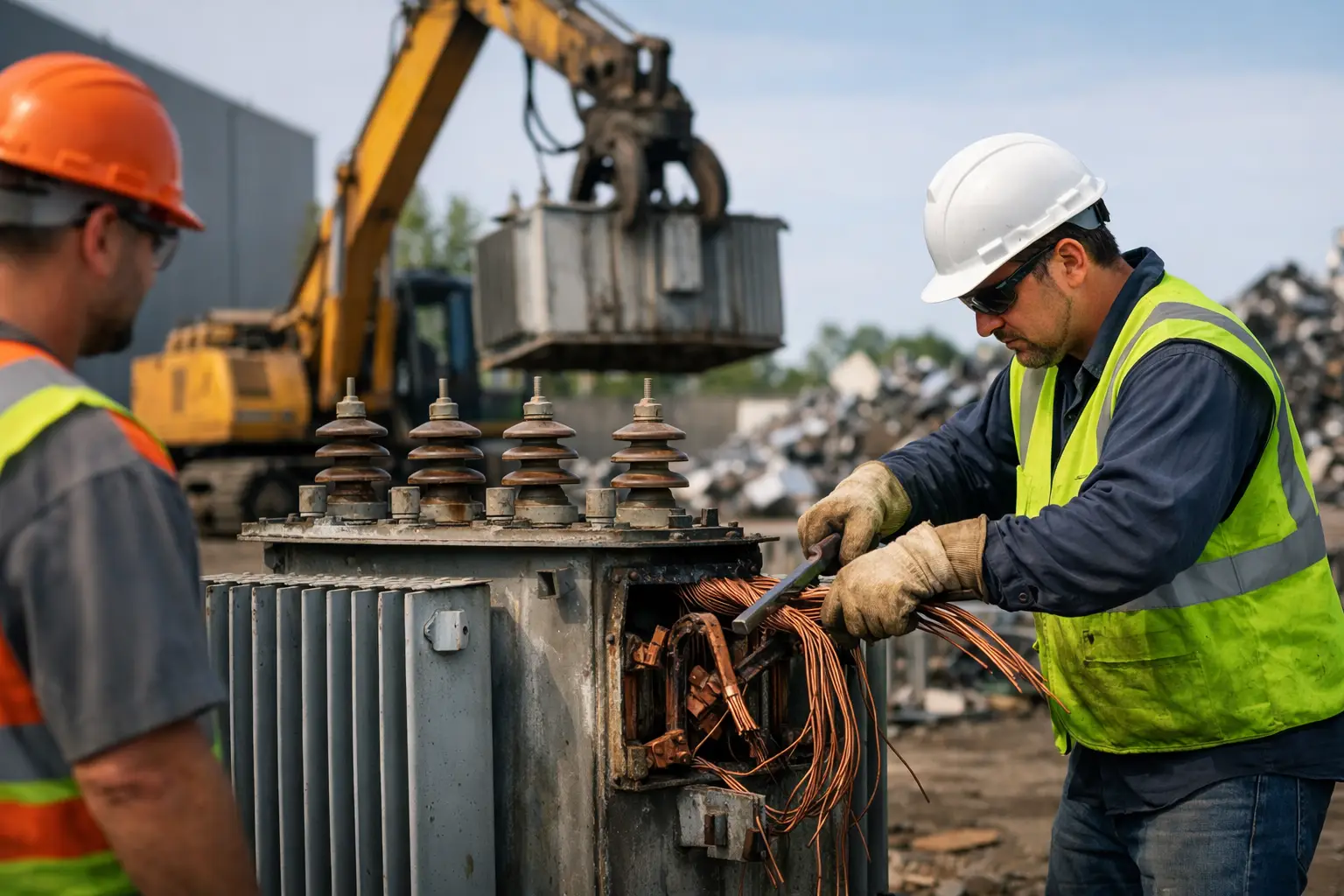
How to Recycle Industrial Transformers Safely
A retired transformer is not simply a heavy piece of surplus equipment. It may contain recoverable copper, aluminum, steel, and electrical steel, but it can also contain residual oil, regulated components, and a lifting challenge that affects the entire work area. Knowing how to recycle industrial transformers starts with treating the project as an asset disposition and environmental management process, not a scrap pickup.
For substations, manufacturing plants, telecom facilities, and data centers, the right approach protects personnel, supports compliance, reduces disruption, and may recover residual value from equipment that no longer serves the operation.
Start With a Transformer Assessment
Before scheduling removal, document what is being retired. Record the transformer manufacturer, model, serial number, kVA rating, voltage class, approximate age, dimensions, weight, cooling method, and current condition. Photographs of nameplates, bushings, radiators, cable terminations, and the surrounding access path help define the scope before a crew arrives.
The first decision is whether the transformer is truly a recycling candidate. A dry-type unit in good condition may have resale or refurbishment value, particularly if it has a common rating and remains supported by available parts. Oil-filled transformers may also have value when they are recent, serviceable, and supported by complete test records. Equipment that is damaged, obsolete, contaminated, or uneconomical to repair is generally better suited for material recovery.
This distinction matters. Selling a usable transformer can produce greater value than processing it for scrap, while recycling a failed or outdated unit prevents usable materials from entering a landfill. A qualified recovery partner should evaluate both paths rather than assuming every retired transformer belongs in a scrap stream.
Test Oil and Identify Regulated Materials
Oil-filled transformers require additional planning. The dielectric fluid must be sampled and evaluated before draining, transport, dismantling, or recycling. Older equipment may contain polychlorinated biphenyls, commonly called PCBs, or may have been contaminated through servicing or cross-contamination. PCB management requirements are significantly different from standard used-oil handling.
Do not rely on the transformer’s age, labels, or assumptions about past maintenance. Obtain appropriate testing and retain the results. The outcome affects how the unit is packaged, transported, stored, processed, and documented. It can also influence project cost and timeline.
A complete assessment should also identify related materials that may require separate handling. These can include residual oil, contaminated rags and absorbents, porcelain bushings, lead-bearing components, wiring insulation, paint, and damaged electrical hardware. The transformer may sit within a larger retirement scope involving switchgear, breakers, cables, battery systems, or control panels, each with its own recovery and disposal route.
Plan Safe Isolation and Removal
Transformer recycling begins only after the equipment has been properly isolated. A facility should confirm that all energy sources are disconnected, locked out, tagged out, and verified de-energized by qualified personnel. This includes primary and secondary feeds, control circuits, backfeed sources, stored energy, and any associated generator or UPS connections.
Removal planning is just as important as electrical isolation. Industrial transformers can weigh thousands of pounds, and their center of gravity is not always obvious. A lift plan should account for verified equipment weight, approved lifting points, rigging capacity, crane or forklift access, floor loading, overhead clearance, door widths, ramps, and the final transport route.
For indoor installations, access constraints often drive the job. A transformer may need to be disconnected, drained, dismantled in place, or moved through a carefully sequenced path to avoid disrupting active operations. In operating data centers, telecom sites, and manufacturing environments, the removal plan should also address dust control, containment, traffic management, work-hour restrictions, and protection of adjacent critical equipment.
Recover Materials Through Controlled Processing
Once the transformer reaches an authorized processing location, components can be separated for reuse, recovery, or regulated disposal. The core materials are often highly recyclable. Copper or aluminum windings, ferrous steel tanks and frames, electrical steel laminations, and certain nonferrous metals can be directed into appropriate commodity streams.
The recovery value depends on the transformer’s construction, size, condition, and current market pricing. Copper-wound units often command stronger scrap value than aluminum-wound units, but material composition is only one factor. Transportation, labor, fluid management, rigging, access, and contamination can all affect the net result.
A responsible recycler does more than cut a unit apart. Fluids are managed separately, recoverable metal is segregated, and non-recyclable or regulated materials are sent through approved disposal channels. This controlled process reduces environmental risk while preserving the value of materials that can return to manufacturing supply chains.
Dry-Type and Oil-Filled Transformers Follow Different Paths
Dry-type transformers usually have a more straightforward recycling profile because they do not contain dielectric oil. However, they still require safe de-energization, rigging, and evaluation of winding insulation, coatings, and encapsulated materials. Their copper or aluminum windings and steel cores can represent meaningful recoverable value.
Oil-filled transformers require fluid sampling, draining, containment, and documentation before metals are processed. A unit with non-PCB oil may move through a standard managed recovery process, while a PCB or PCB-contaminated unit requires specialized handling. The correct path depends on test results and applicable regulatory requirements, not on a one-size-fits-all recycling method.
Maintain Documentation From Site to Final Disposition
Documentation is a practical safeguard for facility owners and environmental managers. It establishes what was removed, where it went, how materials were handled, and whether the project met the intended scope. For larger retirement projects, records also support internal asset controls, insurance requirements, audit readiness, and sustainability reporting.
Useful documentation commonly includes equipment inventories, photographs, oil test results, bills of lading, weight tickets, recycling certificates, disposal manifests when applicable, and final disposition reports. If the transformer is sold for reuse, maintain the sale record and equipment identification. If it is recycled, retain records that distinguish recovered materials from regulated waste streams.
Chain-of-custody matters, particularly when equipment leaves a controlled utility, industrial, or mission-critical site. Working with a provider that can manage logistics, removal, recycling coordination, and reporting under one scope reduces handoffs and makes accountability clearer.
Avoid the Common Costly Mistakes
The most expensive transformer recycling problems usually begin before the truck arrives. Facilities may underestimate weight, skip oil testing, assume a loading dock can handle the move, or schedule removal before confirming outage requirements. These gaps can create delays, additional mobilizations, safety exposure, and avoidable disposal costs.
Another mistake is focusing only on the gross scrap price. A higher quoted material value does not necessarily produce a better project outcome if the provider excludes draining, rigging, containment, transportation, paperwork, or final cleanup. The right evaluation looks at the total scope, the compliance path, the recovery potential, and the impact on site operations.
It is also wise to avoid storing retired transformers indefinitely. Long-term storage consumes space, complicates inventory management, and can create environmental exposure if oil-filled equipment deteriorates or leaks. Once equipment is confirmed surplus, timely assessment allows the owner to choose reuse, resale, or responsible recycling while records and access conditions are still clear.
Choose a Full-Service Recovery Partner
Transformer retirement often intersects with broader infrastructure changes. A facility may be removing switchgear, generators, UPS systems, batteries, cabling, chillers, or raised-floor equipment at the same time. Coordinating separate vendors for each material stream can add cost and create gaps in responsibility.
Critical Asset Recovery supports complex equipment retirements with asset purchasing, decommissioning, dismantling, removal, recycling, and documentation services. For projects across the United States and Canada, a coordinated scope can help facility teams protect operations while moving surplus and end-of-life equipment through the appropriate recovery channel.
The best time to plan transformer recycling is before the outage window is fixed and before the equipment becomes an obstacle in an active facility. A clear inventory, verified oil data, a workable removal route, and a documented disposition plan turn a difficult retirement project into a controlled, accountable next step.